
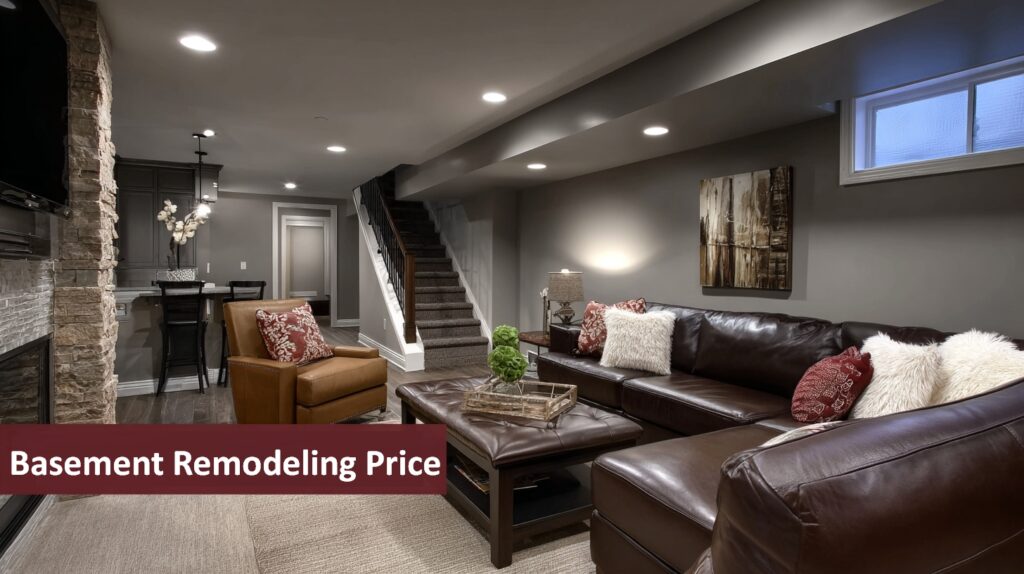
Many New York City homeowners wonder what a basement remodel price really involves and why the final number can vary so much. Without a clear plan, costs can escalate quickly, especially when you’re unsure which upgrades are essential.
It’s easy to overspend or miss critical building code requirements that inflate the final bill. One key statistic to remember comes from Remodeling Magazine’s 2025 Cost vs. Value report, which shows that a mid-range basement remodel can recoup a significant portion of its cost at resale, making it a valuable investment.
This guide breaks down every major cost, step by step. You will learn what each component costs, how to build a smart budget, and where you can save money without sacrificing quality. Ready for a clear path through the numbers? Let’s get started.
Essential Points
- A basement remodel price in New York City typically ranges from $40,000 to $120,000, with an average project costing around $75,000. High-end projects with luxury finishes can easily exceed $150,000.
- Homeowners can expect to recover between 60% and 75% of their investment upon resale, with the potential for higher returns in competitive markets. Adding a full bathroom can significantly increase this return.
- In NYC, labor is a major cost driver, often accounting for 40% to 60% of the total budget, while materials make up 30% to 50%. Permits from the Department of Buildings (DOB) can add another $2,000 to $10,000.
- Always set aside a contingency fund of 10% to 20% for unexpected issues like hidden water damage, foundation cracks, or the need to upgrade an old electrical panel.
- Prioritize essentials like waterproofing, insulation, and permits. Working with licensed NYC contractors who understand local codes is crucial to avoid expensive delays and fines.
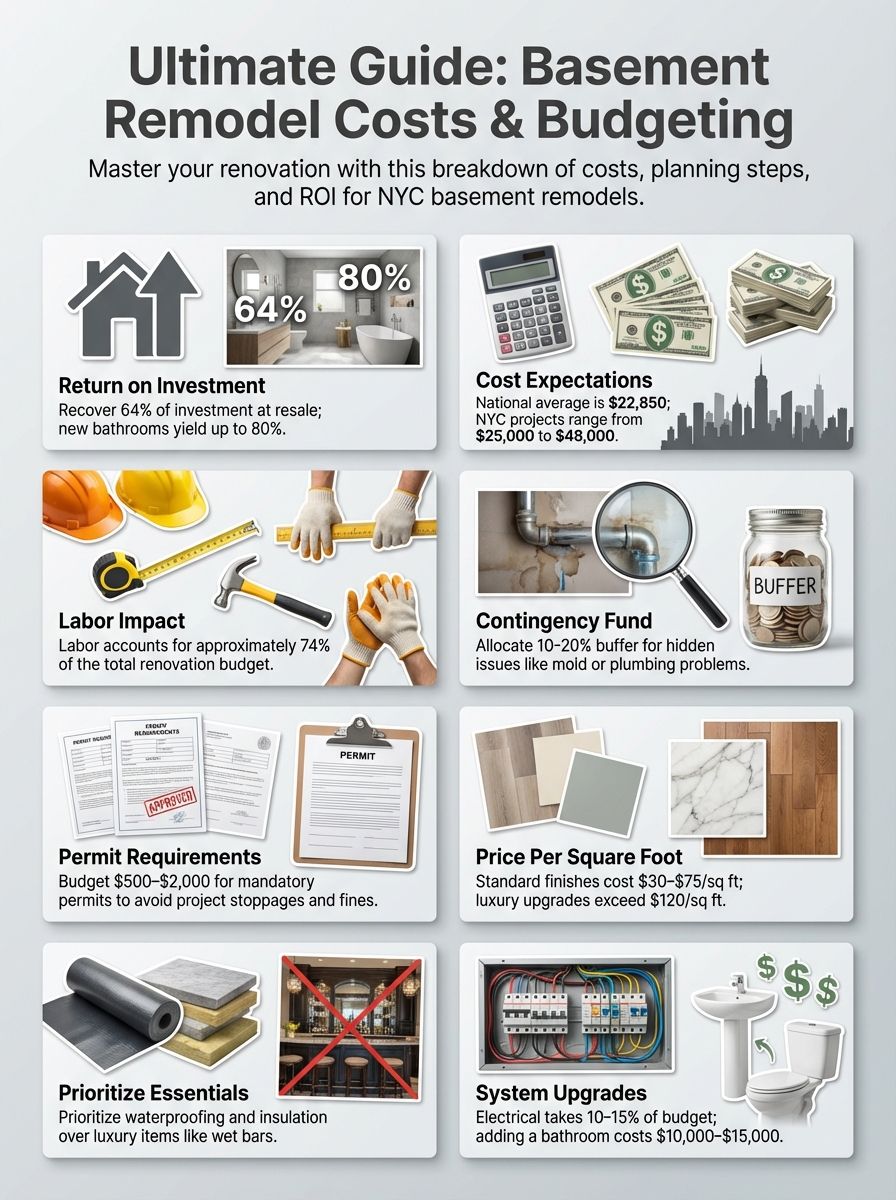
How Do You Plan Your Basement Remodel Budget?
Careful planning is the key to keeping your project on track and minimizing surprises. A well-structured budget not only helps you control your basement remodel price but also serves as a roadmap for all your decisions.
- Assess and Measure: Start by measuring your basement’s square footage. Thoroughly inspect for any signs of moisture, cracks in the foundation, or other damage that must be addressed first.
- Research NYC Costs: Familiarize yourself with current basement remodel price ranges in the city. A basic finish might start around $40,000, while a mid-range project often lands between $60,000 and $90,000.
- List Your Must-Haves: Prioritize functional necessities. This includes waterproofing, proper insulation, and adequate lighting, all of which are crucial for long-term comfort and safety.
- Get Multiple Quotes: Request detailed quotes from at least three licensed contractors. Since NYC labor can be 40-60% of your total cost, compare these estimates carefully to understand what’s included.
- Select Materials Wisely: Choose materials based on durability and price. Materials typically make up 30% to 50% of the budget, so your choices here have a big impact.
- Create a Contingency Fund: Set aside 10% to 20% of your total budget for unexpected problems. Hidden issues like mold remediation or old plumbing repairs are common discoveries during demolition.
- Fund Essentials First: Ensure your budget fully covers foundational work before allocating funds for luxury items like a custom wet bar or home theater.
- Track Every Expense: Use a simple spreadsheet or a budgeting app like Mint to monitor all your spending in real-time.
- Plan for Permits: Check permit requirements with the NYC Department of Buildings early. Skipping this step can lead to stop-work orders and significant fines.
- Think About Resale: Keep return on investment in mind. A finished basement typically recoups 60-75% of its cost, and adding a bathroom can provide an even higher return.
Basement Remodel Cost Overview
Understanding the full price picture helps you budget with confidence. This section provides a clear map of what to expect for different levels of renovation in NYC.
What Are the Costs of a Basic Basement Remodel?
In 2025, a basic basement remodel in NYC typically costs between $40,000 and $60,000. This level of finish turns an unfinished space into a simple, livable area. It usually includes framing, basic insulation, drywall, simple lighting, and durable flooring.
Costs generally range from $50 to $85 per square foot for this type of project. For example, finishing a 600-square-foot basement would land on the lower end of this range. Contractor fees will add another 10% to 25% to the total. Keep in mind that NYC permits can cost between $2,000 and $5,000 even for basic alterations, depending on the scope of work.
A modest basement upgrade gives you value without breaking your budget, says Alex Fedin of HomeRenovation4U in New York City.
How Much Do Mid-Range Basement Upgrades Cost?
A mid-range basement remodel in NYC typically falls between $60,000 and $90,000. This budget allows for more features and higher-quality finishes, turning the space into a true extension of your home.
Projects at this level often include creating distinct rooms like a bedroom and a family room, adding a full bathroom, and installing built-in storage. You can also upgrade to better materials, such as engineered wood flooring and recessed LED lighting. A crucial addition at this level is often an egress window if you’re adding a legal bedroom. In NYC, installing an egress window can add $5,000 to $8,000 to the project cost but is essential for safety and code compliance.
What Is the Investment for High-End Basement Renovations?
For a high-end basement renovation in New York City, expect the cost to start around $90,000 and potentially exceed $150,000. These projects are all about custom features and luxury finishes, often with a price per square foot of $150 or more.
This budget can accommodate premium additions like a custom wet bar with stone countertops, a dedicated home theater, or even a personal gym. For example, a home theater alone can range from $10,000 for a basic setup to over $60,000 for a high-end system with soundproofing and tiered seating. Adding a full bathroom with luxury fixtures can also cost between $20,000 and $40,000 in a high-end project.
Key Factors Affecting Basement Remodel Costs
Several key choices can significantly raise or lower your final budget. In New York City projects, even small decisions can add up quickly.
How Does Basement Size Impact Costs?
The size of your basement is one of the most significant factors driving the overall cost. Most standard renovations in NYC land between $50 and $150 per square foot, with luxury projects going even higher.
A larger space requires more materials for framing, insulation, flooring, and lighting. It also increases the labor hours needed to complete the job. However, there is an economy of scale. The cost per square foot may decrease slightly on larger projects because fixed costs, like permits and contractor setup fees, are spread over a larger area.
What Are the Material and Finish Choices That Affect Pricing?
Your choice of materials will have a major impact on your final bill. Flooring is a great example of this.
| Flooring Type | Average Cost (per sq. ft.) | Key Basement Benefit |
|---|---|---|
| Luxury Vinyl Plank (LVP) | $3 – $7 | 100% waterproof and highly durable. |
| Ceramic/Porcelain Tile | $5 – $10 | Completely waterproof and easy to clean. |
| Engineered Wood | $4 – $9 | Resists moisture better than solid wood. |
| Carpet Tiles | $2 – $5 | Warm and easy to replace if a section is damaged. |
Beyond flooring, upgrades like custom built-in cabinets, stone countertops for a bar, or high-end lighting fixtures will increase costs. Using mold-resistant drywall, such as National Gypsum’s Gold Bond PURPLE XP, is a smart investment that adds a small amount to the material cost but provides significant long-term protection against moisture.
How Are Labor and Contractor Prices Determined?
In New York City, labor costs often outweigh material costs, sometimes making up 40% to 60% of the total project price. Hourly rates for skilled tradespeople can be high.
- Plumbers & Electricians: Often charge between $85 to $200 per hour.
- Carpenters: Framing work can cost $700 to $1,600 for a typical basement.
- General Contractors: Typically add 10% to 25% to the total project cost for management and oversight.
It is essential to get multiple quotes to understand the current market rates. When reviewing bids, make sure each one details the full scope of work, a payment schedule, and proof of licensing and insurance to avoid any surprises.
When Are Permits and Inspections Required?
In NYC, nearly any project that involves electrical, plumbing, or structural changes will require a permit from the Department of Buildings (DOB). This includes common basement remodel tasks like adding a bathroom or moving a wall.
Permit fees in NYC are often calculated based on the total construction cost and can range from $2,000 to over $10,000 for larger projects. It’s crucial to work with a contractor who is experienced with the DOB’s online portal, DOB NOW, to file the necessary paperwork correctly. Skipping permits can lead to steep fines, stop-work orders, and major problems when you eventually sell your home.
Basement Remodel Price Breakdown by Components
Breaking the project into individual components helps you see exactly where your money is going. Use this section as a checklist for your budget.
What Are the Costs for Framing and Insulation?
Framing typically costs between $700 and $1,600 for an average-sized basement. This creates the structure for your new walls. An alternative to traditional wood studs is using steel studs, which are resistant to moisture and pests but may cost 20-30% more for materials.
Insulation is critical for energy efficiency and moisture control. Expect to spend $1,500 to $4,000 on insulation. Using a product like Owens Corning Foamular rigid foam insulation is ideal for basement walls because it provides a high R-value and acts as a vapor barrier, helping to keep the space dry and comfortable.
How Much Do Electrical, Plumbing, and HVAC Work Cost?
This category often represents one of the most significant expenses. Electrical work, including new circuits and lighting, can make up 10% to 15% of the total budget. In NYC, this can translate to $5,000 to $10,000.
Adding a bathroom is a major cost driver. A full bathroom can cost between $10,000 and $25,000, while a half-bath might be $5,000 to $12,000. To save on plumbing, consider using an up-flush toilet system like those from Saniflo, which can reduce the need to break through concrete for drainage pipes, saving thousands in labor.
Extending your HVAC system can cost $3,000 to $7,000. For targeted heating and cooling, a mini-split system is a great option and typically costs between $4,000 and $10,000 installed.
What Are Flooring Options and Associated Prices?
Flooring choices need to be durable and moisture-resistant. Most homeowners spend between $2,000 and $12,000 on basement flooring, depending on the material and square footage.
Luxury Vinyl Plank (LVP) is a very popular choice because it is 100% waterproof and can realistically mimic the look of wood. Brands like LifeProof from Home Depot offer durable options. Another excellent choice is ceramic or porcelain tile, which is also completely waterproof and extremely durable. While carpet can feel warmer, it’s best to use carpet tiles, which allow you to easily replace a small section if it gets stained or damaged.
How Much Does Installing Walls and Ceilings Cost?
For a 1,000-square-foot basement, installing drywall on walls and ceilings typically ranges from $7,000 to $23,000 in NYC due to high labor costs. It’s highly recommended to use moisture- and mold-resistant drywall, often called “purple board” or “green board,” which is specifically designed for damp environments.
For the ceiling, a drop ceiling from a brand like Armstrong is a practical alternative to drywall. While the look is different, it provides easy access to pipes, ducts, and wiring for future maintenance, which can save you a lot of hassle and money down the road.
What Are the Expenses for Lighting and Fixtures?
Good lighting is essential to make a basement feel bright and inviting. Recessed LED lights are the most common choice and are usually installed throughout the main areas.
- Outlets: Each new outlet typically costs $100 to $450.
- Light Switches: Expect to pay $60 to $300 per switch.
- Light Fixtures: The cost can range from $150 to $900 per fixture, depending on the style.
Consider creating a layered lighting plan with general, task, and accent lighting. Smart lighting systems, like Philips Hue, allow you to control different zones and create various moods, which is perfect for a multi-functional basement space.
Pricing for Specialty Basement Features
Adding custom features can transform your basement into a truly unique space. However, these upgrades also significantly increase the basement remodel price, so it’s important to plan for them carefully.
What Does It Cost to Install a Basement Bar?
A basement bar is a popular addition for entertaining. In the NYC area, a simple dry bar (without a sink) can start around $6,000. If you want a full wet bar with plumbing, a sink, a beverage fridge, and custom cabinets, the cost often exceeds $30,000.
The final price depends heavily on your choice of materials. For instance, laminate countertops are a budget-friendly option, while granite or quartz will significantly increase the cost. Custom cabinetry and high-end appliances will also push the price higher.
How Much Does a Home Theater Installation Cost?
Creating a dedicated home theater can be a dream come true for movie lovers. A basic setup with a mid-range screen and speakers can start around $10,000. For a high-end theater in NYC, costs can easily reach $60,000 or more.
Key cost drivers for a premium theater include acoustic treatments and soundproofing. Using materials like Rockwool Safe’n’Sound insulation helps to absorb sound and prevent it from traveling to other parts of the house. Other high-end features include large projection systems from brands like BenQ, tiered seating for an authentic cinema feel, and smart controls that integrate lighting and sound.
What Are the Expenses for Building a Wine Cellar?
A wine cellar adds a touch of sophistication and can be a great feature for collectors. The cost varies widely based on size, climate control needs, and finishes. A basic wine storage area with simple racks might start around $5,000 to $15,000.
However, a true custom wine cellar with a dedicated cooling unit from a brand like WhisperKOOL, proper insulation, a vapor barrier, and custom wood racking can easily exceed $30,000. Professional installation is key to protecting your wine collection by ensuring stable temperature and humidity levels.
How Much Does Adding Bathrooms to a Basement Cost?
Adding a bathroom is one of the most valuable upgrades you can make to a basement. In NYC, a half bathroom typically costs between $8,000 and $15,000. A full bathroom, which includes a shower or tub, usually runs from $15,000 to $40,000.
The higher cost is due to the complexity of basement plumbing. If your basement is below the main sewer line, you will likely need a sewage ejector pump, which can add $1,000 to $3,000 to the project. Permits and inspections for plumbing work also contribute to the overall budget.
How Can You Save Money on Basement Remodeling?
With a few smart strategies, you can make your budget go further. Small adjustments can free up funds for the features that matter most to you.
How Can Recycling Materials Lower Costs?
Using recycled and reclaimed materials is a great way to save money and reduce waste. In NYC, you can find salvaged doors, windows, light fixtures, and even lumber at a lower price from organizations like Big Reuse or Build It Green! NYC.
This approach not only cuts material costs but also reduces disposal fees, which can be high in the city. Mixing new and reclaimed materials can also create a unique and stylish look for your new space.
Why Should You Compare Contractor Quotes?
Labor rates in NYC can vary significantly, so getting at least three detailed quotes is essential. When comparing bids, don’t just look at the bottom-line number. A thorough quote should break down the costs for materials, labor, timelines, and include warranty information.
Make sure to check each contractor’s license on the NYC Department of Consumer and Worker Protection (DCWP) website and ask for references. A careful comparison helps you avoid hidden fees and find a contractor who offers the best value for your project.
How to Prioritize Essential Upgrades Over Luxuries?
Always protect the long-term health of your space first. This means investing in fundamental upgrades like waterproofing, proper insulation, and reliable electrical systems before focusing on cosmetic finishes.
According to the Insurance Information Institute, the average cost of a water damage claim is over $12,500. This statistic highlights why addressing potential moisture issues at the beginning of your project is a non-negotiable investment.
If your budget is tight, consider a phased approach. Complete the core construction and essential services now. You can always add luxury items like a wet bar or high-end home theater in a later phase when you have more funds available.
How to Create a Financial Plan for Your Basement Remodel
A simple financial plan will keep your spending on track and reduce stress. Think of it as a roadmap for your NYC project.
How Do You Set Realistic Remodeling Goals?
Start with a thorough inspection of your basement. Note any existing issues like moisture, foundation cracks, or outdated wiring. Measure the square footage and create a list of your absolute must-haves versus your nice-to-haves.
Use the typical NYC project costs as a guide, ranging from $50 to $150 per square foot, to set a realistic initial budget. Break your project into smaller, manageable steps, such as structural repairs, then lighting and electrical, followed by flooring and finishes. This makes the project feel less overwhelming and easier to budget for.
How Should You Budget for Unexpected Expenses?
It’s a golden rule in remodeling: always expect the unexpected. Plan for this by setting aside a contingency fund of at least 10% to 20% of your total budget. Basements, in particular, are known for revealing hidden problems once demolition begins.
Common surprises include discovering mold behind old walls, finding cracks in the foundation that need repair, or realizing your electrical panel is too old to handle the new load. Having a dedicated fund for these issues ensures that they won’t derail your project or force you to cut corners on essential items.
What Financing Options Are Available for Basement Remodels?
Many homeowners use financing to cover the cost of a basement remodel. Some of the most common options include:
- Personal Loans: These loans offer fixed interest rates and predictable monthly payments, making them easy to budget for.
- Home Equity Loans (HEL): You borrow a lump sum against your home’s equity, usually at a fixed interest rate that is lower than a personal loan.
- Home Equity Line of Credit (HELOC): This is a revolving line of credit that you can draw from as needed, which is great for managing ongoing project costs. Rates are often variable.
- Renovation Loans: Options like the Fannie Mae HomeStyle Renovation loan allow you to bundle the cost of the remodel into your mortgage.
It’s always a good idea to compare offers from different lenders to find the best rates and terms for your situation.
What Are the Financial Benefits of a Finished Basement?
A finished basement does more than just add extra living space, it also offers significant financial benefits. It can serve as a home office, gym, guest suite, or playroom, increasing your home’s functionality.
Financially, a basement remodel is a solid investment. According to national data, homeowners typically recoup 60% to 75% of the project’s cost at resale. In a competitive market like NYC, a well-finished basement can make your home sell faster and for a higher price than comparable homes without one. It’s important to note, however, that for the square footage to be officially counted in the Gross Living Area (GLA) on an appraisal, it must meet specific standards for ceiling height and have a proper egress exit.
How Can You Avoid Common Basement Remodeling Mistakes?
Remodeling a basement in NYC comes with its own set of challenges. Avoiding these common mistakes can save you from major headaches and expenses down the road.
- Ignoring Moisture Issues: The biggest mistake is covering up water problems instead of solving them. Always address any leaks or dampness with proper waterproofing before you start building.
- Forgetting a Contingency Fund: Not setting aside 10% to 20% for surprises is a recipe for budget disaster. Renovations almost always uncover hidden issues.
- Skipping Permits: Working without the required permits from the NYC DOB can lead to fines, stop-work orders, and legal trouble when you try to sell.
- Not Getting Written Quotes: Always get multiple, detailed written quotes. This helps you compare costs accurately and ensures there are no misunderstandings about the scope of work.
- Hiring Unlicensed Contractors: Only hire contractors who are licensed and insured in NYC. This protects you and ensures they understand local building codes.
- Choosing the Wrong Materials: Avoid materials that aren’t suitable for a below-grade environment, like solid hardwood. Opt for moisture-resistant options like LVP or ceramic tile.
- Not Meeting Code Requirements: Basements have specific code requirements, such as a minimum ceiling height of 7 feet for habitable spaces and the need for an egress window in any bedroom.
- Poor Lighting Plan: Basements need more light than other rooms. A good lighting plan with multiple layers will prevent the space from feeling dark and gloomy.
- Neglecting Ventilation: Proper ventilation, including an exhaust fan in a bathroom, is crucial to control humidity and prevent mold growth.
- Having an Unclear Contract: Make sure your contract clearly outlines the scope of work, payment schedule, materials to be used, and project timeline to prevent disputes.
In Summary
A well-executed plan can transform your basement into valuable living space and increase your home’s resale value. The key is to start with the essentials, get clear and detailed bids from licensed professionals, and track your costs carefully.
Every decision, from materials to labor, influences your final basement remodel price and your return on investment.
With a smart approach, you can create a safe, comfortable, and beautiful space that fits your budget and enhances your home for years to come.
FAQs
1. What is the average cost for a basement remodel, and what factors affect this price?
The average cost for a basement remodel in NYC is between $40,000 and $120,000. Key factors influencing this price include the basement’s square footage, the quality of materials you choose, local labor rates, and the specific features you want to add, such as a bathroom or home theater.
2. How can I break down my basement remodeling budget to avoid overspending?
To avoid overspending, divide your budget into key categories: foundational work (waterproofing, framing, insulation), major systems (plumbing, electrical, HVAC), finishes (flooring, drywall, paint), lighting and fixtures, and any specialty features. Tracking expenses in each category with a spreadsheet will help you stay on budget.
3. Which steps should I follow when planning my basement renovation expenses?
First, conduct a detailed inspection to identify any pre-existing issues like moisture. Next, define your goals and get multiple, line-item quotes from licensed NYC contractors. Finally, secure your financing and make sure to set aside at least 10-20% of your total budget as a contingency fund for unexpected repairs.
4. Are there practical ways to save money on a basement remodel without sacrificing quality?
Yes, you can save money by choosing durable yet affordable materials like luxury vinyl plank flooring instead of engineered wood. You can also handle simple tasks like painting or demolition yourself if you are experienced. However, always leave complex jobs like electrical and plumbing work to licensed professionals to ensure safety and code compliance.