
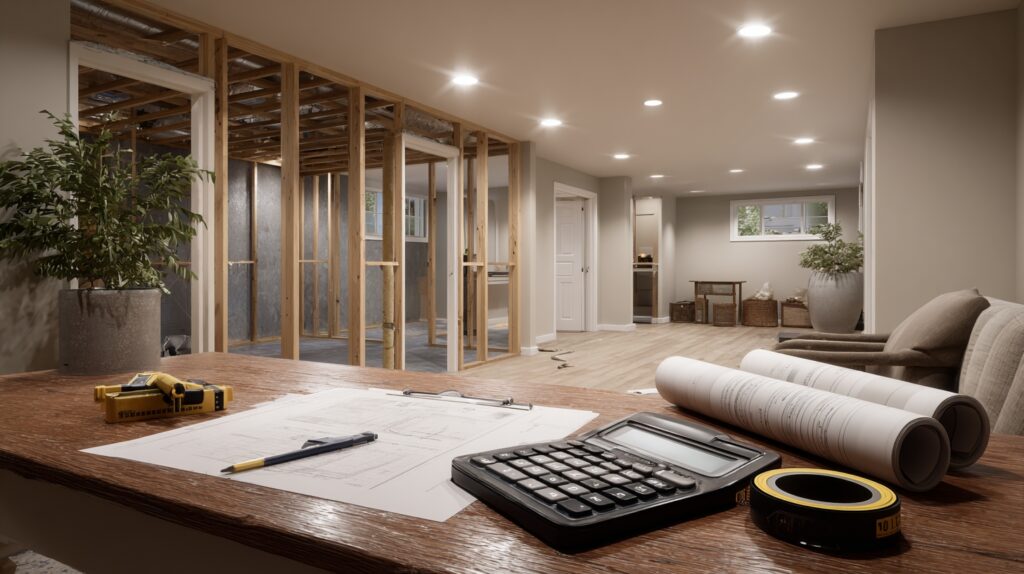
Cellar renovation cost usually depends on six things more than anything else: square footage, moisture control, framing and insulation, electrical work, plumbing, and finish level. For many homeowners, a basic planning range starts around $25 to $65 per square foot for a standard basement remodel, while broader full-remodel projects often land closer to $30 to $90 per square foot depending on condition, layout, and scope. In older homes and tighter metro markets, the real number can move higher once drainage corrections, low-ceiling workarounds, permits, or licensed trade upgrades get involved.
The important part is not the national average by itself. It is understanding why one cellar can be relatively affordable to finish while another turns into a much more expensive construction project. A dry, open, structurally sound cellar with decent ceiling height is far easier to renovate than one with moisture problems, cracked walls, uneven floors, old wiring, or a plan that includes a bathroom, laundry room, or kitchenette. That is why the most useful way to budget a cellar renovation is to separate required construction from optional upgrades before you start comparing finishes.
What to Know First
- Square footage sets the baseline, but existing conditions usually control the real budget.
- Moisture comes first. Waterproofing, drainage, and mold-related correction can change the entire scope before finish work even begins.
- Licensed trades add real cost. Electrical, plumbing, egress, and code compliance are not decorative line items.
- Bathrooms and wet areas move the price fast. A simple open rec room costs much less than a cellar with a bathroom, laundry area, or utility relocation.
- Contingency is part of the budget. In older homes, a reserve of 10% to 20% is usually prudent, not pessimistic.
- A finished cellar can still support resale. Remodeling industry guidance continues to place basement projects in a solid ROI range, often around 64% to 71% depending on market and scope.
What Drives Cellar Renovation Cost Most
Homeowners often begin with finishes because finishes are easy to imagine. Flooring samples, paint colors, lighting, and bathroom fixtures are tangible. The actual budget, however, is usually shaped earlier by conditions that are less photogenic: moisture control, ceiling height, layout difficulty, plumbing access, electrical capacity, and whether the space can legally and practically support the intended use.
That is why a good estimate should break the project into categories rather than present one broad lump sum. If waterproofing, permits, framing, insulation, electrical, plumbing, and finish materials are all mixed together without explanation, the number is harder to trust and harder to compare. A cleaner breakdown gives homeowners control, and control is what prevents budget drift halfway through the project.
Size and Layout
Square footage is still the fastest planning tool because more area means more labor, more materials, and more finishing time. A 500-square-foot cellar and a 1,000-square-foot cellar do not just differ in flooring. They differ in framing, drywall, insulation, paint, lighting, trim, and cleanup. Layout also matters. An open-plan basement is usually cheaper to build than one divided into multiple rooms with closets, soffits, extra doors, and specialty storage.
Current Condition
The condition of the existing cellar often separates a manageable remodeling budget from an expensive corrective project. A space that is dry, structurally stable, and relatively clean to access is cheaper to renovate than one with recurring leaks, deteriorated wall surfaces, old patchwork repairs, slab irregularities, or inadequate ceiling clearance. Surface problems are rarely just surface problems for long.
Moisture and Waterproofing
Waterproofing usually deserves first priority. A finished cellar only stays valuable if the space stays dry. If the project needs drainage correction, crack repair, sump improvements, vapor management, mold remediation, or foundation sealing, those expenses come before the finish package. Homeowners often underestimate this category because it does not always improve appearance immediately, but it is one of the biggest reasons basement budgets go sideways.
Electrical and Plumbing Scope
Electrical and plumbing work can move the number quickly. New circuits, panel upgrades, bathroom rough-ins, laundry hookups, wet bars, pumps, ejector systems, utility relocation, and added lighting all raise the project cost. None of this is frivolous. These are the practical items that determine whether the space works well after it is finished.
Finish Level
Finish level changes the final bill faster than many homeowners expect. Basic painted drywall, standard vinyl plank flooring, and simple recessed lighting are one thing. A media room, gym, office suite, bathroom buildout, custom shelving, premium trim, detailed tile work, or designer lighting is something else entirely. The two projects may occupy the same footprint and still live in very different budget ranges.

Typical Cost Range by Square Foot
Per-square-foot pricing is useful for early planning because it gives homeowners a realistic starting point before a contractor has opened up walls or tested every assumption. For many projects, basement remodeling starts around $25 to $65 per square foot for standard renovation work, while broader remodels commonly run closer to $30 to $90 per square foot depending on condition, finish level, and wet-area additions.
- 500 square feet: about $12,500 to $32,500 for a typical remodel before major corrective work
- 900 square feet: often around $27,000 to $81,000 for a more complete full-remodel scope
- 1,000 square feet: roughly $25,000 to $65,000 for standard remodeling, with bathrooms, drainage work, or premium finishes pushing the number higher
Those numbers are useful, but they are still only starting points. A 1,000-square-foot cellar that is dry and open can sometimes be more straightforward than a 650-square-foot one with chronic moisture, poor access, and a layout that needs substantial reworking. The tape measure matters. Existing conditions matter more.
Where the Budget Usually Goes
Most cellar renovation budgets flow into the same major buckets, even though every project distributes them differently. Labor is often the largest share, especially when licensed trades are involved. Materials come next. After that, waterproofing or corrective work can claim a substantial portion in older basements. Permits, inspections, contractor overhead, and project management round out the rest.
- Labor: often around 30% to 45%
- Materials: often around 20% to 30%
- Waterproofing / moisture control: often around 10% to 20%
- Permits and inspections: often around 2% to 5%
- Contractor fees, design, and management: often around 10% to 20%
These percentages are not fixed rules, but they help homeowners read estimates more intelligently. If a damp cellar renovation budget barely mentions moisture control, or if a bathroom plan barely mentions plumbing and inspections, that is not a bargain. It is usually an incomplete estimate wearing a friendly number.
What Adds Cost Fast
Some scope items increase the budget much faster than others. The biggest ones are wet-area additions, corrective work, structural complications, and layout changes that involve more framing, more mechanical adjustments, and more finish coordination. If your goal is simply to create a dry open living area, the project is usually easier to price and easier to control. Once the cellar starts becoming a bathroom-equipped suite, gym, office cluster, kitchenette zone, or laundry hub, the costs rise quickly.
Bathrooms
Adding a bathroom is one of the fastest ways to raise cellar renovation cost because it introduces plumbing, drainage, venting, waterproofing, tile, fixtures, inspections, and often more framing and electrical work. Bathrooms are useful and often worthwhile, but they should be treated as major scope items, not casual upgrades.
Laundry Areas and Utility Changes
A new laundry setup or utility relocation can also change the project substantially. Water lines, drains, vents, outlets, exhaust considerations, and equipment clearances all affect labor and code coordination. These additions may improve convenience dramatically, but they are never cost-neutral.
Foundation and Drainage Work
Drainage correction, sump systems, crack repair, foundation sealing, and slab issues can turn a cosmetic remodel into a corrective construction project. This is the category many homeowners least want to hear about and most need to plan for. Ignoring it usually costs more later than addressing it early.
Custom Rooms and Built-Ins
Home theaters, wine rooms, offices, gyms, storage walls, wet bars, and custom millwork make the space more tailored, but they also increase framing complexity, finish labor, electrical scope, and material cost. There is nothing wrong with them. They simply belong in the optional-upgrade section of the budget, not in the imaginary-free section.
Regional Pricing: Why NYC-Area Cellars Cost More
Regional cost differences are real, and the New York City metro typically sits near the higher end of the market. Labor rates, access limitations, parking, debris removal, permit coordination, insurance requirements, and scheduling pressure all tend to push cellar renovation costs higher than national averages suggest. That does not mean every local project is wildly overpriced. It means local reality matters more than generic internet numbers.
In the NYC area, older housing stock also changes the equation. Older homes are more likely to reveal wiring updates, plumbing revisions, drainage issues, or layout constraints once the work begins. That is one reason three bids are useful. Not because the lowest number wins, but because side-by-side estimates reveal what one contractor included and another quietly skipped.
- National averages help with orientation
- Local bids determine the real budget
- Older homes usually need stronger contingency planning
- Access and permit friction often matter more in metro markets than homeowners expect
How to Budget the Project Without Lying to Yourself
The cleanest cellar budgets usually start with a simple split: what the space must have to become dry, code-conscious, safe, and usable, and what the homeowner wants for comfort, storage, style, or resale appeal. That structure keeps the project from drifting into expensive wish-list territory before the construction essentials are solved.
Step 1: Price Required Construction
Start with moisture control, structural correction, framing, insulation, legal egress issues, electrical basics, and plumbing infrastructure if needed. This is the part of the budget that makes the cellar work as a real space rather than a decorative experiment.
Step 2: Price the Core Finish Build
Then price drywall, ceilings, lighting, flooring, trim, paint, and basic room layout. This is where the cellar starts to feel like finished living area instead of a construction zone.
Step 3: Add Optional Upgrades
Only after the first two categories are clear should you price bathrooms, custom cabinetry, built-ins, media walls, bars, upgraded lighting packages, specialty tile, or premium materials. That keeps homeowners from overspending on visible luxuries while underfunding the structural or moisture-related work that determines whether the finished space lasts.
Step 4: Set a Contingency
For older homes, a 10% to 20% contingency is usually realistic. It is not a sign that the contractor is vague. It is recognition that once work opens up walls, floors, drains, or electrical runs, surprises become much more likely.
How to Compare Contractor Estimates Properly
One of the easiest ways to lose money on a cellar renovation is to compare estimates that describe different scopes. A lower bid may simply omit permits, moisture correction, disposal, electrical upgrades, or finish details. A higher bid may be more complete, not more inflated.
When reading proposals, look for separate sections or clear line items for demolition, waterproofing, framing, insulation, drywall, electrical, plumbing, flooring, trim, paint, permits, and cleanup. Ask whether the estimate assumes existing walls and floors are ready to finish or whether hidden corrections are excluded. Ask what happens if drainage, slab conditions, or wiring need revision after demolition begins.
Also pay attention to exclusions. What the estimate leaves out often matters as much as what it includes. If there is no mention of moisture control in a damp cellar, that is not an omission to admire.
Can a Cellar Renovation Increase Home Value?
Yes, a well-executed cellar renovation can increase home value, especially when it creates flexible, usable space that buyers can understand immediately. A finished cellar can become a family room, office, gym, guest area, playroom, or a combination of storage, laundry, and bonus living space. In housing markets where every functional square foot matters, that flexibility can carry real appeal.
Return on investment still depends on quality, legality, layout, and local demand. Remodeling guidance often places basement projects in the neighborhood of 64% to 71% ROI, though not every project performs the same way. A dry, well-lit, durable space with a practical layout generally supports value better than a damp, overdesigned, or poorly permitted one.
- Best value drivers: dry space, practical layout, good lighting, durable flooring, useful storage, and a bathroom where it makes sense
- Common value killers: moisture smell, awkward room planning, cheap finishes, poor ceiling execution, and unpermitted work
If resale is part of your thinking, versatility usually wins. A cellar that can serve several purposes tends to age better than one built around a highly narrow idea that only one future buyer may love.
Common Mistakes That Make Cellar Renovations More Expensive
- Finishing before solving moisture issues
- Comparing estimates with different scopes and assuming the cheapest is the best
- Skipping contingency planning in an older home
- Adding bathrooms or wet features too casually
- Using low-grade materials in a space with higher moisture risk
- Ignoring permits, inspections, ceiling constraints, or egress needs
- Over-designing optional features before the core construction budget is stable
Most budget overruns do not come from one dramatic disaster. They come from hidden conditions, missing scope, and overconfidence. A disciplined plan is usually cheaper than a hopeful one.
Frequently Asked Questions
What is the typical cellar renovation cost for homeowners?
Many standard cellar remodels start around $25 to $65 per square foot, while broader full-remodel projects often run around $30 to $90 per square foot depending on condition, trade work, and finish level.
Why do cellar renovation budgets vary so much?
Because size is only one factor. Moisture issues, drainage, layout changes, electrical work, plumbing, ceiling height, finish level, and code-related requirements can all shift the final number significantly.
What usually costs the most in a cellar renovation?
Labor is often the largest category, especially once licensed trades are involved. Waterproofing, electrical work, plumbing, framing, drywall, and bathroom additions can all add substantial cost.
Does waterproofing need to be part of the budget?
Yes. If the cellar has moisture, drainage, or leakage issues, waterproofing should be addressed before finish work begins. Skipping that step often leads to damage and more expensive repairs later.
Can a cellar renovation add value to a home?
It can. A well-executed cellar renovation can add usable living space and support resale appeal, especially when the finished area is dry, versatile, and built with practical quality.
How can homeowners control costs without cutting the wrong corners?
Separate required construction from optional upgrades, compare itemized bids, prioritize moisture control and code compliance, and keep a 10% to 20% contingency for hidden conditions.
Bottom Line
Understanding cellar renovation cost starts with the right order of thinking. Begin with size and condition, then price moisture control, framing, insulation, electrical, plumbing, flooring, and finish level in that order. Treat waterproofing and code-related work as core construction, not annoying extras.
Homeowners usually make better decisions when they split the budget into required work and optional upgrades, compare detailed estimates instead of headline numbers, and keep a real contingency fund. That approach protects the budget and gives the finished cellar a much better chance of staying dry, usable, and valuable over time.