
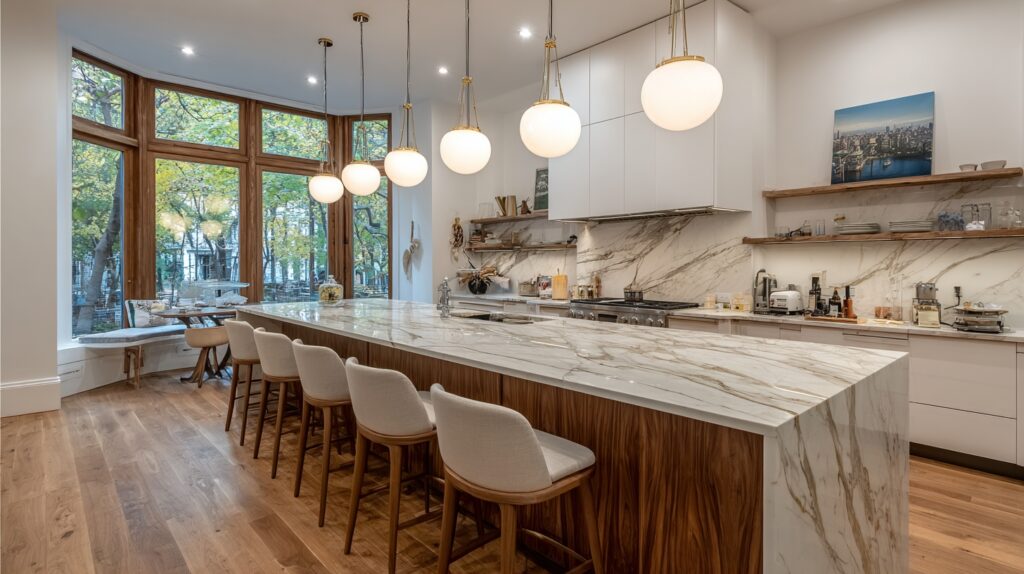
You know how a “simple” remodel turns complicated the moment you try to price it in New York, that is exactly why I wrote Full Renovation House Costs And Tips For Your Project for NYC-area homeowners who want clear numbers and a cleaner plan.
In NYC, the same square footage can cost wildly different amounts depending on building rules, permit scope, access, and how much you change behind the walls.
I’m Alex Fedin, a licensed General Contractor and the founder of HomeRenovation4U, and I’ve seen projects stay on budget when homeowners lock scope early, price the big-ticket items first, and keep a realistic contingency ready.
Below, I’ll break down renovation costs by project type and room, show you how to budget and finance wisely, then share practical planning and contractor selection tips to avoid the most common NYC mistakes.
Key Points
- In the NYC metro, cosmetic updates often pencil out around $150–$250 per sq ft, full renovations around $250–$450 per sq ft, and high-end gut renovations often start around $500+ per sq ft depending on building type and finishes.
- For budgeting, keep a 10–20% contingency for most projects, and push closer to 20–25% for older buildings, prewar systems, or any scope that opens walls.
- For resale planning, the 2025 Cost vs. Value Report shows national averages where “unsexy” exterior upgrades can outperform big interior remodels, garage door replacement is listed at 268% cost recouped, and a midrange bath remodel is listed at 80%.
- Permit timing can be the hidden schedule killer, a New York City Comptroller audit reported that, in Q1 2024, major alteration approvals for 1- and 2-family properties averaged 124 business days from initial submission to final approval citywide.
- Financing basics: cash-out refinance closing costs often run about 2%–6% of the loan amount, and HELOCs commonly come with a draw period that can be around 10 years, which fits phased renovation planning.
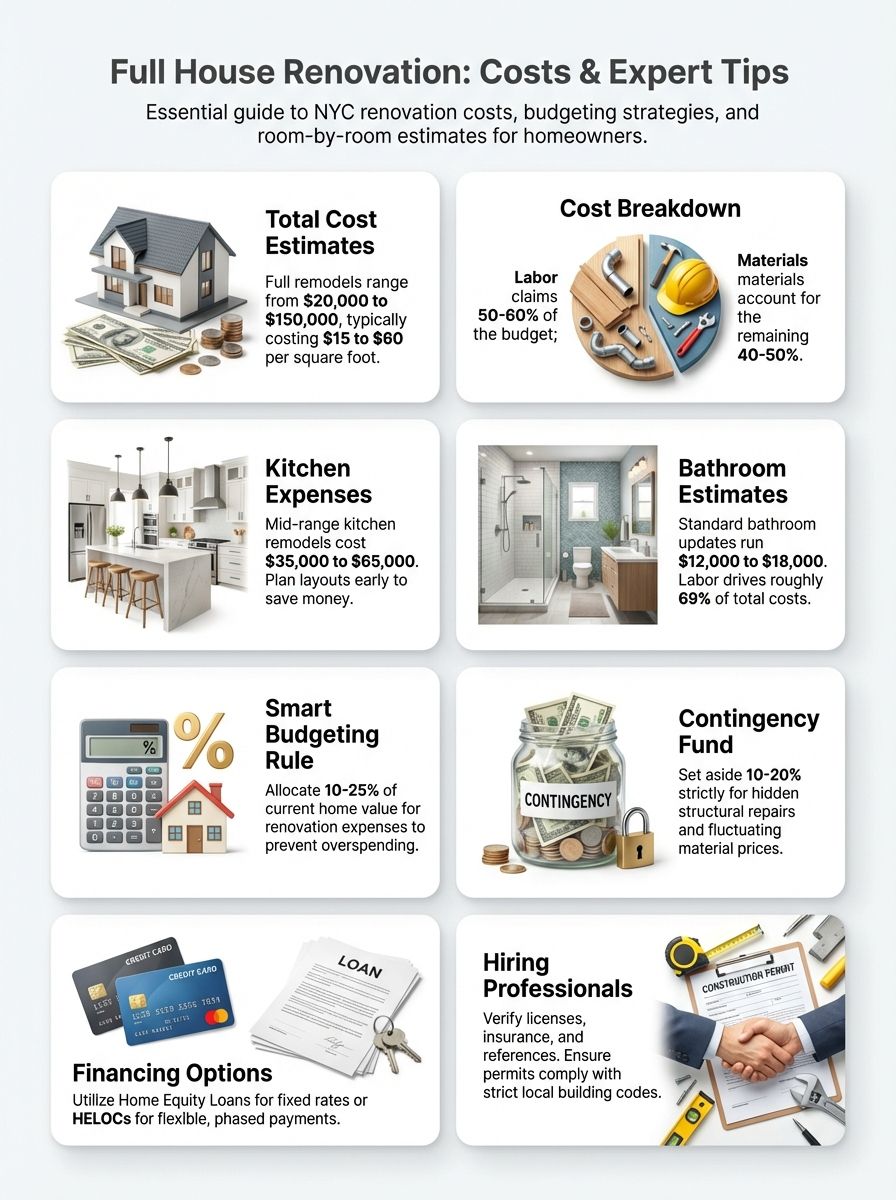
Full Renovation House Costs And Tips For Your Project: Understanding Full Renovation Costs
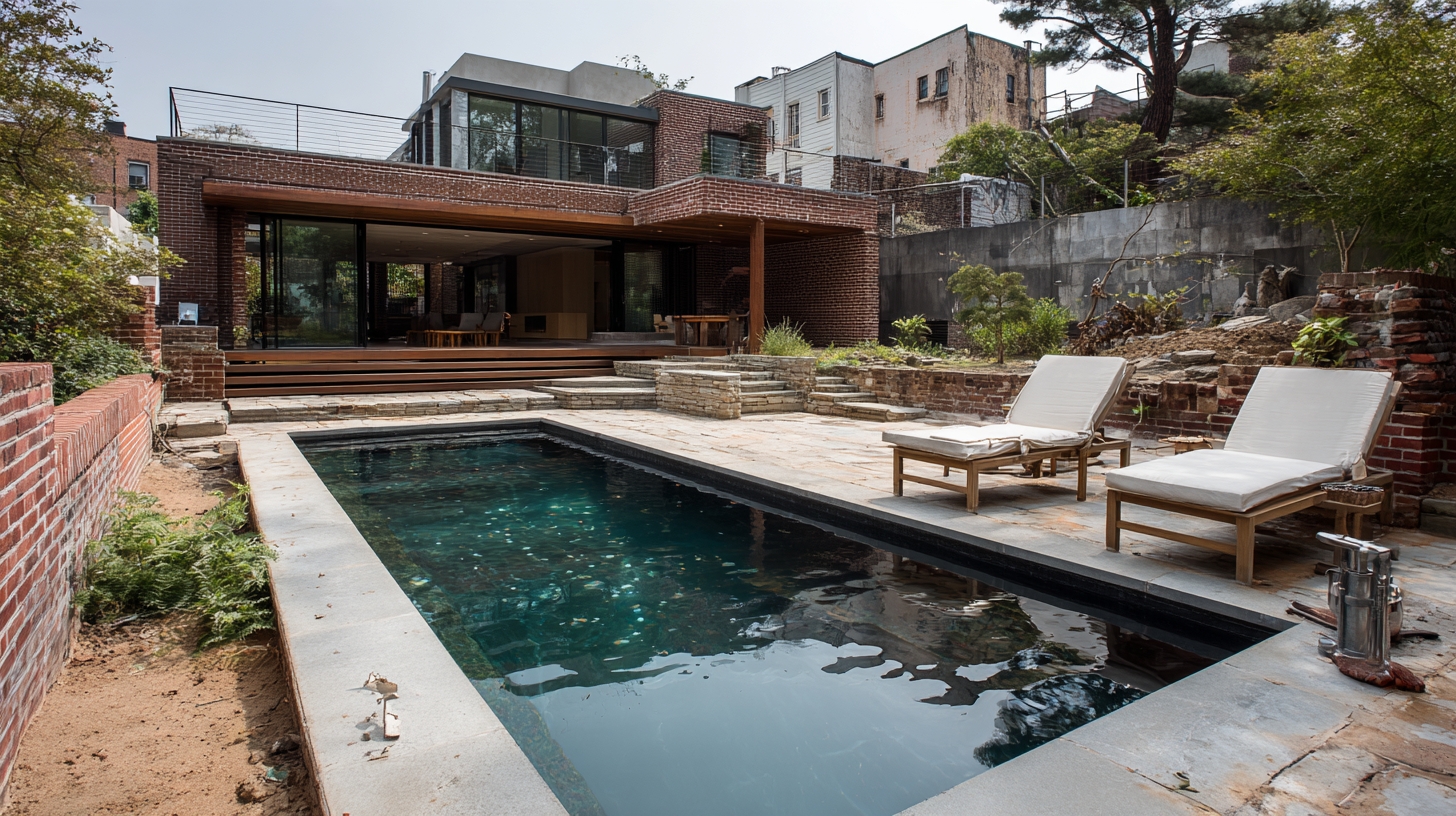
Understanding full renovation costs starts with one honest question: are you updating finishes, or are you rebuilding systems?
In NYC, “full renovation” can mean anything from a clean pull-and-replace to a gut renovation with new plumbing, electrical, HVAC, and layout changes.
Watch a short video overview of what a full renovation can include
What Are the Main Factors Affecting Renovation Costs?
The biggest cost drivers are scope, labor intensity, building requirements, and how many trades you need on-site at the same time.
Here are the factors that change pricing the fastest in the NYC metro area.
- Scope level (cosmetic vs. full vs. gut): A “paint and floors” plan is in a totally different cost category than moving plumbing, changing gas lines, or upgrading electrical capacity.
- Building rules and access: Freight elevator reservations, protection requirements for common areas, debris handling, and limited work hours can raise labor time even when the design looks simple.
- Permits and filings: Fees depend on job type and reported job cost. NYC DOB NOW guidance also makes it clear that certain actions can trigger fixed fees, for example, permit renewals and some requests use a $130 fee (per NYC DOB NOW: Build FAQs).
- Landmarks review (when applicable): If you are in a historic district, Landmarks fees can apply alongside DOB requirements, and the Landmarks Preservation Commission lists a fee structure that starts with $95 for the first $25,000 of work and scales with project cost.
- Material volatility: If you are buying steel-heavy items (lintels, structural components, some framing connectors), keep a pricing cushion. BLS PPI reporting for December 2025 showed steel mill products up 6.8% that month, which is why early specification helps prevent mid-project sticker shock.
Pro rule: price the “hard to change later” items first (layout, plumbing locations, electrical plan), then pick finishes. That order keeps change orders from eating your budget.
How Do Renovation Costs Vary by Region?
Even within the U.S., renovation costs swing based on labor markets, permitting, and logistics. The fastest way to stay realistic is to compare like-for-like scope.
| Market (U.S.) | What tends to drive the difference |
|---|---|
| NYC Metropolitan Area |
|
| Other high-cost coastal metros |
|
| Midsize and lower-cost areas |
|
Use regional comparisons to sanity-check quotes, but make your decisions based on building type and scope, not just zip code averages.
How Do Material Costs Compare to Labor Costs?
In NYC renovations, labor is usually the dominant cost because so much work is hands-on and sequence-dependent.
Use the table below as a practical planning tool, it helps you choose where to spend (and where to simplify) without hurting the final result.
| Cost Category | What it typically includes | What you can do to control it |
|---|---|---|
| Labor |
|
|
| Materials and finishes |
|
|
| Soft costs |
|
|
| Permits, fees, compliance |
|
|
Average Costs Across Common Renovation Projects
NYC pricing depends on your building and how deep you go, but you can still plan intelligently by starting with realistic ranges and then tightening them with bids.
See a video breakdown of common renovation scopes and what changes pricing
How Much Does a Kitchen Renovation Typically Cost?
In NYC, kitchens get expensive fast because they combine plumbing, electrical, ventilation, cabinets, and finishes in a small footprint.
If you want a budget that holds up in the real world, price these categories first: cabinetry and installation, countertop and templating, and the appliance package.
| Kitchen line item | Typical NYC planning range | Why it matters |
|---|---|---|
| Cabinets (semi-custom to custom) | $800–$1,200+ per linear foot (semi-custom is often the entry point in many NYC projects) | Cabinet lead times and fit details can drive both schedule and change orders. |
| Countertops (installed) | Granite often lands around $75–$130 per sq ft installed, quartz often around $90–$160 per sq ft installed | Templating, seams, and edge profiles change price, and they affect how the kitchen wears over time. |
| High-end appliance packages | $20,000–$45,000 for premium packages (varies by integration and paneling) | Integration details (panels, electrical loads, ventilation) can add hidden labor. |
Plan the layout first. If the sink, range, and major walls stay put, you usually keep both permits and labor more manageable.
If resale is part of your plan, keep the scope “midrange” and focus on function, the 2025 Cost vs. Value Report lists a midrange minor kitchen remodel at 113% cost recouped nationally, while larger “major” kitchens recoup less on average.
What Are the Average Costs for Bathroom Renovations?
Bathrooms swing widely in price because waterproofing, tile labor, and plumbing access can be simple in one building and brutal in another.
A practical way to budget is to pick your “non-negotiables” first, then build the rest around durable, easy-to-service choices.
- Budget refresh: keep plumbing locations, replace vanity, toilet, lighting, mirror, and refinish surfaces where possible.
- Mid-scope remodel: new tile, new fixtures, better ventilation, upgraded electrical, and a cleaner layout.
- Full gut: open walls, update supply and waste lines, rebuild waterproofing, and re-tile completely.
For ROI context, the 2025 Cost vs. Value Report lists a midrange bath remodel at a national average job cost of $26,138 with 80% cost recouped. Use that as a reality check, then decide how much “NYC premium” your building adds.
How Much Should You Expect to Spend on Bedroom Renovations?
Bedrooms are usually “dry space” projects, which means they are one of the best places to control costs without sacrificing comfort.
National cost guides often place a bedroom remodel in the $1,500–$5,500 range for basic work, which tracks well for NYC when you are not moving walls and you are keeping the scope focused.
- High-impact upgrades: new lighting plan, closet interiors, fresh paint, updated trim, and flooring.
- NYC-specific win: add sound control where it counts, solid-core doors, better seals, and underlayment under floors in multi-unit buildings.
What Is the Cost to Finish a Basement?
Basements are where homeowners lose money when they rush. Moisture management, headroom, and egress planning need to come before finishes.
As a pricing reference point, the 2025 Cost vs. Value Report lists a national average basement remodel at $52,012 with 71% cost recouped.
- Budget first for moisture: drainage fixes, dehumidification planning, and any waterproofing work, then frame and finish.
- Plan for systems: electrical capacity, heating, and ventilation are often the hidden drivers in basement usability.
- Storage is not an afterthought: built-in cabinetry and zones keep the space usable, especially in NYC rowhouses where every square foot earns its keep.
How Much Does Exterior Renovation Usually Cost?
Exterior work can shift your budget quickly because it is exposed to weather, often requires staging, and usually has fewer “small fixes” once you open things up.
For roofing, Angi’s 2026 data lists an average roof replacement cost of about $9,529 with a typical range of $5,869–$13,221, and they also note many projects price out around $4–$11 per sq ft depending on roof details.
| Exterior project | Planning numbers you can use | How to keep it under control |
|---|---|---|
| Fiber cement siding | Angi lists a typical installation range of $7–$18 per sq ft, with many projects totaling $6,594–$23,190 | Budget for sheathing repairs and flashing, that is where “simple siding” becomes a larger job. |
| Vinyl siding | Angi lists vinyl siding costs that can run $2–$12 per sq ft depending on grade, and points out New York is often higher than lower-cost markets | Choose thicker profiles where impact is a risk, and make sure trim and water management details are in the scope. |
| Composite decking | Angi’s 2025 data lists composite decking at $15–$32 per sq ft, and a typical total range of $5,400–$11,500 | Decide early on railings and stairs, those items swing pricing more than most homeowners expect. |
Budget Planning for Your Renovation
A NYC renovation budget needs to be more than a number. It needs a structure: allowances, contingency, and a plan for approvals.
Watch a budgeting walkthrough you can use to sanity-check your plan
How Do You Set a Realistic Renovation Budget?
Start by deciding what you are actually buying: better function, better finishes, or new systems. Each has a different cost curve.
- Define the scope in plain English: list what stays, what moves, and what gets replaced, especially plumbing and electrical locations.
- Use a “per square foot” range only as a first pass: in NYC, fixed costs (permits, protection, mobilization) can keep small projects expensive.
- Price the big items first: cabinets, countertops, tile, fixtures, and the appliance package, then build labor and timeline around those selections.
- Set an allowance strategy: if you have not chosen tile or fixtures, assign realistic allowances so bids stay comparable.
- Reserve contingency money: 10–20% for most jobs, and closer to 20–25% for older buildings or gut work.
- Compare bids apples-to-apples: require line items for labor, materials, permits, protection, disposal, and supervision.
Why Is a Contingency Fund Important for Renovations?
In NYC, the biggest surprises are behind walls, and delays are often paperwork-driven, not construction-driven.
So your contingency needs to cover both: hidden conditions and time.
- Hidden conditions: old plumbing, tired wiring, structural repairs, and water damage that only shows up after demo.
- Timing risk: approvals, objections, and inspection windows that push labor into longer sequences.
For context on timing, a New York City Comptroller audit reported an average of 124 business days in Q1 2024 from initial submission to final approval for major alterations for 1- and 2-family properties citywide. That is why clean filings and early planning matter.
What Are Common Hidden Costs in Renovation Projects?
Hidden costs are rarely “random.” Most fall into a few predictable buckets you can plan for.
- Structural repairs: framing, joist work, or leveling issues uncovered during demolition.
- Electrical upgrades: panel changes, new circuits for modern loads, and required safety upgrades.
- Plumbing reroutes: old pipe replacement, venting corrections, and fixture relocations.
- Lead-safe requirements in pre-1978 homes: the EPA’s Renovation, Repair and Painting program requires lead-safe certified firms for paid work that disturbs painted surfaces in pre-1978 housing, which can change how demo, prep, and cleanup are priced.
- Building protection and logistics: floor protection, elevator pads, debris staging, and stricter cleanup rules in multi-unit buildings.
- Design and engineering: drawings, sign-offs, and revisions when DOB objections require updates.
- Temporary living costs: storage, dining out, or short-term housing when a kitchen or bath is offline longer than planned.
Options for Financing Your Renovation
The right financing choice depends on one thing: do you need a fixed lump sum, or flexible access as the project unfolds?
How Can Home Equity Loans Help Finance Renovations?
Home equity loans can be a fit when you have a defined scope and want predictable payments. You receive a lump sum, then repay on a fixed schedule.
- Best for: one-time scopes like a kitchen pull-and-replace, exterior siding, or a planned bathroom gut.
- Budget advantage: fixed payments make it easier to match a payment plan to contractor milestones.
- NYC reality check: even a “simple” project can turn into a bigger scope once walls open, so keep a separate contingency even if your loan is fixed.
What Are the Benefits of Cash-Out Refinancing?
Cash-out refinancing can work when you want one mortgage payment and you have enough equity to pull cash for construction.
Closing costs are a real factor, many lenders and consumer guides put cash-out refinance closing costs around 2%–6% of the loan amount, so you should run the math before you commit.
- Good fit: larger projects where the savings from one consolidated payment outweigh the upfront closing costs.
- Watch-outs: a longer term can lower your monthly payment while increasing total interest paid over time.
How Does a HELOC Provide Flexibility for Renovation Funding?
A HELOC is usually the most flexible option for phased renovations because you draw funds as invoices arrive.
Many HELOCs include a draw period that is commonly around 10 years, which can match a multi-stage renovation plan (per Bankrate’s HELOC guidance).
- Best for: staged work like basement first, then kitchen, then bathrooms.
- Budget advantage: you pay interest only on what you draw, not the full line.
- Risk to plan for: rates are often variable, so build room in your budget for payment changes.
Strategies for a Successful Renovation
Successful renovations are simple on paper: clear scope, clean paperwork, steady decisions, and disciplined change control.
In practice, the homeowners who win in NYC are the ones who plan approvals and logistics with the same care as finishes.
How Do You Choose Reliable Renovation Professionals?
You do not need a long checklist. You need the right checklist.
- Confirm licensing for the work type: NYC notes that Home Improvement Contractor Licenses are issued by the Department of Consumer and Worker Protection, and many residential improvements require that license, so ask for proof before you sign anything.
- Verify insurance and your building’s requirements: in co-ops and condos, ask for the exact Certificate of Insurance wording your building requires.
- Demand a line-item scope: materials, labor, permits, protection, disposal, and who is responsible for filings and inspections.
- Ask how change orders work: who prices them, how fast, and what stops work while waiting for approvals.
- Look for building-specific experience: townhouses, brownstones, co-ops, and condos all behave differently once the job starts.
What Are Effective Planning and Design Tips?
Good planning reduces cost because it reduces rework. In NYC, that is the whole game.
- Write a one-page scope summary: what stays, what moves, and what gets replaced, room by room.
- Build a “long-lead” list: cabinets, specialty tile, custom glass, and any made-to-order doors, then order early.
- Keep a selections deadline: if you miss it, you accept schedule impact or you choose an in-stock backup.
- Plan protection and logistics: where materials land, where debris exits, and how you protect floors and common areas.
- Do a weekly budget check: track allowances, change orders, and paid invoices, and update your remaining contingency.
How Do You Select Durable Materials?
Durable materials are not about luxury. They are about fewer repairs, easier cleaning, and better long-term value.
| Where | What usually performs well in NYC homes | Why it helps |
|---|---|---|
| Kitchens | Quartz or well-sealed stone countertops, quality cabinet hardware, resilient flooring | Less staining and fewer service calls, especially in high-use apartments. |
| Bathrooms | Porcelain tile, quality waterproofing system, easy-to-service fixtures | Bathrooms fail at waterproofing first, not aesthetics. |
| Entry points | Solid doors, good weatherstripping, durable thresholds | Comfort improves, and exterior-facing items tend to show ROI better than luxury finishes. |
Always view samples in your actual lighting, morning and night, then make the final call.
How Can You Improve Storage and Layout During Renovations?
NYC renovations are won or lost on daily function. Storage and circulation matter more than people expect.
- Use “dead” wall space: shallow built-ins in halls, banquettes with storage, and tall pantry cabinets can outperform adding square footage.
- Clean up the kitchen work triangle: even without moving plumbing, a smarter cabinet plan can cut daily friction.
- Design closets as systems: drawers, shelves, double-hang sections, and a real place for vacuums and mops.
- Plan for building constraints: if you cannot open a wall, improve flow with wider openings, better door swings, and better lighting.
How Do You Incorporate Modern Technology in Renovations?
Modern upgrades work best when they reduce bills, reduce chores, or prevent damage.
- Smart thermostats and zoning: tighter control can improve comfort in drafty prewar layouts.
- Leak detection: simple sensors under sinks and behind toilets can prevent expensive water damage in multi-unit buildings.
- LED lighting plan: better light, lower heat, lower energy use.
- Electrical capacity planning: if you want induction cooking or more HVAC capacity, plan circuits early so the walls only open once.
If you live in a larger building, keep an eye on building-wide energy decisions too, NYC DOB guidance around Local Law 97 compliance has pushed many buildings to prioritize energy upgrades, which can influence what your co-op or condo board will approve.
Common Renovation Pitfalls to Avoid
Most NYC renovation blowups come from three things: loose scope, weak paperwork, or late decisions.
Fix those early, and your odds improve fast.
How Can You Avoid Underestimating Your Budget?
Underestimation usually comes from pricing finishes without pricing the work behind them.
- Stop using “best case” pricing: build your budget from a realistic scope, then add a real contingency.
- Price the messy parts: demolition, protection, disposal, and the labor required to work inside an occupied building.
- Track allowances weekly: if you upgrade tile or fixtures, you must adjust the budget the same week.
One practical test: if your plan includes moving plumbing, changing electrical service, or removing walls, you are no longer in “minor remodel” territory, budget accordingly.
Why Are Permits and Inspections Important?
Permits and inspections protect you from redoing work later, and they protect resale and insurance claims.
They also protect your schedule, because if DOB stops a job for missing paperwork, the lost time costs real money.
- Plan for permit costs as a line item: do not hide them inside finishes.
- Expect paperwork time: the fastest projects are the ones with complete filings and fast responses to objections.
- Know how permits can expire: NYC DOB NOW explains permits can expire based on insurance, license status, or one year from issuance, so keeping paperwork current prevents avoidable renewals and fees.
How Should You Consider Long-Term Value in Renovations?
Long-term value means two different things: resale value, and living value.
If you plan to sell soon, lean toward the projects that repeatedly perform well on recoup, the 2025 Cost vs. Value Report lists garage door replacement at 268%, steel entry door replacement at 216%, and fiber-cement siding replacement at 114% cost recouped nationally.
If you plan to stay, prioritize comfort and durability first: moisture control, electrical capacity, ventilation, and finishes that are easy to maintain.
Conclusion
Full Renovation House Costs And Tips For Your Project is meant to give NYC homeowners a clearer way to price work, plan scope, and avoid the surprises that derail budgets.
Set a realistic budget, keep a contingency, and push decisions earlier than you think you need to.
Hire licensed, insured pros who understand NYC approvals and building rules, and you will get a smoother build and a better finish that holds up.
FAQs
1. What factors affect full renovation house costs?
Full renovation house costs depend on the project scope, the quality of materials, labor rates, permits, and design fees, all of which add up. Hidden issues, like structural damage or old systems, raise unexpected costs, and extend the timeline. Include a contingency in your budget, to cover surprises.
2. How much should I budget for a full renovation project?
Plan a clear budget that covers materials, labor, permits, design fees, and a 10 to 20 percent contingency for unexpected costs.
3. How do I find reliable contractors and manage the timeline?
Get at least three written quotes, check licenses, and review past work to vet contractors. Allow extra time for permits and inspections, set milestone dates, and update the schedule when delays occur.
4. What tips cut costs but keep resale value high?
Prioritize core upgrades, like structure, efficient systems, and durable finishes, these give the best return on investment. Use market research to match finishes to buyer demand, and keep major layout choices intact when possible.