

You know how one HVAC decision can change everything, comfort, air quality, even whether a renovation passes inspection. Hiring the right hvac contractor is what keeps a small problem from turning into a long, expensive mess.
I’m Alex Fedin, a licensed General Contractor in New York City. I’ve led residential and commercial renovation projects since 2000, and HVAC work is one of the biggest make-or-break trades on any job.
In NYC homes, tight mechanical spaces, building rules, and permits raise the stakes. That is why searching “hvac contractors near me” can feel overwhelming.
Below, you’ll get a clear plan: what HVAC contractors do, which systems fit common NYC housing, when to call, and how to vet certified hvac contractors and hvac contractor insurance before you sign anything.
Key Highlights
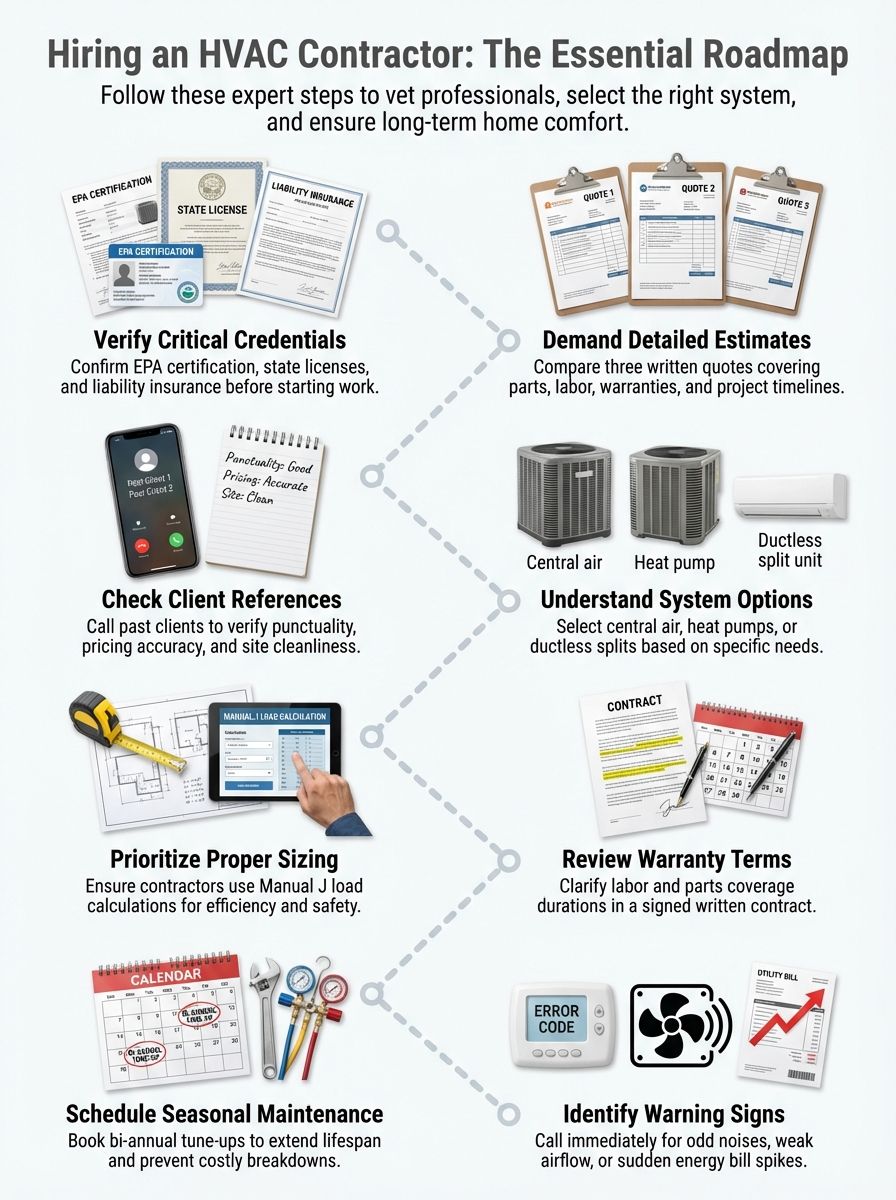
- Get proof, not promises: verify EPA Section 608 credentials for refrigerant work, ask about NATE or manufacturer training, and request liability and workers’ comp certificates before a crew starts.
- Size beats brand: insist on a written load calculation (Manual J) and equipment selection logic (Manual S) so you do not end up with short-cycling, humidity issues, or noisy airflow.
- Plan for age and payback: ENERGY STAR flags air conditioners and heat pumps over 10 years old, and furnaces or boilers over 15 years old, as strong “replace soon” candidates, and notes that correctly installed high-efficiency equipment can save up to 20% on heating and cooling.
- In NYC, permits can decide the schedule: for boiler-related work, expect trade licensing and permitting steps, plus inspections, to drive your timeline more than the physical install.
- Compare estimates like a pro: request at least three written estimates that list model numbers, efficiency ratings (SEER2, HSPF2), refrigerant type, permit responsibilities, warranties, and emergency service terms.
What Does an HVAC Contractor Do?
An HVAC contractor designs, installs, maintains, and repairs heating and cooling systems for homes and small commercial spaces. In the NYC metro area, the best contractors also help you avoid surprises by planning for access, noise, condensate drainage, and required inspections.
If you are comparing hvac contractors near me, focus on the parts of the job that protect you long after the crew leaves. That means design math, documented testing, and clear paperwork.
Watch a quick overview of what HVAC contractors handle (video)
Here is the practical scope you should expect from professional hvac contractors on a NYC home project:
- Design and sizing: load calculations, equipment selection, and airflow planning so the system matches your apartment or house, not a rule of thumb.
- Installation and commissioning: startup checks and measurement-based adjustments (temperature split, refrigerant charge verification, airflow, static pressure).
- Maintenance and service: seasonal tune-ups, filter strategy, coil and drain care, and early problem detection.
- Repairs and parts: diagnostics, safe component replacement, and refrigerant-compliant work practices.
- Compliance and coordination: permits, inspections, and building requirements when the work touches regulated systems like boilers or fuel-burning equipment.
A strong “authority signal” many homeowners miss is third-party verification. ACCA’s Quality Installation (QI) certificates can verify equipment operation, and the higher level certificate verifies whole-system performance, including ductwork. If a contractor offers this, it usually means they measure and document the install instead of guessing.
How Do HVAC Contractors Install Systems?
On renovation projects, I treat HVAC installation like any other critical trade. You want the design choices in writing, and you want the final performance verified before the last payment.
- They size the system using load calculations: ask to see the room-by-room report, not just a total number. I use Manual J methods as the baseline, then confirm the assumptions match your real conditions (insulation, windows, orientation, occupancy).
- They pick equipment using the load results: Manual S is the companion to Manual J, it sets realistic sizing limits and selection rules. Tell the contractor you want the chosen model justified against the load report, not upsized “to be safe.”
- They plan ducts and airflow or zone placement: in ducted systems, design choices control noise and comfort. In ductless systems, placement controls drafts, condensation risk, and whether bedrooms actually hold temperature at night.
- They wire, pipe, and protect the home: you should see clean routing, correct electrical protection, properly pitched condensate drains, and safe clearances around equipment.
- They coordinate permits and inspections when required: for boiler and certain fuel-related work, NYC Department of Buildings rules require licensed trades and permitting steps, and that can drive your schedule.
- They document commissioning: ask for startup readings and a final checklist. If a contractor can issue an ACCA Quality Installation certificate, that is even better, it means performance was verified and recorded.
- They lock it down with paperwork: the written estimate and signed contract should list scope, model numbers, permit responsibilities, start and completion dates, payment schedule, and warranty terms.
How Do HVAC Contractors Maintain and Service Units?

Maintenance is where you save money and avoid emergency calls. It also protects manufacturer warranties, which often assume routine service.
ENERGY STAR recommends pre-season check-ups and points out contractors get busy once summer and winter demand hits. In NYC, that timing matters, because access and scheduling can add days to a simple service visit.
- Seasonal check-ups: plan one visit before cooling season and one before heating season. A good tech will check thermostat operation, electrical connections, condensate drainage, and moving parts.
- Filter strategy that fits your system: check your filter monthly and change it if it is dirty. ENERGY STAR advises changing it at least every three months.
- Indoor air quality without choking airflow: EPA notes that MERV 13 filters can improve particle capture, but you should use the highest rating your system can handle without restricting airflow, and make sure the filter fits snugly so air does not bypass it.
- Coil and drain care: clogged drains and dirty coils are common causes of water damage and poor cooling in NYC apartments.
- Combustion safety (if you have gas or oil heat): ask for combustion testing and a safety control check during the heating visit.
- Recordkeeping: keep a simple maintenance log with dates, filters used, and any readings noted, it helps with warranty claims and future estimates.
How Do HVAC Contractors Repair HVAC Problems?
Repairs should start with diagnosis, not parts swapping. The fastest way to waste money is approving a repair without understanding the failure mode.
- They document symptoms and readings: error codes, temperature split, refrigerant pressures (when applicable), electrical measurements, and airflow indicators guide the repair plan.
- They fix airflow first: a clogged filter, blocked return, collapsed duct, or dirty coil can look like a major equipment failure. I always push to confirm airflow before signing off on compressors or control boards.
- They treat refrigerant work as regulated work: refrigerant handling requires EPA Section 608 certified technicians, and a pro should be able to explain what refrigerant is in your system and how it is recovered and documented.
- They repair safely in occupied buildings: proper lockout and protection of finishes matters more in NYC apartments and brownstones, where mechanical spaces are tight and water damage travels fast.
- They propose a repair-versus-replace decision: the estimate should show parts, labor, and what failure risk remains after the repair.
If you feel pressure to approve a big repair immediately, pause and request a written diagnosis summary. A trustworthy hvac contractor near me can explain the failure in plain language.
When Do HVAC Contractors Upgrade or Consult on Systems?
Upgrades make sense when the system no longer matches the home, which is common after renovations. New windows, new insulation, finished basements, and open-plan layouts all change heating and cooling loads.
ENERGY STAR highlights a practical age rule: air conditioners and heat pumps over 10 years old, and furnaces or boilers over 15 years old, are strong candidates to replace, especially if repairs are frequent. It also notes that correctly installed high-efficiency equipment can cut heating and cooling costs by up to 20%.
In NYC, upgrades also tie into building requirements. If your project touches a boiler, you may need licensed trades and permit steps, and you should plan for inspections as part of the schedule.
Upgrades work best when the contractor proves the design with a load calculation and proves the install with real measurements.
If you are weighing options, ask for a short “decision memo” from the contractor: what you have now, what is failing, what the upgrade fixes, and what it costs to operate over time.
Types of HVAC Systems to Know
NYC homes are a mix: brownstones with boilers, prewar apartments with radiators, condos with forced air, and renovated spaces with ductless zones. Understanding your options helps you compare hvac contractors near me with confidence.
See common home HVAC system types explained (video)
| System type | Best fit in the NYC metro area | What to ask the contractor |
|---|---|---|
| Central air (ducted) | Homes with existing ductwork or space to build it | Show Manual J results, duct plan, and commissioning readings |
| Heat pump (ducted or ductless) | Homes aiming to lower fossil fuel use, or needing both heating and cooling | How will it heat on cold days, and what is the backup plan (if any)? |
| Ductless mini-split | Apartments, renovations, and homes without ducts | Indoor unit placement plan, condensate handling, and noise control |
| Furnace or boiler | Many NYC buildings with established fuel-based heating infrastructure | Combustion testing, venting, permits, and inspection responsibilities |
How Does Central Air Conditioning Work?
Central AC moves heat out of your home using an outdoor condenser and an indoor coil, then distributes cooled air through ducts. The thermostat controls when the system runs, and the duct design controls whether each room actually feels comfortable.
When you compare systems, look for SEER2 ratings (the newer efficiency metric). For the Northeast, DOE minimum efficiency requirements for split-system AC align with 13.4 SEER2. In practice, you still want a contractor to explain what efficiency level they are proposing and why it fits your budget and payback goals.
Action step: ask the contractor to include three numbers in the estimate, the target airflow, the expected temperature split, and the total external static pressure limit they are designing around. This forces a real design conversation.
What Are the Benefits of Heat Pumps?
Heat pumps give you heating and cooling in one system. For many NYC homeowners, the biggest win is comfort plus simpler equipment, especially in renovations where you want to reclaim space.
Rebates and incentives are also part of the decision. NYS Clean Heat lists statewide incentives that vary by utility, and it notes average incentives of about $7,000 to $9,000 for geothermal heat pumps and about $700 to $1,000 for heat pump water heaters.
One more timing note: the federal Energy Efficient Home Improvement Credit (Section 25C) currently shows an end date of December 31, 2025 for qualifying property, and it includes up to $2,000 per year for qualifying heat pumps. Since rules can change, confirm the current status with your tax professional before you buy equipment in 2026.
Action step: ask your hvac contractor near me to quote two options, a baseline heat pump and a cold-climate oriented model, and to state the expected winter comfort tradeoffs in writing.
Why Choose Ductless Mini-Split Systems?
Ductless mini-splits are a strong match for NYC renovations because they avoid major ductwork and let you zone rooms. That means you can cool and heat the spaces you actually use, instead of conditioning an entire home the same way.
They still need real design work. A quality install depends on indoor unit placement (drafts and noise), condensate routing (leaks), and line-set routing (appearance and protection).
Action step: have the contractor mark indoor unit locations on a floor plan and explain how each room will get enough airflow. If the explanation is vague, keep shopping for certified hvac contractors with proven ductless experience.
How Do Furnaces and Boilers Operate?
Furnaces heat air and push it through ducts. Boilers heat water or steam and send it through radiators or piping. In NYC, boilers are common in multifamily buildings and many older homes.
NYC Department of Buildings rules make boilers a special case. The city states that boilers must be inspected annually in many building types, and new or replaced boilers require a “First Test” inspection before use. It also notes specific filing deadlines, such as filing certain boiler inspection reports within 14 days of the inspection.
Action step: if your project involves boiler replacement or significant boiler work, ask who is pulling the permit, who is scheduling the inspection, and who is responsible for documentation and signoff. Get those answers written into the contract.
Best Times to Hire an HVAC Contractor
In NYC, timing is strategy. The best hvac contractors near me get booked fast once heat waves and cold snaps hit.
Watch tips on when to call an HVAC pro (video)
If you are planning a renovation, bring your HVAC contractor into the conversation early. HVAC choices affect framing, electrical, plumbing, finishes, and even permit paths.
When Should You Install or Replace an HVAC System?
Replace a system when it cannot hold temperature, needs frequent repairs, or drives your bills up. Age matters too, especially if you are investing in other renovation upgrades.
ENERGY STAR suggests this simple trigger: consider replacement when an air conditioner or heat pump is more than 10 years old, or when a furnace or boiler is more than 15 years old. It also notes that correctly installed high-efficiency equipment can save up to 20% on heating and cooling.
- Install before you renovate finishes: it is cheaper to run lines and drains before you close walls and ceilings.
- Replace before peak season: you will have more equipment choices and better scheduling flexibility.
- Replace if comfort is uneven: hot bedrooms and cold living rooms often point to sizing or airflow issues, not just “old equipment.”
- Replace if repairs are stacking up: if you are paying for major parts repeatedly, ask for a written repair-versus-replace comparison.
How Often Should You Schedule Maintenance and Tune-Ups?
Schedule maintenance at least twice a year, once before cooling season and once before heating season. This is also how you avoid last-minute calls when everyone else is also searching “hvac contractors near me.”
As a practical routine, check your filter monthly and replace it when it is dirty. ENERGY STAR advises changing it at least every three months.
- Spring visit: cooling performance, condensate drainage, coil condition, thermostat operation
- Fall visit: heating safety checks, combustion testing when applicable, controls, and airflow
What To Do During Unexpected HVAC Breakdowns?
If you smell burning or see smoke, shut the system off at the breaker and keep people away from the equipment.
If you smell gas, leave the home and contact your utility or emergency services. Do not try to troubleshoot gas issues yourself.
- Do quick, safe checks: thermostat settings, tripped breaker, and a clogged filter are common causes.
- Capture clues: take photos of error codes, note odd sounds, and write down when the problem started.
- Call for help with the right info: tell the contractor the model, the symptoms, and what you already checked.
- Get it in writing: request a written estimate that lists the diagnosis, the repair scope, and any after-hours fees.
For urgent calls, prioritize certified hvac contractors who can show hvac contractor insurance documentation on request.
How Can Contractors Help Improve Energy Efficiency?
Energy efficiency is not one upgrade. It is a chain of decisions, correct sizing, tight ducts (if ducted), clean airflow, and controls that match how you live.
- Design accuracy: Manual J sizing and Manual S selection prevent short cycling and wasted energy.
- Airflow and duct fixes: sealing leaks and correcting airflow can improve comfort without replacing equipment.
- Controls: smart thermostats and zoning can help, but only after the system is sized and balanced correctly.
- Indoor air quality upgrades: EPA guidance points many homeowners toward MERV 13 filtration when the system can handle it, plus longer fan runtimes when practical.
Action step: ask every bidder to list the top three efficiency improvements they will address on day one, and which readings they will use to prove the result.
How to Choose the Right HVAC Contractor
Picking the right team is about more than reviews. In NYC, the right hvac contractor protects you with documentation, code awareness, and clean coordination with your renovation schedule.
How Do You Verify Licenses and Certifications?
Start by matching credentials to the work. Refrigerant, combustion appliances, and boiler work all carry different risks, and the paperwork should reflect that.
- Confirm the contractor holds EPA Section 608 Certification for any refrigerant handling, and ask which technicians on the crew are certified.
- Ask about NATE certification or manufacturer training for the specific system type you are installing, especially heat pumps and ductless equipment.
- For boiler-related scope, confirm who is licensed to perform the work and who is responsible for permits, inspections, and signoff in NYC.
- Request proof of general liability and workers’ compensation, and confirm the policy dates and coverage limits on the certificate.
- Ask for at least three written estimates, then compare model numbers, efficiency ratings, permit responsibilities, and warranty terms.
- Ask for local references tied to your building type (single-family, condo, co-op, mixed-use) and your system type.
If a contractor refuses to provide documentation, move on. That is not a negotiation point.
Why Is Contractor Experience Important?
Experience shows up in the details: clean routing, correct drainage, quiet airflow, and realistic scheduling in an occupied home.
In NYC apartments and brownstones, I see the same avoidable mistakes cause the most callbacks, oversizing, poor condensate planning, and ignoring access for future service. An experienced crew prevents these before they happen.
Ask for examples of similar projects in the borough you live in, then compare them against your scope. The best hvac contractors near me can explain what changed between those projects and yours.
How Can You Read Reviews and Get Referrals?
Use reviews to spot patterns, not perfection. One bad review is not the issue, repeated complaints about the same behavior are.
- Ask neighbors and building staff who they have seen do clean work in your building type.
- Read reviews with an eye for details: job type, timeline, cleanup, communication, and whether the final price matched the estimate.
- Confirm the contractor’s license information and certification claims match the paperwork they provide.
- Ask for three recent references and call them, focus on whether the home stayed clean and whether the system ran correctly after the first week.
- Use what you learn to narrow down to three bidders for written estimates.
How Should You Compare Estimates and Understand Pricing?
Do not compare bids by the bottom line first. Compare the scope and proof you are paying for.
| Estimate item to require | Why it matters | What to ask |
|---|---|---|
| Model numbers and efficiency ratings (SEER2, HSPF2) | Efficiency impacts operating cost and rebate eligibility | “Which rating are you listing, and is it for this exact matched system?” |
| Load calculation and sizing method | Prevents oversizing, noise, and humidity issues | “Will you provide the Manual J report and explain assumptions?” |
| Permits, inspections, and filings | Defines schedule and legal responsibility | “Who is pulling permits, and what inspections are required for this scope?” |
| Startup testing and commissioning | Proves the system is actually performing | “What measurements will you record at startup, and will I get a copy?” |
| Refrigerant type for new equipment | Impacts compliance, safety requirements, and service approach | “What refrigerant does this system use, and what leak detection is required?” |
If you need commercial hvac contractors near me for a mixed-use building, ask for a separate line item for any after-hours coordination, roof access requirements, and tenant protection steps.
What Warranties and Service Agreements Should You Ask About?
Warranties are only useful when they are specific. If the contractor cannot explain what is covered, assume it is not.
- Parts and labor warranty length, in writing, with clear exclusions.
- Whether warranty coverage changes if subcontractors touch any part of the job.
- Maintenance plan scope: what is included in each visit and what triggers extra charges.
- Emergency service terms: response expectations and how after-hours pricing works.
- Documentation requirements: what records you should keep for warranty claims.
Why Is Insurance and Safety Important?
HVAC work can involve electricity, combustion, refrigerants, heights, and water lines. If something goes wrong, your financial protection starts with insurance and clean documentation.
- General liability: protects you if property is damaged.
- Workers’ compensation: protects you if a worker is injured on your property.
- Certificates that match your project: many co-ops and condos require proof of coverage before allowing work.
Ask for hvac contractor insurance proof before any equipment arrives onsite. If the contractor hesitates, do not proceed.
What Questions Should You Ask Your HVAC Contractor?
Good questions expose good process. You are not trying to “test” the contractor, you are trying to confirm they have a repeatable system that protects your home.
Do They Specialize in Different HVAC Systems?
Not every company does every system well. Some are strong in ductless, some in boilers, and some in larger commercial hvac contractor work.
Ask what they install most often in the NYC metro area, and what percentage of their work matches your system type. Then ask for photos and references from similar jobs.
Are Emergency Services Available?
Emergency availability matters most when you have vulnerable occupants, tenants, or strict building rules.
- Do you offer after-hours service in my borough?
- How do you price emergency calls, and what counts as “emergency”?
- Do you stock common parts for my system type?
Get the emergency policy in writing and confirm it aligns with your service agreement.
What Are the Details of Their Maintenance Plans?
A maintenance plan should read like a checklist, not a promise. You want specific tasks, specific timing, and clear pricing.
- Visit schedule (cooling and heating seasons)
- Filter guidance tailored to your system, including the highest MERV rating your setup can handle
- Drain and coil care to reduce leak risk
- Combustion safety checks for fuel-burning heat
- Priority scheduling and any discounts on parts or labor
If you manage a mixed-use property, ask whether the contractor can support both residential and commercial hvac contractors scope under one plan, or if you need separate agreements.
Can They Provide References from Past Clients?
References are still one of the fastest ways to spot professionalism. I have called past clients before approving contractors on Brooklyn projects, and you learn more in five minutes than you will from a polished quote.
- Did the final price match the written estimate?
- Was the home protected and left clean every day?
- Did the system perform correctly in the first week, and in the first big weather swing?
- How did the contractor handle a change order or a surprise?
Benefits of Hiring a Professional HVAC Contractor
When you hire professional hvac contractors, you are paying for fewer surprises. You get a system that is sized correctly, installed cleanly, and supported with real documentation.
ENERGY STAR notes that correctly installed high-efficiency heating and cooling equipment can save up to 20% on heating and cooling costs.
How Do They Improve System Efficiency and Lifespan?
Efficiency starts with correct sizing and airflow. Lifespan comes from clean maintenance habits and catching problems early.
- Correct load calculations reduce short cycling and wear.
- Commissioning proves the system is operating as designed.
- Seasonal tune-ups protect key components and keep performance steady.
How Can They Help Reduce Energy Costs?
Costs drop when your system runs fewer hours to do the same job. That usually comes from the unglamorous basics: correct sizing, clean airflow, and controls that match your routine.
If you are considering heat pumps, ask your contractor to walk you through available New York incentives and utility programs for your address, and to include the rebate assumptions in writing so you can verify them.
How Do They Improve Indoor Air Quality?
Indoor air quality is a combination of filtration, humidity control, and clean airflow paths.
EPA guidance is straightforward: keep indoor humidity below 60%, ideally between 30% and 50%, to reduce mold risk. It also recommends using a MERV 13 filter or the highest-rated filter your system can accommodate, as long as airflow stays healthy.
- Ask your contractor what MERV rating your system can handle without restricting airflow.
- Confirm the filter fits tightly so air does not bypass it.
- Have them check condensate drains and drip pans, because water problems drive mold problems.
How Do They Provide Peace of Mind?
Peace of mind comes from clarity: written scope, measurable results, and real insurance coverage.
- Clear estimates that match the final invoice
- Permits and inspections handled correctly when required
- Proof of hvac contractor insurance and a written warranty
- A service plan that explains how you get help later
That is how you protect your renovation investment and avoid repeat disruptions.
Conclusion
Before you hire an hvac contractor, confirm credentials, written estimates, and hvac contractor insurance. Then compare bids by scope, sizing proof, and documented startup testing, not just price.
Call hvac contractors near me early for seasonal maintenance, and keep an emergency contact saved now, so a breakdown does not force a rushed decision.
FAQs
1. What should I check before I hire an hvac contractor?
Ask the HVAC technician to show a license, references, and proof of hvac contractor insurance, and call past customers. Pick hvac contractors who are certified hvac contractors, with clear written estimates, warranty, and fair timings.
2. How do I find hvac contractors near me, or the best hvac contractors near me?
Search online for hvac contractors near me, read reviews, and check ratings, then call two or three. For larger sites, search commercial hvac contractors near me, and ask for recent project photos.
3. Should I call commercial hvac contractors, or a single commercial hvac contractor for a business job?
Hire commercial hvac contractors for big systems, they know local codes, load calculations, and long term service. Ask contractors hvac about maintenance plans, parts, and service windows.
4. What makes a contractors hvac the right choice for my home?
Look for clear contracts, fast response, and honest quotes, these cut surprise costs. Choose contractors who explain the work, use modern tools, and fit your schedule. If you find a hvac contractor near me who is listed among certified hvac contractors, and carries hvac contractor insurance, hire them.