
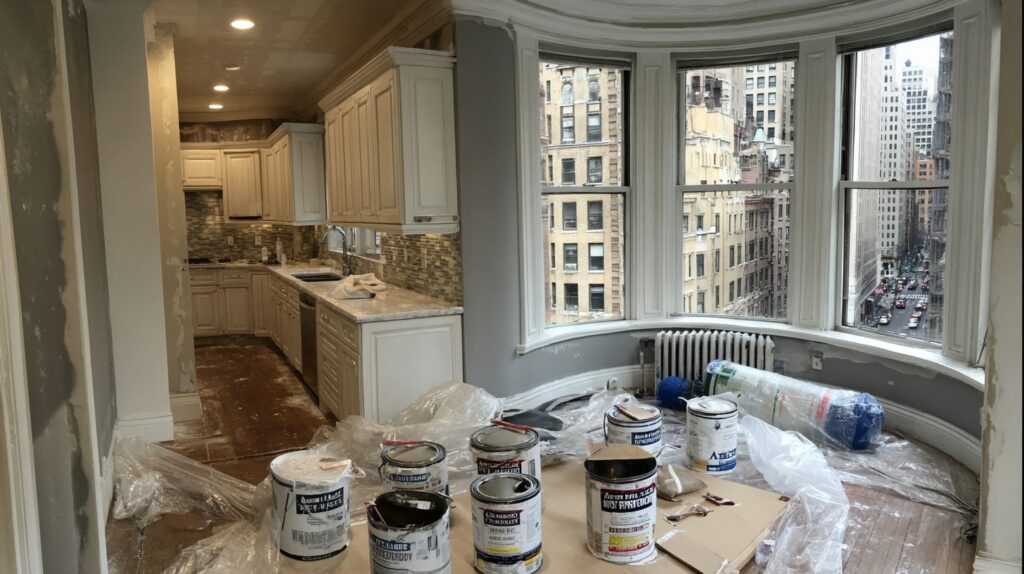
A Manhattan kitchen renovation usually gets expensive for the same reason Manhattan life does: space is tight, logistics are real, and small decisions carry bigger consequences than they would in a suburban house. The projects that stay calmer and cleaner are the ones that lock in scope, approvals, and materials before demolition starts. The ones that drift usually pay for it in change orders, delivery delays, and building-rule headaches.
The practical way to plan a Manhattan kitchen is to treat design, approvals, budget, and building logistics as one system. Before you price finishes, decide what must stay, what can move, what your building will allow, and which parts of the job will trigger permits, filings, or extra coordination. That one step does more to protect cost and schedule than almost any countertop decision ever will.
This guide breaks down what matters most in Manhattan kitchen remodeling: tight-layout strategy, realistic cost ranges, 2026 design directions, permit logic, budget pressure points, and how to choose the right renovation professional for a job that has to work both on paper and inside a real Manhattan building.
What Matters Most Before the Project Starts
- Most Manhattan kitchens should improve layout before trying to gain square footage. In tight apartments, a better plan usually beats a bigger footprint.
- Keeping the existing plumbing and gas zones usually protects both budget and timeline. Moving systems is where many kitchens become much more expensive.
- Building rules matter early. Elevator reservations, work-hour limits, insurance certificates, and alteration packages affect the job before demo begins.
- Permit strategy belongs at the front of the project. A cosmetic update is one job; a multi-trade kitchen with plumbing, electrical, gas, or wall changes is another.
- Cabinetry, labor, appliances, and logistics usually drive the budget. In Manhattan, access and coordination are real cost items, not background noise.
- A contingency fund is not optional. Reserve 10% to 20% for hidden conditions, change orders, and building friction.
Why Manhattan Kitchens Need a Different Planning Mindset
A Manhattan kitchen renovation works best when you stop thinking about it as a room makeover and start thinking about it as a compact construction system. Space is limited, labor is expensive, and your building may care as much about hallway protection, freight elevator reservations, and work windows as you care about cabinet paint and backsplash tile. That does not mean the project has to become joyless. It just means that good planning needs to happen earlier.
In many Manhattan apartments, the smartest cost-control move is not cutting quality. It is refusing unnecessary layout changes. A same-footprint kitchen with stronger cabinetry, better storage, layered lighting, quieter ventilation, and more disciplined finish choices often delivers a better result than a more dramatic layout change that forces new plumbing paths, harder permit review, and more building coordination.
This is especially true in co-ops and condos, where every upgrade has to pass through both construction reality and building process. If the two are not aligned from the start, the project gets slower and more expensive very quickly.
How Space Constraints Shape Manhattan Kitchen Design
Small kitchens do not give you much room for bad decisions. That is why smart kitchen remodeling in Manhattan usually starts with storage density, workflow, and cabinet fit rather than demolition. In many apartments, the right cabinetry plan recovers more usable function than a wall move ever would.
Vertical storage is usually the first win. Full-height uppers, tall pantry cabinets, drawer bases, appliance garages, and internal cabinet accessories help reclaim inches that would otherwise disappear into bad shelving or unused corners. In Manhattan apartments, those inches add up fast. A pantry pull-out, a better fridge surround, or a deeper sink-wall storage run can change how the entire kitchen works.
- Use vertical storage first: tall pantry cabinets and stacked uppers recover daily-use space without changing the footprint.
- Choose drawer bases over lower shelves: they waste less space and improve access in compact kitchens.
- Plan corners carefully: awkward corners are where custom cabinetry usually earns its keep.
- Keep the footprint if possible: when plumbing and gas stay in place, cost and timeline usually improve.
Custom millwork matters more in Manhattan than in many other markets because apartment walls are rarely perfect and clearances are often unforgiving. A few well-recovered inches at the pantry, fridge wall, or sink run often deliver more value than a more dramatic and more expensive reconfiguration.
In Manhattan, a better layout usually beats a bigger layout.
How to Balance Style and Function Without Making the Kitchen Busy
The best modern kitchen design feels calm because it solves friction. It looks good, but it also opens properly, stores well, lights task areas clearly, and keeps counters from turning into storage overflow. In Manhattan, the kitchens that age best are usually the ones that are visually disciplined and operationally efficient at the same time.
One practical approach is to choose one visual anchor instead of five. That may be the countertop, the backsplash, or warm cabinetry. Then let the rest of the room support that choice quietly. Too many competing finishes make a small urban kitchen feel smaller and more anxious.
- Pick one visual anchor: quartz counters, a slab backsplash, or warm wood cabinetry can each carry the room without help from three other headline materials.
- Hide clutter, not function: pantry pull-outs, drawer organizers, appliance panels, and tray storage work better than decorative minimalism with nowhere to put anything.
- Layer the lighting: recessed plus under-cabinet lighting usually does more for daily life than a more dramatic fixture plan with weak task light.
- Choose easy-care finishes: quartz, durable hardware, low-maintenance cabinet paint, and practical flooring usually age better in hard-working kitchens.
One detail homeowners often underfund is ventilation. If you cook often, spend real money on a quiet, effective hood before overspending on a decorative pendant. The prettier feature will not help much if the kitchen still traps heat, moisture, and cooking odors every night.
Permits, Building Rules, and Why They Matter So Early
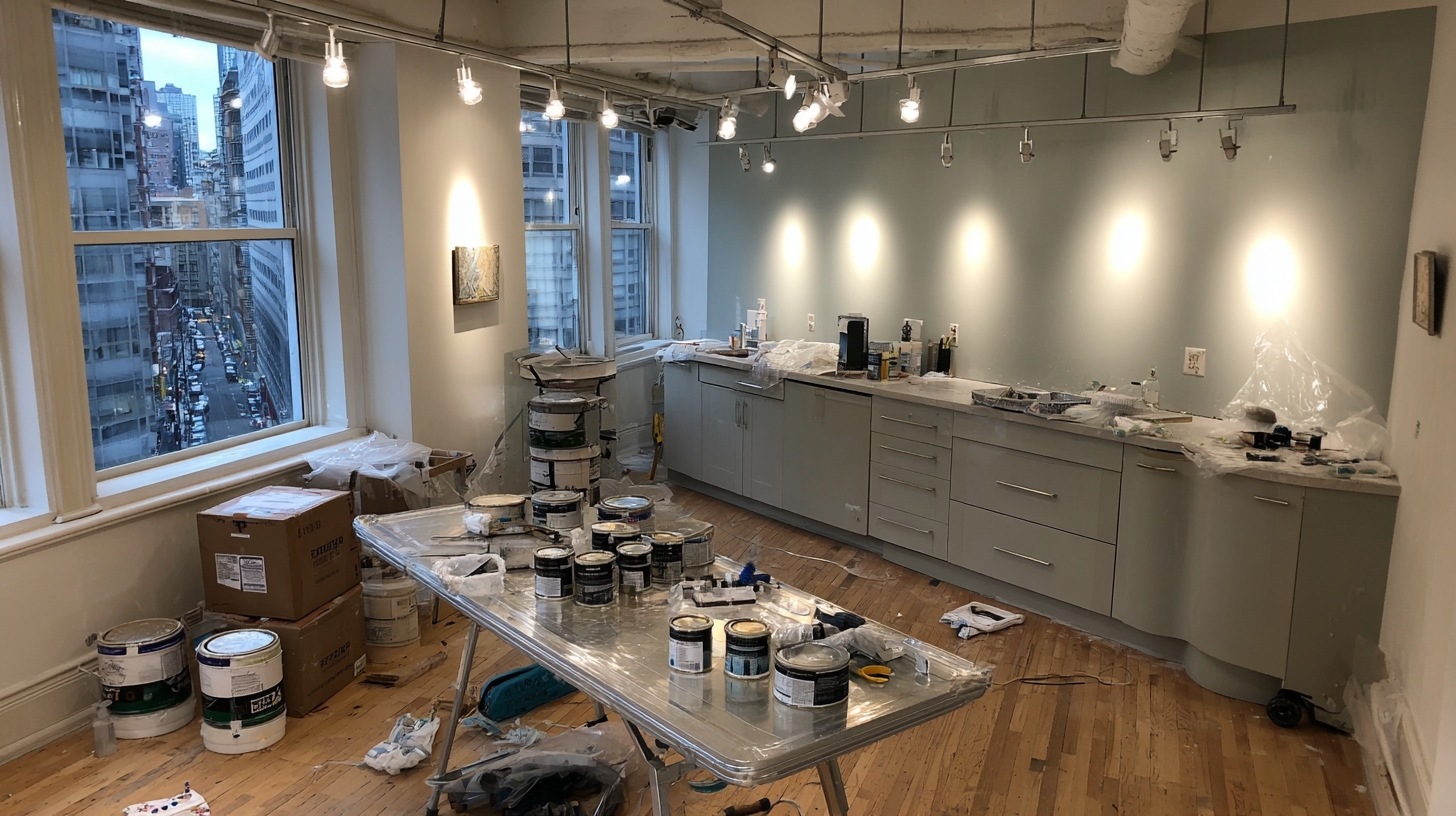
A Manhattan kitchen renovation is never just about the kitchen. It is also about what the building allows, what the filing path requires, and how much of the work crosses from cosmetic into regulated multi-trade renovation. That distinction matters early because it affects the team, the paperwork, and the schedule.
As a practical rule, simple work such as painting, cabinet installation, and some floor resurfacing can be much lighter administratively than a kitchen project that changes electrical, gas, plumbing, layout, or structure. Once the work moves into multiple trades and more technical coordination, the filing path becomes more important and the need for a licensed design professional may come with it.
- Ask the building for the alteration package first: co-ops and condos often want plans, insurance certificates, contractor credentials, and work-hour compliance details before anything starts.
- Confirm who files the job: if the kitchen needs a more formal filing path, the architect or engineer should be identified before the build contract is signed.
- Verify license status and complaint history: the right contractor should be easy to verify, not mysteriously hard to pin down.
- Respect building logistics: freight elevator scheduling, delivery windows, floor protection, debris handling, and service hours all affect the actual schedule.
In Manhattan, board review lag often does more schedule damage than the construction itself. That is why materials should not be ordered blindly and demo should not be scheduled aggressively until approvals and logistics feel real, not assumed.
Top Manhattan Kitchen Trends for 2026
The strongest 2026 kitchen trends are practical rather than theatrical. Homeowners want kitchens that store more, feel cleaner, reduce clutter, improve lighting, and work harder for everyday life. That is a very good fit for Manhattan, where the best design choices are usually the ones that improve function every day, not just photograph well after installation.
Custom and semi-custom cabinetry remain strong because fit matters in city kitchens. Built-in pantry storage, appliance integration, layered lighting, and warm but controlled material palettes continue to make sense because they support the two things small kitchens need most: order and calm.
The trend direction is also more selective. Homeowners are less interested in a room full of statements and more interested in quiet upgrades that improve use: better drawer systems, stronger task lighting, smarter appliance choices, cleaner ventilation, and surfaces that stay attractive without demanding too much maintenance.
When Smart Kitchen Technology Is Actually Worth It
Smart appliances are worth the money when they save steps, reduce waste, or make daily routines easier. If they only add another app and another setup screen, they are just expensive clutter. This is one of those categories where selectivity matters more than enthusiasm.
- Induction cooktops: faster response, easier cleanup, and no open flame make them attractive in many Manhattan apartments.
- Smart ovens: useful if you cook on a schedule and want monitoring or precision control that you will actually use.
- Sensor microwaves: useful for repeat weekday tasks and simpler reheating.
- Inventory-aware refrigeration: worthwhile mainly for households that shop in larger cycles and actively use the feature.
The practical rule is simple: prioritize the smart features you will use three times a week, not the ones that only sound good in a showroom demonstration.
Smart kitchen technology is worth it when it removes friction from cooking, cleanup, and energy use.
Which Sustainable Materials Make Sense in a Manhattan Kitchen
Sustainable materials make the most sense when they improve durability, indoor air quality, or long-term operating cost. In Manhattan, where replacement cycles are expensive and indoor air volume is limited, sustainability works best when it also improves maintenance and comfort rather than existing as a label alone.
- Engineered quartz: strong choice for main counters because it is consistent, low-maintenance, and durable.
- Recycled-content surfaces: useful where the aesthetic fits and the fabrication quality is strong.
- FSC-certified wood: especially relevant for custom cabinetry and built-in millwork.
- Low-VOC paints and sealants: helpful in compact apartments where ventilation matters during and after installation.
- Porcelain tile: durable, cleanable, and usually practical for a high-use kitchen.
- Efficient appliances: better for long-term operating costs, especially in high-cost utility markets.
Low-VOC does not mean no odor and it does not eliminate the need for ventilation. The smartest eco-friendly kitchens are usually the ones that combine healthy materials with practical ventilation and finishes that do not need to be replaced every few years.
Do You Really Need an Island?
A well-designed island can add prep area, storage, seating, and social value in one move. But in Manhattan, an island only works if the room can actually carry the circulation. If the kitchen feels cramped on paper, the island is usually the wrong hero.
- Add deep drawers: they improve utility much more than decorative open shelving usually does.
- Use seating only if traffic allows: in many narrow kitchens, a peninsula works better than a full island.
- Use contrast carefully: a different countertop or wood finish can give the island identity without turning it into visual noise.
- Consider movable prep surfaces: in very tight rooms, a mobile solution can add flexibility without freezing the layout permanently.
If the kitchen cannot comfortably support an island, build better perimeter storage instead. A crowded island makes a room feel smaller and works against the reason people wanted one in the first place.
Why Minimalist Cabinets Work So Well in Manhattan
Minimalist cabinetry works in Manhattan because it lowers visual noise. Cleaner door styles, simpler lines, and fewer competing finishes make a small room read as calmer and larger. That does not mean the kitchen has to look cold. It means the visual field should stay disciplined while the storage and functionality work harder inside the cabinets.
- Use slab or simple Shaker fronts: both can feel current without becoming trend-chasing.
- Keep colors controlled: whites, soft taupes, warm neutrals, oak, and walnut still play well in Manhattan resale logic.
- Hide some appliances, not all: selective paneling can clean up sight lines without turning the budget inside out.
- Spend on the cabinet interior: pull-outs, trash drawers, dividers, and organizers matter more than a more fashionable finish.
The goal is not minimalism for its own sake. It is making the room feel less crowded while actually increasing the amount of work the cabinetry can do.
What Kitchen Renovations in Manhattan Usually Cost
Kitchen renovation costs in Manhattan are driven by scope first, then by building type, logistics, finish level, and how much of the room you move. A kitchen that keeps the same footprint will usually price better than one that moves plumbing, gas, or walls. The more the project becomes a systems-and-layout renovation instead of a replacement renovation, the faster the number rises.
As a planning framework, Manhattan kitchens often break down roughly like this:
- Cosmetic refresh: about $20,000 to $40,000 when the layout is workable and the project focuses on finishes, selective lighting, and partial replacement work.
- Standard full replacement: about $35,000 to $95,000 for many same-footprint apartment kitchens with new cabinetry, counters, fixtures, flooring, appliances, and code-related updates.
- Full gut or custom renovation: roughly $100,000 to $250,000 or more once layout changes, premium finishes, structural work, or heavy building complexity enter the job.
- Per-square-foot planning logic: useful only for early budgeting, not for precise forecasting.
The point of these ranges is not to promise a number. It is to separate project types. A light refresh, a same-layout full replacement, and a full custom reconfiguration are not variations of the same project. They are different projects with different budget logic.
Direct Cost Answer
For Manhattan homeowners, a light kitchen remodeling project can start around $20,000 to $40,000, a more complete same-layout renovation often lands around $35,000 to $95,000, and full custom or gut work commonly starts near $100,000 and rises from there depending on building conditions, finish level, and how much of the room moves.
What Usually Pushes the Number Up
The biggest cost swings usually come from cabinetry, labor, permit and filing demands, appliance package, layout changes, and building logistics. Once those are set, the rest of the budget becomes much easier to read honestly.
- Cabinetry: often the single largest spend, especially where custom millwork is needed for uneven or tight Manhattan conditions.
- Labor: skilled trade coordination is expensive, and Manhattan typically sits at the high end of labor intensity.
- Permits and filings: the paper trail, professional drawings, and inspections add both cost and time.
- Layout changes: moving a sink, dishwasher, or gas line can add thousands quickly.
- Access and logistics: elevator scheduling, walk-ups, delivery windows, floor protection, and debris handling are real budget items.
If you want to control budget, move fewer systems. New finishes are expensive enough. New routes for plumbing, gas, and power are where compact kitchens become very expensive kitchens.
Budget-Friendly Upgrades That Still Make the Kitchen Feel New
You do not need a full gut to make a Manhattan kitchen look current and work better. The right mix of finishes, storage, lighting, and appliance strategy can deliver a strong visual and functional gain without dragging the entire apartment into a more invasive renovation.
- Reface or repaint solid cabinet boxes: often much cheaper than full replacement when the underlying cabinetry is still worth saving.
- Choose engineered quartz over more temperamental premium stone: strong look, easier maintenance, lower risk.
- Upgrade lighting first: recessed lighting, under-cabinet LEDs, and better switching can change the room dramatically.
- Keep appliances in the same zone: this protects budget by avoiding heavy plumbing, gas, and electrical relocation.
- Use low-VOC paint and new hardware: one of the cheapest ways to make an older kitchen feel cleaner and more current.
- Upgrade interior storage accessories: pull-out trash, spice inserts, divider systems, and better drawer planning often deliver more value than cosmetic excess.
These upgrades work best when they solve a real pain point such as weak storage, poor light, worn finishes, or a cluttered work zone. Fix the friction and the kitchen feels newer fast.
How to Make Layout and Workflow Do the Heavy Lifting
Workflow is what makes a kitchen feel expensive even when the materials are not. A room that lets you prep, cook, clean, and store things in a clean sequence will always feel better than one with prettier surfaces and a clumsy plan.
- Create simple work zones: prep near the sink, cooking near utensils and oils, cleanup near trash and dishwasher.
- Use pull-out storage: it usually reduces bending and wasted reach in compact kitchens.
- Add more task lighting: good light improves both comfort and safety immediately.
- Test appliance swings on paper: fridge doors, dishwasher doors, and range clearances can ruin a tight plan if skipped.
- Store by use, not by category: keep what you use together physically near where you use it.
- Protect walking paths: do not let seating, oversized handles, or bad clearances break the flow.
One of the most overlooked planning steps is simply doing a mock run before cabinetry is finalized. Open the fridge mentally, turn to the sink, reach for a pan, load the dishwasher, and see what collides. That exercise catches more design mistakes than a mood board ever will.
Why Better Appliances and Fixtures Are Worth Planning Early
Higher-quality appliances and fixtures pay back in three ways: better daily use, stronger long-term performance, and a kitchen that does not feel dated immediately after the renovation. But this category still needs discipline. The goal is not to make every item luxury. The goal is to buy quality where daily use makes quality matter.
- Spend on the range or cooktop if you cook often: performance shows up every day.
- Choose a quiet dishwasher: in open or semi-open Manhattan apartments, noise becomes part of the living room experience.
- Upgrade the faucet thoughtfully: it gets daily use, so cartridge quality and finish durability matter.
- Match ventilation to your cooking style: serious home cooks should prioritize hood performance early.
If the budget is tight, buy fewer premium pieces instead of trying to make every line item high-end. A strong range, dependable refrigerator, quiet dishwasher, and good lighting often matter more than trying to make every visible object a luxury badge.
How to Find Manhattan Contractors Who Can Actually Deliver
Look for contractors who understand Manhattan apartments, not just kitchen construction. A great suburban remodeler can still struggle with co-op packages, service elevator rules, and filing coordination in a Manhattan building.
- Check license status: residential home improvement work in NYC over the threshold should be properly licensed.
- Review building experience: ask directly about co-op and condo packages, COI requests, common-area protection, and management communication.
- Request recent Manhattan examples: you want projects that match your building type and scope.
- Ask who supervises the site daily: the salesperson and the site manager are often different people.
- Compare line-item estimates: that is where missing permit costs, weak allowances, and unrealistic schedules reveal themselves.
The right kitchen contractor in Manhattan is not just someone who builds good cabinets. It is someone who can coordinate trades, approvals, access, and finish quality without letting the project unravel between them.
How to Vet the Kitchen Renovation Professional Properly
Choosing the right renovation professional is less about finding the lowest bid and more about finding the team that can deliver the scope you actually want. In Manhattan, the wrong hire usually shows up as delays, thin communication, and expensive change orders rather than obvious incompetence on day one.
- Check legality first.
- Study projects like yours, not just beautiful projects.
- Look for detail shots: cabinet reveals, countertop seams, tile edges, and finish lines.
- Read reviews for patterns about cleanup, change orders, schedule, and communication.
- Ask for recent client references from the last 6 to 12 months.
- Review scope clarity carefully: strong contractors explain inclusions, exclusions, and allowances in writing.
A polished website is nice. A clean estimate, recent Manhattan references, and a clear plan for permits, logistics, and supervision are much better.
Questions Worth Asking at the Consultation
The consultation is where you test how the contractor thinks, not just how they sell. Ask questions that reveal planning quality, permit knowledge, and how they handle problems once the walls open up.
- Who will file permits or coordinate the architect or engineer if the job needs formal filing?
- Have you completed kitchen remodeling projects in Manhattan buildings like mine?
- What hidden conditions do you see most often in prewar apartments, postwar co-ops, and newer condos?
- How do you handle change orders, and how quickly are they priced and approved?
- What materials need to be ordered before demolition starts?
- Who is on site each day, and how often will I get updates?
- What protection do you use for hallways, elevators, and finished rooms?
- Can you provide proof of insurance that matches my building’s requirements?
- What is the realistic timeline for approvals, ordering, construction, and punch list?
- What parts of the estimate are fixed, and what parts are allowances?
Vague answers about permits, supervision, or change orders are not minor sales flaws. They are previews.
Bring It All Together
A successful kitchen renovation in Manhattan comes down to a few practical truths: protect the layout when you can, plan permits and building logistics early, spend where function improves daily life, and hire contractors who know Manhattan buildings instead of learning on yours.
If the scope is clear, the approvals are moving, the allowances are honest, and the contractor understands both construction and building process, the project usually feels much more controlled from first estimate through final punch list. That is what makes the job not just look better when it is done, but feel better while it is happening.
Frequently Asked Questions
What does a kitchen renovation in Manhattan usually cost?
A light kitchen refresh may start around $20,000 to $40,000, a same-layout full replacement often lands around $35,000 to $95,000, and a full gut or highly custom renovation can start near $100,000 and go much higher.
What usually drives the budget up fastest?
Cabinetry, labor, permits and filings, layout changes, appliance package, and building logistics are usually the biggest budget drivers in Manhattan kitchens.
Should I keep the existing kitchen footprint?
In many Manhattan apartments, yes. Keeping plumbing, gas, and major appliance zones in place is often the strongest way to protect both budget and timeline.
Do Manhattan kitchen renovations usually need permits or filings?
Simple cosmetic work may be lighter administratively, but kitchen projects involving multiple trades, layout changes, plumbing, gas, or electrical work usually require more formal coordination and often a defined filing path.
How do I choose the right contractor for a Manhattan kitchen renovation?
Look for a contractor with Manhattan apartment experience, clear written estimates, realistic allowances, current licensing and insurance, strong references, and a working understanding of co-op or condo requirements.