
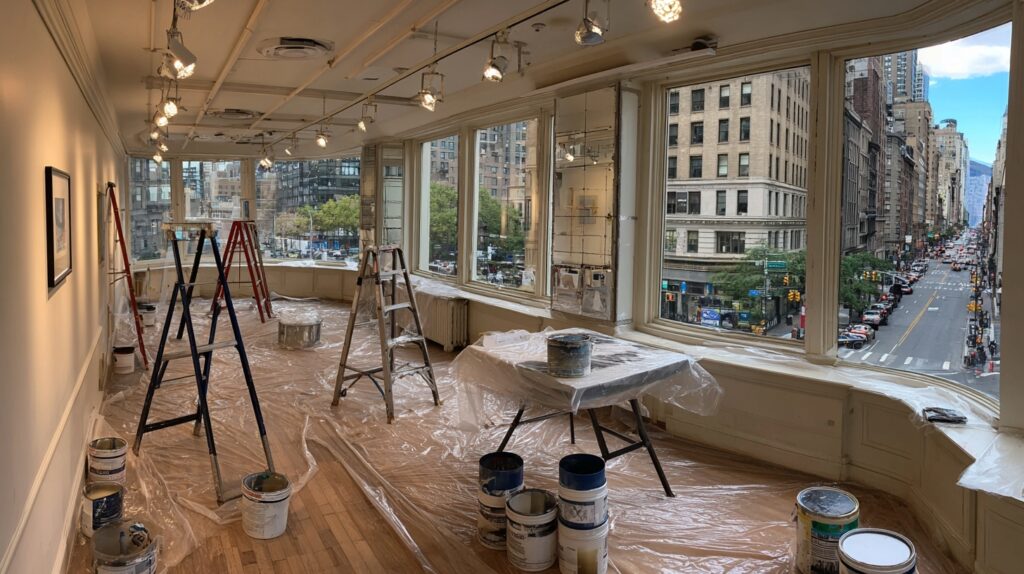
Choosing a painting contractor looks simple until the estimates arrive and three companies describe the same job three different ways. That is why this decision is really about scope, screening, and risk control. A strong painting contractor protects your finish, schedule, and budget through clear prep, realistic estimating, and organized follow-through. A weak one usually costs less only at the beginning.
In the NYC metropolitan area, the smartest way to choose a painter is to define the job clearly, verify that the contractor is qualified for the exact type of work you need, compare written estimates line by line, and lock the scope into a contract that leaves less room for surprises. For residential work in New York City, jobs over $200 generally require a DCWP Home Improvement Contractor license, and if painted surfaces in pre-1978 housing will be disturbed, EPA lead-safe rules may also apply. NYC consumer guidance also says homeowners should not pay more than 25% upfront to start the work. Read https://portal.311.nyc.gov/article/?kanumber=KA-01808
This guide explains how to define the project, separate interior from exterior and residential from commercial work, check reviews and referrals without getting fooled by noise, verify licensing and insurance, compare estimates properly, evaluate communication and past work, review warranty language, and sign an agreement that actually protects you.
What Matters Most Before You Hire Anyone
- Write a project brief first. Scope drives accurate estimates far more than color names do.
- Use at least three written estimates. Compare prep, products, coats, timeline, and exclusions side by side.
- Verify licensing, insurance, and project fit. A good general painter is not automatically the right cabinet, masonry, or commercial painter.
- Read reviews for patterns, not just stars. The FTC’s rule on fake and deceptive reviews took effect on October 21, 2024. Read: https://www.ftc.gov/business-guidance/resources/consumer-reviews-testimonials-rule-questions-answers
- Use a written contract with a real payment schedule. Scope, dates, paint line, coats, exclusions, warranty, and change-order rules should all be in writing. Read https://www.nyc.gov/site/dca/consumers/shopping-services-home-improvement.page
Define the Painting Job Before You Start Calling Contractors
Before you contact painters, write a simple project brief. List the rooms or exterior elevations, the surface condition, the finish level you want, the deadline, and any access limits such as co-op work hours, elevator reservations, parking, tenant occupancy, or storefront operating hours. This small step makes the contractor search much easier because it helps you separate apartment repainting, house exteriors, cabinet refinishing, retail repainting, and specialty coating work before you waste time comparing bad-fit estimates.
- Measure approximate square footage.
- List repairs such as peeling paint, cracks, water stains, rust, wood rot, or damaged plaster.
- Note occupancy issues such as children, pets, staff, customers, or tenants.
- Write down the target start date and any hard deadline.
- Decide whether you want simple repainting or also want patching, trim repair, carpentry, or stain blocking included.
A written brief does something important: it stops painters from estimating different versions of the job. The more specific you are up front, the easier it becomes to compare estimates that actually describe the same work.
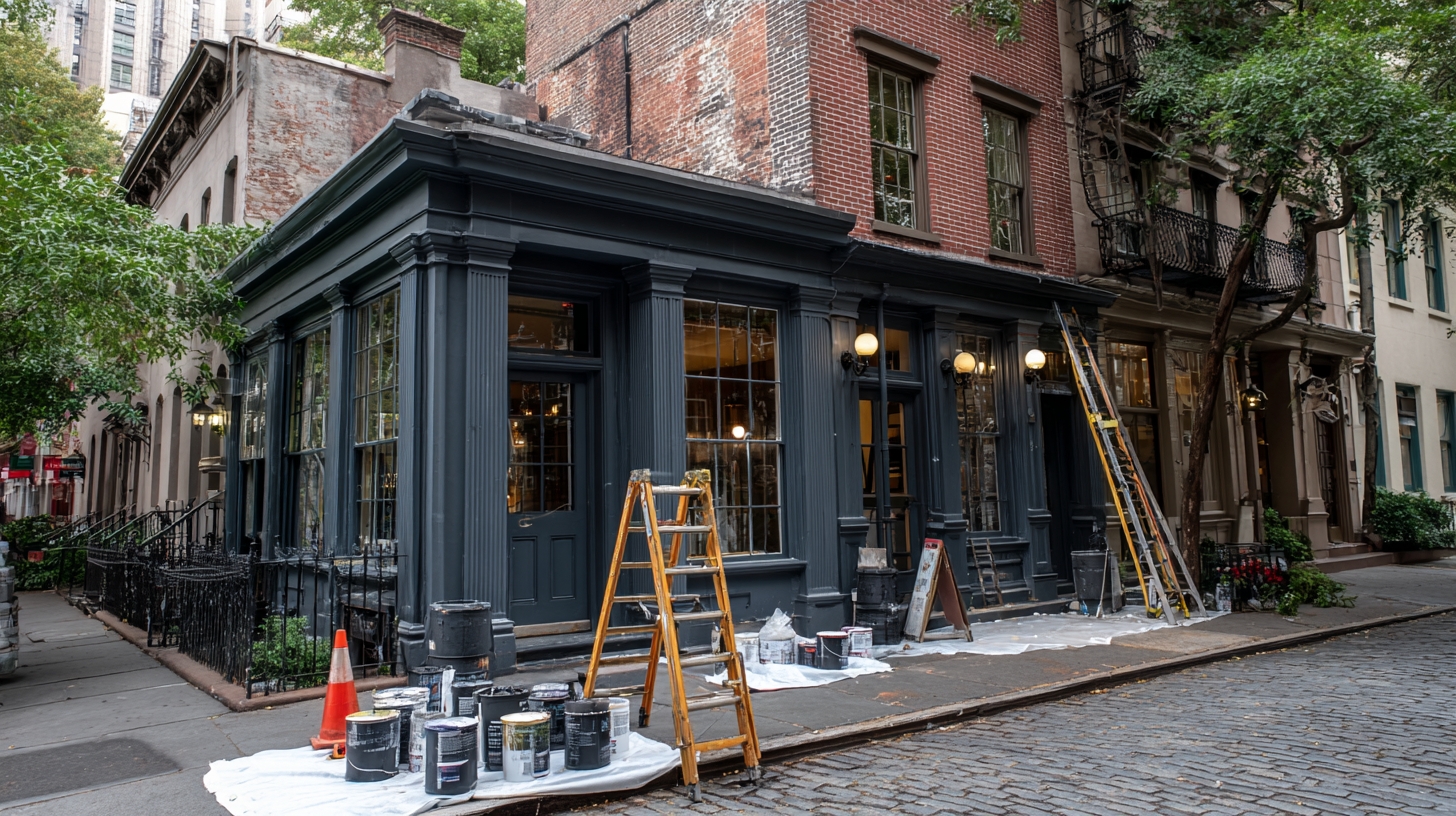
Interior and Exterior Painting Are Not the Same Job
Interior painting is mostly about finish quality, cleanliness, staging, and how well the crew protects your living or work space during the job. Sharp cut lines, clean floor protection, controlled odor, dust management, and a good daily cleanup routine matter as much as the paint itself in occupied spaces. Interior jobs usually succeed or fail on prep discipline and how organized the crew is while people are still living or working around them.
Exterior painting is different. It is a weather-protection system before it is a beauty treatment. Prep quality matters more because sun, rain, freeze-thaw cycles, moisture around trim, and surface movement punish shortcuts quickly. That is why exterior bids need better questions: washing, scraping, patching, sanding, caulking, priming, and exactly which product line is being used.
Many premium exterior paint systems commonly fall into a repaint cycle of roughly 7 to 10 years in typical conditions, though surface type, exposure, and prep quality change that. Coverage for many paints is often around 350 to 400 square feet per gallon per coat, which is useful for rough planning but not a substitute for a site-specific estimate. Read https://www.nyc.gov/site/dca/consumers/shopping-services-home-improvement.page
- Ask whether the quote includes washing, scraping, patching, sanding, caulking, and priming.
- Ask for the exact paint line, not just the brand name.
- Confirm the number of coats for walls, trim, doors, and repaired spots.
- For exterior work, ask how landscaping, windows, walkways, and neighboring property will be protected.
Residential and Commercial Painting Need Different Contractors
Residential painting is personal. Homeowners usually care most about color accuracy, odor control, furniture protection, quiet work habits, and how respectfully the crew behaves in an occupied home. The contractor’s ability to stage the space cleanly and keep disruption low often matters almost as much as the final finish.
Commercial painting is more about project management. Work often has to fit business hours, customer access, tenant use, loading rules, and faster turnover. That is why experienced commercial painters may propose phased scheduling, night work, or room-by-room sequencing. In an office, retail, or medical environment, logistics are not side issues. They are the project.
- Residential interior: ask about floor and furniture protection, odor control, and touch-up handling.
- Residential exterior: focus on prep quality, repair scope, weather resistance, and substrate-specific products.
- Commercial interiors: ask about scheduling outside business hours, phasing, and low-odor products.
- Open ceilings or warehouse work: ask about overspray control and whether the contractor has experience with dryfall coatings or similar systems.
The point is simple: the best painter for a townhouse interior is not automatically the best painter for a retail space, office suite, masonry façade, or cabinet spraying job.
How to Find Reliable Painters Without Wasting Time
Start with local contractors who clearly list the exact service you need. Do not build a giant shortlist full of generic names. Build a smaller one that is easy to verify. If you need apartment repainting, brownstone exterior work, cabinet refinishing, office repainting, or masonry coatings, only shortlist companies that already present themselves that way.
After that, compare customer reviews, licenses, insurance, and estimate quality. In the NYC area, it is usually better to have five verifiable professional painters than twenty vague marketing-heavy names with weak documentation. Reliable contractor selection is mostly a filtering job.
How to Read Reviews Without Getting Played
Star ratings help, but they are only a first screen. The FTC’s Consumer Reviews and Testimonials Rule, which took effect on October 21, 2024, directly addresses deceptive and unfair conduct involving consumer reviews and testimonials. That is a useful reminder that bought, fake, suppressed, or manipulated reviews are not theoretical. They are part of the market now. Read https://www.ftc.gov/business-guidance/resources/consumer-reviews-testimonials-rule-questions-answers
That means you should read for patterns, not averages. Check at least three places. Focus on the last 12 months because ownership, crew quality, and project management can change quickly. Read the written comments. Repeated complaints about missed calls, sloppy prep, change-order pressure, or warranty dodge-and-delay tell you much more than a polished collection of generic five-star reactions.
- Compare at least three review sources.
- Prioritize recent reviews over old reputation.
- Look for mentions of prep work, cleanliness, communication, and return visits for touch-ups.
- Be cautious with near-perfect scores backed by very few written reviews.
- Notice whether the company responds professionally to criticism or gets defensive and vague.
A practical painter-specific tip: pay special attention to prep mentions. Customers talk most about color, but the contractor’s real discipline usually shows up first in sanding, patching, caulking, priming, masking, and cleanup.
Why Personal Referrals Still Matter
Personal referrals are still one of the strongest ways to find trusted service, especially in the NYC metro where building access, parking, cleanup, elevator rules, and work-hour limits can make an otherwise decent painter look bad if they are not used to local conditions. But the referral is only useful if you ask the right questions.
- Did the contractor finish on the promised date?
- Did the final invoice stay close to the estimate?
- Was the crew clean and respectful in an occupied home or business?
- Would you hire the same company again without shopping around?
- If it was a co-op or condo, did the contractor handle insurance paperwork and building rules smoothly?
That last question matters more than people think. A contractor who cannot handle certificates of insurance, elevator scheduling, and building rules can turn a simple paint job into a scheduling mess.
Licensing, Insurance, and Lead-Safe Questions Are Not Formalities
Once you have a shortlist, move past marketing and into proof. In New York City, residential home improvement work over $200 requires a DCWP Home Improvement Contractor license. That matters for more than paperwork. It is part of the city’s consumer protection framework. DCWP’s own guidance also tells homeowners not to pay in cash or without a contract and not to pay more than 25% upfront to start the work.
Insurance matters just as much. Ask for current general liability and workers’ compensation certificates, and make sure the business name matches the estimate and contract. If the property was built before 1978 and painted surfaces will be disturbed, EPA lead-safe certification becomes another key question. EPA requires lead-safe certified contractors for covered renovation, repair, and painting work in pre-1978 homes, child care facilities, and preschools. ([epa.gov](https://www.epa.gov/lead/lead-renovation-repair-and-painting-program?utm_source=chatgpt.com))
If a contractor gets vague when you ask about license status, insurance certificates, or lead-safe paperwork, treat that as a decision, not a detail.
Find the Right Specialist for the Surface You Actually Have
Not all painting contractors are interchangeable. A painter who does basic wall repainting well is not automatically the right fit for cabinet spraying, masonry coatings, stucco repair, epoxy or polyaspartic floor coatings, or commercial open-ceiling work. That is why specialization matters when specialization changes the result.
- Cabinet painting: ask whether doors will be removed, labeled, cleaned, sanded, primed, sprayed or rolled, and cured before reinstallation.
- Masonry or stucco exteriors: ask about crack repair, moisture conditions, primer strategy, and the specific coating system.
- Garage or basement floors: ask about moisture testing and whether the system is epoxy, polyaspartic, or something else.
- Warehouses and retail ceilings: ask about overspray control and dryfall-type applications if relevant.
- Occupied offices or medical spaces: ask about low-odor or zero-VOC product lines and indoor air quality protection.
The easiest way to verify specialty experience is to request photos and references from jobs that match yours in size, surface, and occupancy. If the portfolio shows only generic wall repainting, the contractor has not yet proved they are your best fit.
How to Compare Painting Estimates Properly
Ask at least three contractors for written estimates based on the same scope. If one contractor is pricing full prep and two finish coats while another is pricing spot-prime and one finish coat, those are not competing bids. They are different jobs pretending to be comparable.
Multiple quotes help for two reasons. First, they show you the market range. Second, they reveal what each contractor quietly left out. A low bid can be a great bid, but only if it still includes the prep, materials, cleanup, and schedule you need. If a number looks unusually cheap in NYC, ask what is missing before you assume you found a bargain.
- Reject one-line estimates.
- Flag any quote that does not state the number of coats.
- Watch for vague prep language such as “as needed” with no allowance or limit.
- Be cautious with oversized upfront payment demands. NYC consumer guidance says no more than 25% upfront. ([nyc.gov](https://www.nyc.gov/site/dca/consumers/shopping-services-home-improvement.page?utm_source=chatgpt.com))
What a Good Estimate Should Show
A useful estimate tells you how the contractor thinks, not just what they charge. It should show surface prep, paint system, labor plan, timeline, and exclusions clearly enough that you can judge process as well as price.
- Surface prep: cleaning, patching, sanding, caulking, priming, and repair allowances
- Paint system: brand, product line, sheen, and number of coats
- Labor plan: crew size, work hours, access method, and cleanup routine
- Timeline: start date, completion date, and any milestone phases
- Exclusions: carpentry, plaster repair, moving oversized furniture, lead-safe setup, or other items not included
Exclusions deserve special attention because they are where surprise charges often begin. If the estimate does not make them explicit, ask for a revision before the job moves any further.
Communication Predicts the Project Experience
Communication usually tells you what the project will feel like. A contractor who is clear, responsive, and organized before the deposit is due is more likely to stay that way after the work begins. Fast replies alone do not prove quality, but clear replies usually signal better planning and fewer avoidable surprises.
- They confirm the scope in writing after the site visit.
- They answer technical questions without dodging them.
- They send revisions promptly if the scope changes.
- They tell you who the day-to-day contact will be.
Ask the contractor to walk you through the job in order. Good painters can explain prep, primer, first coat, second coat, cleanup, punch list, and final walkthrough in plain language. Ask what happens if hidden damage appears after sanding or scraping, how change orders are documented, what the space will look like at the end of each day, and when final touch-ups happen.
In many co-ops and condos, communication also includes building paperwork. A contractor who understands certificates of insurance, elevator reservations, floor protection, and allowed work hours will often save more time than the cheapest bidder.
Past Work and References Should Be Reviewed Like Evidence
Past work tells you whether the contractor can repeat quality, not just talk about it. A portfolio is useful, but do not just look for attractive colors. Look for close-up evidence of trim lines, corners, repaired areas, doors, and how the contractor handled difficult surfaces such as stained ceilings, cracked plaster, or peeling exterior trim.
- Ask for before-and-after photos that show the prep problem, not just the final beauty shot.
- Look for work in your property type: apartments, brownstones, storefronts, offices, or cabinet projects.
- Look for consistency across several jobs, not one standout image.
- If possible, ask for one recent project and one older project so you can judge durability.
References matter too, but use a checklist. Ask whether the job started and finished when promised, whether the final price stayed close to the estimate, how well the crew protected the space, whether the same painters stayed on the job, whether the contractor returned for touch-ups, and whether the client would hire them again. In a co-op, condo, or active business, also ask how the contractor handled building management and cleanup.
Warranty Language Should Be Read Before You Need It
A strong paint job should come with a clear plan for what happens after the crew leaves. Ask for the workmanship warranty in writing, then read it as though you expect to use it. Manufacturer warranties may cover the product. Your contractor’s workmanship warranty is what protects you from weak prep, poor adhesion caused by bad application, or sloppy finish handling.
- List the covered defects, such as peeling, blistering, or adhesion failure caused by workmanship.
- State the exact duration of coverage and when it begins.
- Explain what is excluded, such as leaks, structural movement, abuse, or pre-existing moisture issues.
- Name who performs the repair work and how quickly they respond.
- Clarify whether touch-ups are spot repairs or full-area repainting when needed.
Also ask how the company handles the first callback. Get the name, phone number, and email for the warranty contact. Ask for labeled leftover paint. Ask whether a final punch-list walkthrough happens before the last payment. These are small details until they are suddenly not small at all.
Finalize the Agreement Like It Matters
The last step is where good screening becomes actual protection. A strong written contract keeps the scope, cost, materials, schedule, and warranty from drifting after the crew is on site. If it matters to you, it belongs in writing.
NYC consumer guidance says contractors must provide a written contract and a separate Notice of Cancellation before work begins, and city guidance also warns against paying more than 25% upfront. A solid contract should include the exact areas to be painted, specific products and sheens, prep and repair responsibilities, start and completion dates, work hours, cleanup standards, warranty terms, and the change-order procedure. ([nyc.gov](https://www.nyc.gov/site/dca/consumers/shopping-services-home-improvement.page?utm_source=chatgpt.com))
- Set a modest upfront payment with later payments tied to visible milestones.
- Make sure the contract lists start and completion dates and what can legitimately move them.
- Require every change order to be written and priced before extra work begins.
- Confirm the exact paint line, sheen, and number of coats for each surface.
- If you live in a co-op or condo, attach building rules, work-hour limits, and insurance requirements.
- Hold final approval until the punch list is complete and the space is clean.
A painting contract does not need to be dramatic. It just needs to be specific enough that both sides know what “done” actually means.
Bring It All Together
Choosing the right painting contractor for your home or business comes down to a practical filter: licensed when required, properly insured, specific in writing, responsive before the job starts, and easy to verify through reviews, references, and comparable work. The best painters make the project feel clearer as you speak to them, not foggier.
If a contractor gives you a clear estimate, recent and believable reviews, proof of insurance, a readable contract, and straight answers about prep, products, schedule, and warranty, you are usually looking at a safer hire. Taking one extra day to compare bids properly is much cheaper than living with a finish that fails early, a job that drifts off schedule, or a crew that disappears when the touch-ups start.
Frequently Asked Questions
What should I check first before hiring a painting contractor?
Start with scope, licensing, insurance, reviews, and written estimates. Make sure the contractor is actually qualified for the exact type of project you have, not just painting in general.
Do painting contractors in NYC need a license?
For residential home improvement work in New York City costing more than $200, a DCWP Home Improvement Contractor license is generally required. https://portal.311.nyc.gov/article/?kanumber=KA-01808
Why should I get at least three painting estimates?
Because multiple written estimates help you compare prep, paint system, number of coats, timeline, exclusions, and total value instead of trusting one contractor’s version of the job.
What should a painting contract include?
A strong contract should include the exact areas to be painted, products and sheens, prep responsibilities, number of coats, dates, payment schedule, cleanup standards, warranty terms, and change-order rules. ([nyc.gov](https://www.nyc.gov/site/dca/consumers/shopping-services-home-improvement.page?utm_source=chatgpt.com))
How much should I pay upfront?
NYC consumer guidance says homeowners should pay no more than 25% of the total contract amount upfront to get the work started.