
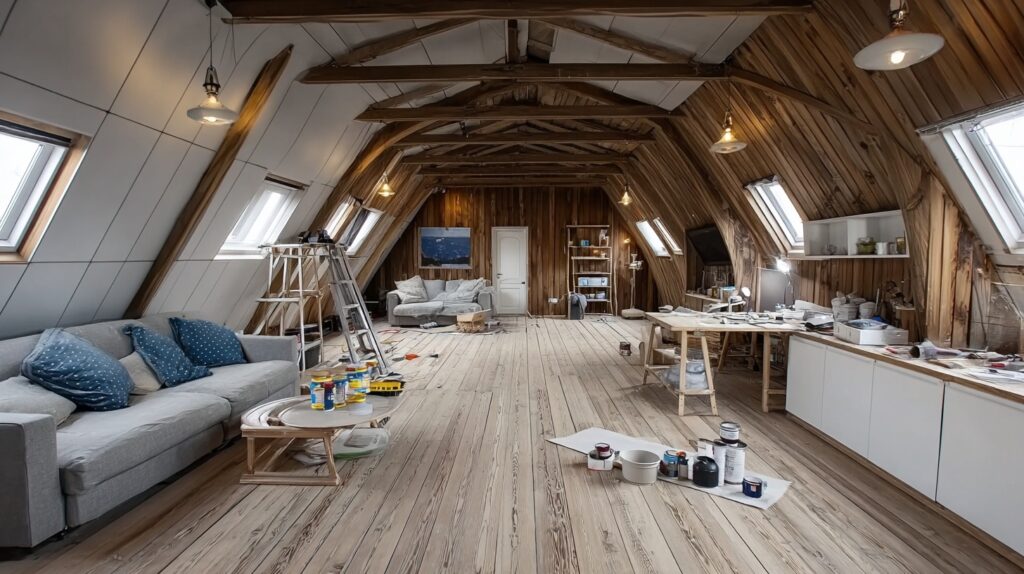
Turning your attic into a genuine living space takes careful planning, a bit of patience, and the right attic remodel contractor. Many NYC homeowners dream of having more room but feel overwhelmed by the costs, permits, and the challenge of finding a trustworthy professional.
Attics often become wasted space because it’s hard to know where to start or who to hire for safe, code-compliant work. Following a few clear steps can make the entire process feel much more manageable.
Across the city, a basic attic finish can cost between $50 and $150 per square foot. A full conversion into a bedroom or office is a bigger investment, but it adds valuable square footage and can significantly lift your home’s value without the expense of a full addition.
This guide will walk you through planning your project, hiring licensed pros, checking reviews, and comparing bids to avoid common pitfalls. Use these tips to hire with confidence and keep your attic remodel on track.
Highlights at a Glance
- In NYC, finishing an attic can return up to 71% of its cost at resale, adding both financial and lifestyle value to your home.
- Always hire licensed and insured contractors. You can verify a contractor’s license through the NYC Department of Consumer and Worker Protection (DCWP) to avoid unpermitted work that risks fines and insurance issues.
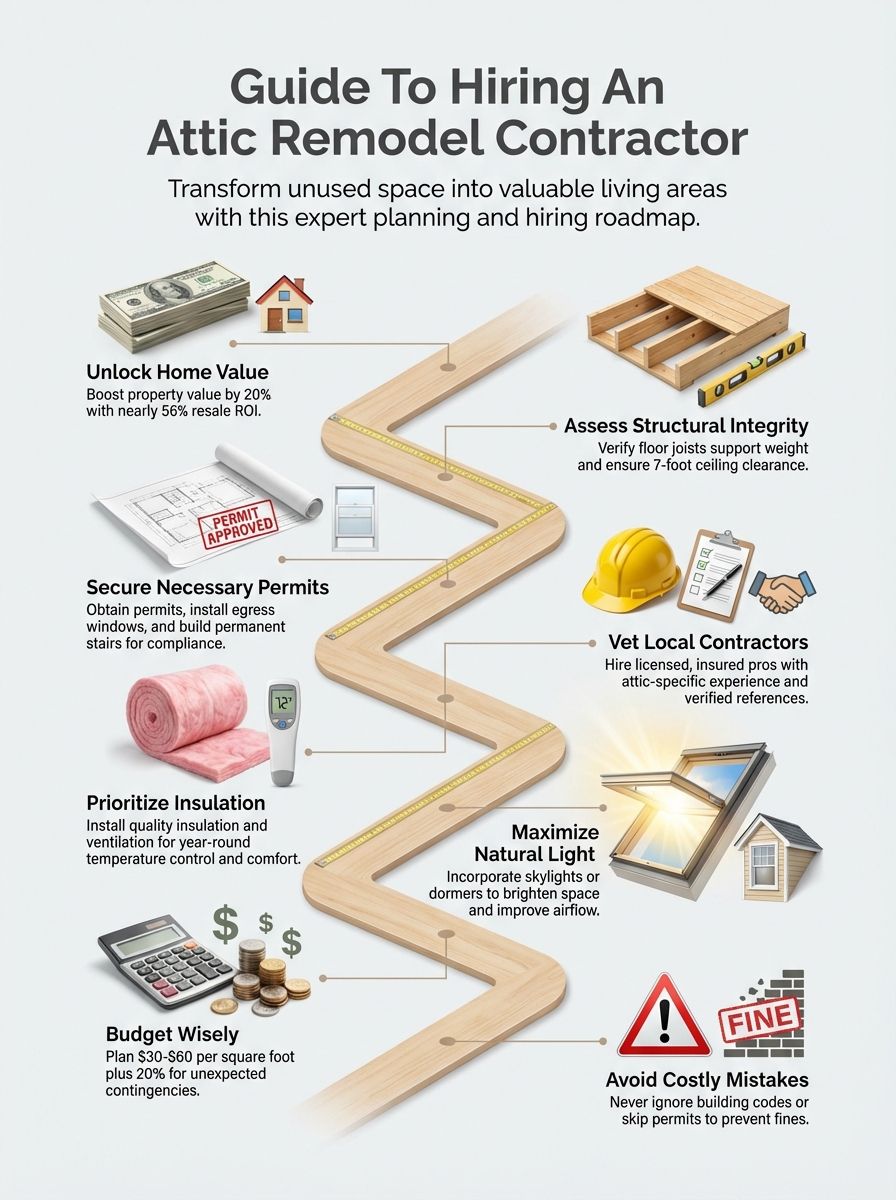
- Permits for attic remodels typically range from $100 to $3,000. To be considered habitable, the space must have a ceiling height of at least 7 feet over half the area and include two safe exits.
- High-impact upgrades include proper insulation, which can cost around $2,500, and egress windows, which often range from $3,000 to $7,000.
- Always gather at least three detailed quotes. A good quote will break down labor, materials by brand, projected timelines, and include license numbers for verification.
Benefits of Remodeling Your Attic

A smart attic remodel transforms an underused area into a functional living space without altering your home’s footprint. Many NYC homeowners find that a finished attic boosts resale appeal when they hire an experienced attic remodel contractor.
How can remodeling unlock hidden potential in your attic?
Many attics in NYC are just quiet spaces filled with dust and untapped potential. With the help of attic remodeling services, that empty area can become a bright home office, an extra bedroom, a playroom for the kids, or even a personal gym.
A thoughtful design can bring in natural light and fresh air with skylights or dormer windows. Modern insulation not only keeps the new space comfortable throughout the year but also helps manage your utility bills.
Alex’s team turned our dark storage attic into my dream studio, now it is my favorite place at home, says Maria T., Brooklyn homeowner.
With careful planning and the right team, almost any attic can be transformed into a space that is useful, safe, and welcoming.
How does an attic remodel boost your home’s value?
Finishing an attic adds valuable square footage, which can increase your home’s market value by up to 20%. In a city like NYC where space is at a premium, a finished attic with a permanent staircase often counts toward your home’s official livable area.
Homebuyers are often drawn to flexible rooms that offer a quiet escape from street noise, making an attic office or guest space highly appealing. The 2025 Remodeling Impact Report from the National Association of REALTORS® shows that an attic conversion can recover around 71% of its cost upon resale.
Homes with finished attics tend to stand out and sell faster in competitive markets. The same Remodeling Impact Report also found that 64% of homeowners have a greater desire to be at home after completing a remodel, which adds significant lifestyle value.
Why adapt your attic space to modern lifestyles?
Today’s families need rooms that can adapt to various needs, whether for remote work, creative hobbies, or hosting guests. Many NYC homeowners use “attic remodeling near me” searches to find contractors who can create a much-needed playroom or guest suite without the hassle of moving.
Smart furniture choices, like a sofa bed or a built-in desk, help maximize every square inch. A well-designed plan not only improves your daily comfort but also supports the long-term value of your home.
Planning Your Attic Remodel
A solid plan is the key to minimizing surprises during your attic remodel. Taking the time to create a checklist now can prevent frustrating and costly delays down the road.
How do you assess your attic’s structure before remodeling?
Start with a close look at the floor joists and beams. These structural elements must be strong enough to support the added weight of people, furniture, and new finishes. Reinforcement is a common step, as NYC building codes have strict load-bearing requirements.
Joist upgrades can cost between $350 and $1,000 per joist. You’ll also need to measure the ceiling height. For a space to be considered livable, at least half of the room must have 7 feet of clearance.
- Check for Safe Access: You will need two exits, typically a door and an egress window, to meet safety codes.
- Measure the Room Size: A legal room usually needs to be at least 70 square feet.
- Inspect Insulation and Ventilation: Poor airflow or old insulation can cause everything from uncomfortable temperatures to mold growth. Make sure to plan for heating and cooling to keep the space comfortable year-round.
How do you define the purpose for your remodeled attic space?
Think about how you’ll use the room on a daily basis. A bedroom or home office will require more comfort, storage, and possibly a bathroom. A playroom might just need open floor space and plenty of natural light.
An art studio or media room may need specialized lighting and soundproofing. Some homeowners opt for a climate-controlled storage space to protect valuables, which is usually a less expensive project than a full living area.
Establishing a clear purpose from the start helps guide all your decisions, from the layout and electrical plan to the final budget.
What building codes and permits apply to attic remodels?
- Most attic conversions require permits, particularly if you’re adding dormers, altering the roofline, or creating a bedroom.
- In NYC, permit fees often fall between $100 and $3,000, depending on the project’s scope.
- Habitable attics must meet specific ceiling height rules, which is typically 7 feet over at least half of the usable floor area.
- Egress windows are mandatory in living spaces to provide an emergency exit and allow for natural light.
- The floor structure must meet load-bearing requirements, which an inspector will verify to ensure it can support furniture and people safely.
- A permanent staircase is required for legal access, as pull-down ladders are not sufficient. Expect to pay between $1,000 and $5,000 for a standard staircase.
- Skipping permits can lead to fines, issues with your homeowner’s insurance, or complications when you decide to sell.
- Your contractor should be responsible for managing all drawings, permit applications, and inspections with the NYC Department of Buildings.
- Building codes can vary by borough, so it’s important to confirm the specific details with a licensed local contractor.
- A past client shared, “Our contractor made code compliance easy, we got clear timelines and passed all inspections!”
How to Hire the Right Attic Remodel Contractor
Choosing the right contractor is the most important step to ensure your project is safe, legal, and well-managed from start to finish.
How do you research local attic remodel contractors?
- Start by asking friends, family, or neighbors for recommendations of contractors who have done quality work.
- Read online reviews on sites like Google, Yelp, and Houzz, paying attention to consistent feedback.
- Focus your search on contractors who have specific experience with attic remodels, not just general renovations.
- Review their portfolios for before-and-after photos of projects similar to yours, looking for clean finishes and smart storage solutions.
- Check their ratings and complaint history with the Better Business Bureau (BBB).
- Ask for referrals from local building supply stores or architects, as they have firsthand knowledge of contractors’ workmanship.
- Always request proof of licensing and insurance before scheduling an in-home estimate.
- Look for memberships in professional organizations like the National Association of the Remodeling Industry (NARI) or the National Association of Home Builders (NAHB).
How can you check reviews and references effectively?
- Begin by checking the Better Business Bureau to confirm their local presence, rating, and any verified reviews.
- Read comments on Google, Yelp, and Thumbtack to identify trends in feedback about quality, cleanliness, and scheduling.
- Ask to see recent photos or videos of completed attic projects that align with your vision.
- Request at least three references from projects completed within the last two years.
- Call each reference and ask specific questions about timelines, communication, budget adherence, and how problems were solved.
- Listen for detailed feedback like, “They finished our Brooklyn attic remodel right on schedule,” or “They handled the permit process flawlessly.”
- Be cautious if a contractor seems hesitant to share references or only provides outdated contacts.
- Scan their social media profiles for recent project posts, which can show consistent activity and workmanship.
- Finally, verify their license through the official New York City Department of Buildings portal.
Why is it important to verify licenses and insurance?
A valid license confirms that your contractor understands and follows NYC’s building codes and safety regulations. This is your best protection against fines, failed inspections, or major project delays.
Insurance is just as critical. It protects you from liability if a worker is injured on your property or if accidental damage occurs. Without proper coverage, you could be responsible for medical bills or legal fees. Always ask for a certificate of insurance before signing any contract.
How do you get and compare multiple contractor quotes?
You should always contact at least three reputable local contractors to get detailed bids for your attic remodel. When you do, make sure you provide each one with the exact same project scope, including square footage and material preferences.
| What to Look For | Why It Matters |
| Detailed Breakdown | Quotes should list costs for labor, materials, permits, and other fees separately. This transparency helps you understand exactly where your money is going. |
| Material Brands and Grades | A quote that specifies brands (e.g., “Velux skylights,” “Owens Corning insulation”) prevents contractors from substituting cheaper materials later. |
| Project Timelines | Compare the estimated start and completion dates. A realistic timeline shows the contractor has thought through the project’s logistics. |
| Payment Schedule | A typical schedule involves a down payment, progress payments at key milestones, and a final payment upon completion. Be wary of large upfront cash demands. |
Comparing quotes side-by-side helps you judge both cost and quality. Remember to choose the best overall value, not just the lowest price.
What to Consider Before Hiring a Contractor
Before you start calling contractors, take some time to think through your project goals, budget, and schedule. A few careful decisions now can lead to a much smoother remodel.
What is the total square footage of your attic?
The square footage of your attic is one of the biggest factors driving the overall cost. Measure the length and width of the space to calculate the total area. In NYC, attics can range from 300 to 700 square feet, though some are much larger.
Your contractor will use these measurements to estimate the cost of labor and materials like insulation, drywall, and flooring. While a basic finish might cost between $30 and $60 per square foot, a full conversion in NYC can average closer to $200 per square foot, depending on the finishes you choose.
Providing accurate measurements helps you get more precise bids and maintain better control over your budget.
What structural changes will the remodel require?
Many attics need significant structural work to become comfortable living spaces. For instance, raising a roof to create more headroom can cost between $30,000 and $70,000. Adding dormers to bring in light and space typically runs from $20,000 to $55,000 each.
Safe access is another key consideration. A standard staircase usually costs between $1,000 and $5,000, while a spiral staircase could cost up to $18,000. The floors will likely need reinforcement, which can be $350 to $1,000 per joist, plus a new subfloor for $3,500 to $8,600.
These are just the structural costs. You’ll also need to budget for finishes like flooring, drywall, and insulation. An experienced attic remodel contractor can help you understand which changes are necessary for your space.
How do you ensure compliance with building regulations?
The best way to ensure compliance is to work with a licensed contractor who handles the entire permit process. They should be responsible for submitting architectural plans, managing reviews with the DOB, and scheduling all required inspections.
All electrical work must be performed by a licensed electrician, which typically costs between $4 and $9 per square foot. If your attic is being converted into a living space, you will also need to install egress windows, which can cost from $3,000 to $7,000 each. Following these regulations not only ensures safety but also helps speed up the approval process.
Key Features of a Successful Attic Remodel
A truly great attic remodel is a perfect balance of comfort, safety, and light. Paying attention to a few key details can transform the space into a room you’ll love for years to come.
How does insulation and ventilation improve comfort?
Proper insulation is essential for keeping your attic comfortable. It holds warmth in during the winter and blocks heat from the roof in the summer. NYC homeowners often spend around $2,500 on attic insulation, a worthy investment that can lower energy bills and reduce noise from the outside.
Ventilation is equally important. It allows excess heat and moisture to escape, preventing issues like mold and mildew. Ridge vents, baffles, and exhaust fans all work together to keep the air moving and protect your home’s structure.
Why include windows and skylights for natural light?
Once the space is comfortable, natural light is what makes it feel like a true part of your home. Windows and skylights not only brighten the room but can also improve your mood.
Skylights, like those from popular brand Velux, often cost between $1,600 and $4,200 to install and can come with features like automatic rain sensors that close them when it starts to rain. Egress windows typically range from $3,000 to $7,000 and are required for safety in living spaces. As one homeowner from Brooklyn Heights put it, “My office is so bright now.” It’s an upgrade you will appreciate every single day.
What flooring, lighting, and wall options enhance functionality?
The right finishes can make all the difference in your attic’s functionality. For flooring, choose durable options like engineered wood or luxury vinyl plank (LVP), which can handle foot traffic and resist moisture. These materials often cost between $4 and $15 per square foot, while carpeting is a more budget-friendly option at $2 to $8 per square foot.
LED lighting is a great choice for attics with low ceilings, with fixtures typically costing $70 to $300. To make the space feel larger, use light paint colors, which cost around $1 to $3 per square foot. Finally, drywall provides a clean, finished look and usually costs between $1.50 and $3.50 per square foot.
Questions to Ask Your Contractor
Asking the right questions upfront leads to clear expectations for everyone involved. A brief conversation now can save you from long delays and misunderstandings later.
What is the estimated timeline for the attic remodel?
A basic attic remodel can often be completed in 4 to 8 weeks. However, more complex conversions that involve adding dormers, windows, or making major structural changes can take anywhere from 8 to 12 weeks.
In NYC, the permitting and inspection process can also affect the timeline. One client mentioned, “Our attic was set for six weeks but ran to ten after city inspections.” Always ask for an estimated start and end date, and request weekly progress updates to stay informed.
What materials will be used in the project?
Investing in quality materials always pays off in the long run. An attic remodel typically involves wood framing, insulation, drywall, and a moisture-resistant subfloor. For insulation, closed-cell spray foam or mineral wool are excellent choices for their high performance and moisture resistance.
Energy-efficient, double-pane windows are also a smart investment that can help control your energy bills. For flooring, you might consider engineered hardwood, vinyl planks, or carpet tiles. If you’re adding built-ins for storage, be aware that this can increase your material costs by up to 20%.
Ask your contractor to provide a detailed list of all materials, including the brands and grades, in the written quote. This ensures there are no surprises about the quality of what you’re getting.
Do you handle permits and inspections during the remodel?
A reputable NYC contractor should always manage the entire permitting process. This includes handling all paperwork for structural work, dormers, and converting the attic into a habitable room. Following the proper procedures protects your safety and your home’s future resale value.
Skipping permits can result in hefty fines or major issues when you try to sell your home. As Michelle R. of Brooklyn shared, “My contractor took care of every permit and kept me updated at each inspection stage.” Make sure you ask for updates throughout the process so you know everything is being handled correctly.
Tips to Save Money on Your Attic Remodel
With a bit of smart planning, you can stretch your budget further than you might think. A few thoughtful choices made early on can end up saving you thousands of dollars.
How can you repurpose existing materials to save costs?
Before you tear everything out, see if any existing materials can be reused. Old subflooring or insulation might still be in good condition. Ask your contractor to assess what’s worth keeping.
As Rachel from Brooklyn shared, “We kept our original floors and just sanded and sealed them. It saved us hundreds.”
- Opt for standard-sized windows and doors, as custom sizes are always more expensive.
- Refresh existing doors with a fresh coat of paint and new hardware.
- Repairing a staircase instead of replacing it can save you between $500 and $4,000.
A little creativity can go a long way in reducing waste and keeping your costs down.
What energy-efficient upgrades offer the best value?
For most NYC homes, insulation provides the best return on investment. It immediately improves comfort while lowering your heating and cooling bills. In fact, adding attic insulation is one of the few home projects that can return over 100% of its cost at resale.
Good ventilation is another smart upgrade that helps prevent mold and keeps the air fresh. A Queens homeowner noted, “Our attic felt comfortable all year after the new insulation and vents. They even reduced our electric bill.”
A mini-split HVAC system is an efficient way to heat and cool the space, with quality equipment often costing around $3,000. Switching to LED fixtures, which typically cost between $70 and $300 per unit, will also help save on energy costs.
How do you plan a realistic budget for your attic remodel?
The first step is to get written quotes from several local contractors. Carefully compare the scope of work, materials, and timelines to understand what’s included and what’s not, like painting or trim work.
In NYC, most attic conversions range from $20,000 to $95,000, which breaks down to about $50 to $150 per square foot, depending on the finishes. You should also factor in design fees of $1,000 to $5,000 and permit costs of $100 to $3,000.
It’s also a good idea to set aside a contingency fund of 10% to 20% for unexpected issues, like outdated wiring or hidden water damage. Having this buffer in your budget will help keep your project on track if any surprises come up.
Common Mistakes to Avoid
A few common mistakes cause the most stress during a remodel. If you know what to look out for, you can plan ahead to avoid them.
What happens if you ignore building codes?
Ignoring building codes is a serious mistake that can lead to fines, stop-work orders, and expensive rework. If a contractor ignores a stop-work order, they can be fined $5,000 for the first offense and $10,000 for each one after that. Your homeowner’s insurance may also deny claims if an accident is caused by unpermitted work.
Unsafe wiring can create a fire hazard, and poor ventilation can lead to mold and other health issues. Illegal work can also cause problems when you try to sell your home. Always insist that your attic remodel contractor follows all codes from day one.
Why do people often underestimate remodeling costs?
It’s easy to focus on the cost of visible items, like flooring and paint, and forget about the hidden expenses. Things like permits, skilled labor, and unexpected repairs can add up quickly. A cheap bid might also be a red flag for poor-quality work.
One of the biggest mistakes is not having a contingency fund of 10% to 20%. This fund is crucial for covering unforeseen issues without derailing your project. Plan for the unexpected, and your budget and schedule will be much more likely to stay on track.
How can poor space planning affect your attic remodel?
Without a detailed layout, you can end up with an awkward room, cramped headroom, or not enough storage. Poor planning often leads to last-minute changes, which are a surefire way to drive up costs.
Focus on function first, then style. As one homeowner told us, “I wish we thought more about closets before picking fancy lights.” When you design the space for how you’ll actually live in it, every inch will work harder for you.
The Bottom Line
Hiring the right attic remodel contractor near you is the key to turning unused space into a room that perfectly fits your life. A well-planned attic remodel adds comfort, boosts your home’s resale value, and gives you a quiet retreat without changing your home’s footprint.
Be sure to get at least three detailed quotes, verify all licenses and insurance, and ask for a clear project timeline. With a strong plan and the right team, your attic can become the most valuable and beloved space in your NYC home.
FAQs
1. How do I find a reliable attic remodel contractor near me?
Start with local referrals from friends and family, then check online platforms like Houzz, Thumbtack, and the Better Business Bureau. Focus on contractors who specialize in attic renovations and have a strong portfolio of completed projects. As homeowner Lisa M. shared, “Our project finished on time, and the crew respected our space,” highlighting the importance of choosing an experienced professional.
2. What should I ask before hiring an attic remodel specialist?
Before hiring anyone, ask about their experience with similar projects, their license and insurance details, estimated timelines, and what kind of warranty they offer. Always request recent references. A satisfied customer often says something like, “The team explained every step clearly,” which is a great sign of transparency and good communication.
3. Which services does an attic remodeling contractor usually provide?
Most attic remodel contractors offer a range of services, including insulation and ventilation upgrades, structural modifications like reinforcing joists, drywall installation, electrical and plumbing work, flooring, and custom storage solutions. They should also manage the entire permit and inspection process with the NYC Department of Buildings.
4. Why is it important to hire a licensed professional for my attic renovation?
Hiring a licensed contractor is crucial for ensuring your project meets all NYC building codes and safety standards. Licensed professionals carry liability insurance, which protects you from financial risk during construction. As expert builder Tom R. notes, “Proper credentials mean fewer headaches down the road.” Taking the time to verify a contractor’s license is a simple step that provides invaluable peace of mind.
References
- https://budmatthews.com/blog/how-do-you-choose-the-right-attic-renovation-contractor
- https://www.bbb.org/all/home-improvement/how-to-hire-a-reliable-and-trustworthy-general-contractor
- https://www.nar.realtor/the-facts/consumer-guide-hiring-a-remodeling-contractor
- https://briggsnins.com/how-to-compare-home-remodeling-contractor-quotes-a-complete-guide/ (2024-03-19)
- https://realtytimes.com/consumeradvice/ask-the-expert/item/1051762-a-guide-to-attic-renovation-expectations-and-preparations (2025-04-15)
- https://theacdr.com/understanding-the-importance-of-proper-attic-ventilation-and-insulation-for-your-homes-comfort-and-energy-efficiency/ (2024-06-28)
- https://energy.gov/sites/prod/files/2013/11/f5/insulation_guide.pdf
- https://goasher.com/home-improvement/questions-to-ask-a-contractor/
- http://michellehuntersellshomes.com/7-mistakes-to-avoid-when-hiring-a-contractor/
- https://www.unitedhoosierscontracting.com/blog/the-most-common-home-renovation-mistakes-and-how-to-avoid-them (2025-03-24)