
The part of a Brooklyn brownstone renovation that feels risky isn’t the paint color or tile choice. It’s the unknowns hiding behind the walls, the maze of city approvals, and the exact moment your “simple update” becomes a full-blown construction project.
If you’re evaluating contractors and comparing teams like full-service brownstone renovation contractors brooklyn, you are already focused on the most important question. How do you modernize the house without losing the historic character that made you fall in love with it?
I’m Alex Fedin, a licensed General Contractor here in New York City. With architecture training from Kharkiv National University of Architecture & Construction and 25 years of building experience, I’ve learned to keep things practical and grounded in how these projects actually work.
A five-story brownstone project we’re currently working on in Park Slope is a perfect example. It’s a good reminder that brownstones reward careful planning and always punish guesswork.
This guide will walk you through real costs per square foot, what to expect for timelines, and design ideas for your brownstone renovation NYC project. We will also cover how to compare bids from contractors so you can choose the right team with confidence.
Highlights at a Glance
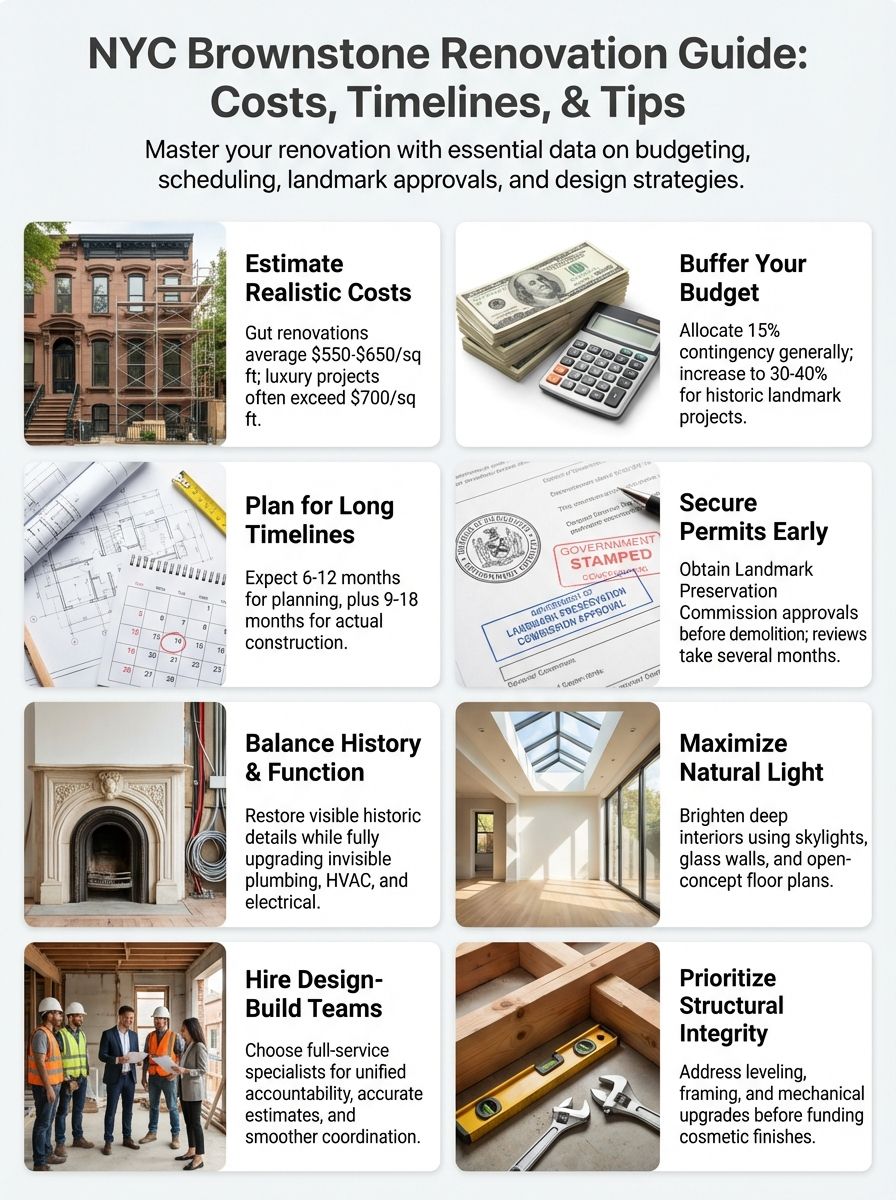
- Budget Accordingly: Expect brownstone renovation costs to range from $200-$500+ per square foot for targeted work. A full gut renovation averages $550-$650 per square foot, while luxury projects can easily exceed $700-$1,000 per square foot.
- Plan Your Timeline: A full renovation, from planning to completion, typically takes 6-12 months. The construction phase alone often lasts 9-18 months. If your property is in a historic district, securing approvals from the Landmarks Preservation Commission (LPC) can add several more months.
- Contingency is Key: Set aside a 15% contingency fund for unexpected issues in a standard renovation. For landmarked properties with more unknowns, a 30-40% contingency is much safer.
- Hire Proven Specialists: Choose a full-service contractor with specific experience in Brooklyn brownstones and a deep understanding of the LPC process. My company, HomeRenovation4U, has successfully completed over 725 projects since 2017.
Key Considerations for a Brooklyn Brownstone Renovation in NYC
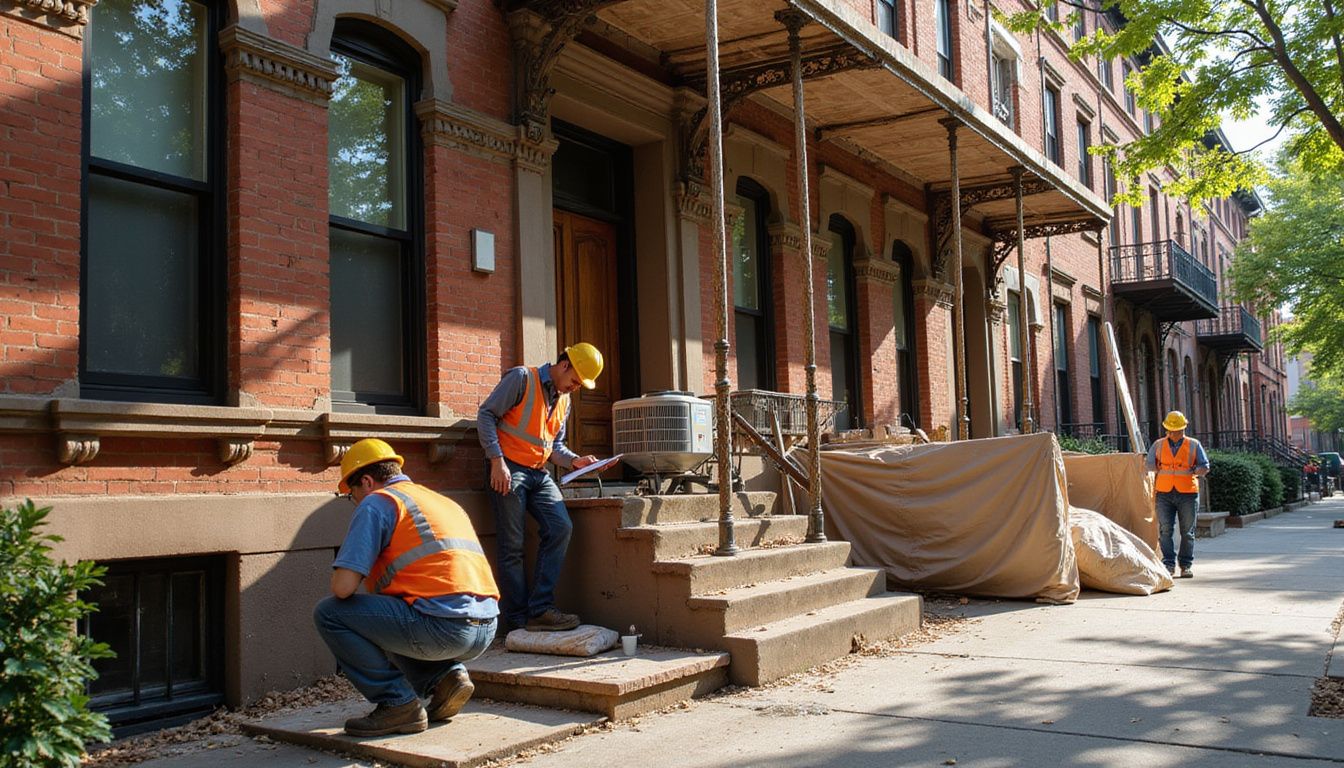
Every brownstone project involves a balancing act. You want to preserve the historic soul of the building while making it function like a modern home.
Before you even think about finishes, your team needs a solid plan for approvals, structural risks, and site logistics. This is where experienced full-service brownstone renovation contractors brooklyn truly earn their fee. They coordinate the entire process so the project moves forward without costly stalls.
Watch a short brownstone renovation walkthrough
How do you balance historic preservation with modern functionality?
My approach is to keep what cannot be easily replicated and rebuild what needs to perform. I focus on preserving original moldings, staircases, fireplaces, and facades. At the same time, I prioritize updating the plumbing, HVAC, and electrical systems to make the home safe, comfortable, and efficient.
Exterior work is where many projects run into delays. If your brownstone is in a historic district, any changes to protected architectural features require approval from the Landmarks Preservation Commission (LPC), which shapes your entire timeline. To avoid lengthy public hearings, which can add months to the process, my advice is to design for a staff-level approval whenever possible.
This often means choosing materials and designs that align with LPC guidelines, such as historically accurate windows from a company like Marvin, which specializes in solutions for historic projects.
I restore the details you love and install modern systems that last.
Inside, we tackle the biggest risks first. Sagging floors, undersized beams, and knob-and-tube wiring only get more expensive and disruptive to fix later on.
Then, we use light and layout to make the home feel bigger without erasing its character. Skylights and strategically placed interior glass can brighten the narrow brownstone floor plan without turning it into a generic white box.
What are the main challenges in renovating older homes?
Most of the “surprises” we find in brownstones fall into three categories: hazardous materials, hidden water damage, and outdated systems that can’t handle modern life.
- Hazardous Materials: Homes built before 1978 likely contain lead paint. Any work that disturbs painted surfaces must follow the EPA’s lead-safe practices. Asbestos is also common in old pipe insulation and floor tiles, requiring professional abatement. A certified asbestos investigator, like those at AAA Lead Professionals, must evaluate the materials before removal.
- Code and Permit Issues: Even interior-only projects often require permits from the Department of Buildings (DOB), especially if you’re altering kitchens, bathrooms, or mechanical systems.
- Logistical Constraints: Shared party walls, tight rear yards, and limited street access for deliveries all impact the schedule. These factors need to be planned for from the beginning.
A clear contingency fund and a formal change-order process are essential for managing these challenges. They protect your budget, your schedule, and the relationship with your contractor.
Real Costs of Brownstone Renovations
The cost of a “brownstone renovation” can mean anything from a simple cosmetic refresh to a complete gut that includes new structural and mechanical systems. The scope of work is the biggest driver of your final budget.
For most homeowners, the best way to create a realistic budget is to use a cost-per-square-foot range based on the project’s scope. You can then test this budget by getting detailed cost comparisons for full-service brownstone renovation contractors in brooklyn.
Watch a cost and scope explainer video
| Scope | Typical work | Budget range (per sqft) |
|---|---|---|
| Targeted Renovation | Selective updates, limited layout changes, partial MEP work | $200-$500+ |
| Gut Renovation (Upper Mid-Tier) | New kitchens and baths, major MEP, structural repairs as needed | $550-$650 |
| Luxury Gut Renovation | High-end finishes, custom millwork, premium systems, complex detailing | $700-$1,000+ |
What is the average cost per square foot for brownstone renovations?
The table above is a great starting point. Your final costs will depend on specific factors like landmark requirements, the extent of structural repairs, and the number of kitchens and bathrooms you are relocating.
A 2025 analysis of NYC renovation costs confirms these ranges, placing mid-range projects between $150-$250 per square foot and high-end work from $300-$500 and up. Your hard costs are for demolition, carpentry, and mechanicals, while soft costs cover architecture, engineering, and permit fees.
To put it in perspective, a 3,200-square-foot gut renovation at an upper mid-tier level would cost between $1.76 million and $2.08 million. A luxury version with high-end appliances from brands like Sub-Zero and Wolf could be between $2.24 million and over $3.2 million. Adding a rear-yard extension or significant facade work will increase these numbers.
How can you budget for unexpected renovation expenses?
A contingency fund isn’t just a good idea, it’s a necessary part of the job. I recommend a 15% contingency for most brownstone projects. If the building is landmarked or has known structural problems, you should increase that to at least 20-30%.
You can also avoid surprises by making smart decisions. When a wall is open for plumbing, that is the best time to upgrade old wiring or correct framing issues. The small incremental cost is much lower than reopening the wall later.
- Define Your Allowances: Your contract should include specific budget allowances for items like cabinets, tile, and plumbing fixtures. This prevents misunderstandings about quality and cost.
- Order Key Items Early: Windows, custom millwork, and specialty appliances can have long lead times, sometimes up to 20-30 weeks in the current market. Ordering them early prevents them from delaying the entire project.
- Plan for Carrying Costs: If you need to move out, remember to budget for temporary housing, which can easily be $3,000 or more per month.
- Use a Decision Calendar: Late decisions on finishes are a common cause of delays and change orders. A calendar with clear deadlines for each selection keeps the project on track.
Finally, never gamble with unpermitted work. A Stop Work Order from the NYC Department of Buildings comes with significant penalties. The initial fine for a violation is $6,000, and each subsequent offense costs $12,000. These costs, plus the resulting delays, can derail your project.
What extra costs apply to landmarked properties?
Landmarked properties add costs in two main areas: specialized design work and a longer approval process. Even if the construction itself is similar, the required documentation, material matching, and potential mockups increase professional fees.
You will likely need an architect with specific preservation experience and artisans who can replicate historic details. This is why I recommend a contingency of 30% to 40% for projects in historic districts, especially if you are changing the facade, windows, or adding a rooftop or rear-yard extension.
Timelines for Brownstone Renovations
A realistic project timeline includes more than just the construction phase. It must account for design, approvals, material ordering, and inspections, with each step depending on the one before it.
A phased approach can keep the work organized, but a full gut renovation is often faster once construction begins. However, it requires more upfront coordination and a more complex approvals process.
Watch a typical brownstone renovation timeline video
| Phase | What happens | Typical duration |
|---|---|---|
| Planning and Design | Survey, drawings, engineering, scope definition, bid comparisons | 2-4 months |
| Approvals and Permits | DOB filing, landmark review if applicable, revisions, permit issuance | 2-6 months (varies by scope) |
| Construction | Demo, structure, MEP rough-in, inspections, finishes, punch list | 9-18 months (common range) |
What is a phased renovation approach?
A phased approach breaks the project into smaller, manageable chunks. This helps you focus your decisions and reduces the chance of having to redo work.
In practice, this means completing all structural and MEP (mechanical, electrical, plumbing) work first. After that, you close up the walls and finish rooms in an order that makes sense for your lifestyle. If you plan to live in the home during the renovation, phasing is often the only practical way to do it, but you should expect a slower timeline and added costs for dust protection and site management.
How long does a typical brownstone renovation take?
A full brownstone renovation in NYC typically takes between 6 to 12 months from initial planning to the start of construction. This includes time for design, permits, and material ordering.
The construction phase itself usually lasts between nine and eighteen months, depending on the scope of work. Site logistics, delivery schedules, and city inspections can often extend the final stages of the project.
If your project involves exterior work that needs LPC approval, it’s smart to build a buffer into your schedule from the very beginning. A complete and well-documented submission package is your best tool for a smooth review process.
Which factors influence renovation timelines?
Most delays stem from a few common issues: incomplete drawings, slow decision-making, long-lead materials, and an approval process that wasn’t planned for early enough.
- Quality of Drawings: When architectural, structural, and MEP plans don’t align, you lose time and money on revisions and field changes.
- Landmark Scope: Any exterior changes can trigger additional review cycles with the LPC.
- Permit Review Times: The complexity of your project and how quickly you can resolve any objections from the DOB will determine your permit approval time.
- Long-Lead Materials: As of 2025, items like custom windows, millwork, electrical switchgear, and some HVAC systems can have lead times of several months, so they must be ordered well in advance.
- Owner Decisions: Late selections are one of the fastest ways to delay a project and generate change orders.
For a simple way to stay on track, ask your contractor for a detailed decision calendar before construction starts. This should map out every selection you need to make and its corresponding deadline.
Key Design Ideas for Brownstone Renovations
The best brownstone designs honor the home’s original character while improving the flow of daily life.
The goal is to restore beautiful original details, brighten the center of the floor plan, and modernize the kitchen and bathrooms in a way that feels true to the home’s Brooklyn roots.
How can you restore original architectural details?
I always start with a thorough inspection to identify any structural issues, water damage, or failing masonry. These problems must be addressed first, otherwise they will ruin any finish work you do.
Next, we decide what can be preserved, what needs to be repaired, and what must be reproduced. For plaster and trim, it’s often possible to have new pieces milled to match the historic profiles perfectly.
- Protect What Stays: We build temporary protection around stairs, newel posts, mantels, and any other details you want to keep so they are not damaged during demolition.
- Fix Moisture First: Water infiltration from the roof, parapets, or windows must be stopped before any new plaster or paint is applied.
- Use Samples: Always test paint colors, wood stains, and mortar tones in small, inconspicuous areas before committing to them on a large scale.
How do you incorporate modern layouts and amenities?
True modern comfort begins with the systems behind the walls. A well-designed mechanical plan allows you to enjoy quiet, efficient heating and cooling, great water pressure, and reliable electrical service, all while preserving the home’s historic charm.
One of the best options for older homes is a high-velocity HVAC system, like those from Unico or SpacePak. These systems use small, flexible ducts that can be installed with minimal disruption to existing walls and ceilings, preserving the architectural integrity of the space.
To keep costs under control, try to locate new kitchens and bathrooms near existing plumbing stacks. Moving plumbing can significantly increase demolition, framing, and restoration costs.
How to maximize natural light with skylights and glass walls?
The center of a brownstone floor plan is often dark, so managing light is one of the most impactful design moves you can make.
Skylights can completely transform top floors and stairwells. On lower floors, interior glass partitions or doors can borrow light from brighter rooms without sacrificing privacy.
- Place Skylights Strategically: They are most effective in stairwells, hallways, and interior bathrooms that lack windows. Quality brands like Velux offer options with integrated shades for better heat control.
- Use Interior Glass: Pocket doors with glass panels, transoms above doorways, and steel-and-glass partitions can all help share light between rooms.
- Confirm Structural Needs: Always have an engineer verify the framing and load paths before cutting any new openings for skylights or large windows.
What are functional design ideas for kitchens and bathrooms?
The best kitchen and bathroom designs are planned around your daily routines, and then styled to look like they belong in a historic home.
- Prioritize Circulation: Maintain clear pathways and avoid oversized islands that can make the room feel cramped. The National Kitchen & Bath Association (NKBA) provides helpful guidelines for clearances.
- Invest in Touchpoints: Spend your budget on the items you touch every day, such as faucets, cabinet hardware, and light fixtures.
- Maximize Storage: Use tall pantry cabinets, recessed medicine cabinets, and clever under-stair storage to make the most of every square inch.
- Ensure Good Ventilation: A powerful but quiet exhaust fan in the bathroom and a properly vented range hood in the kitchen will protect your finishes from moisture and odors.
Getting LPC Approvals (Landmarked Brownstones)
If your brownstone is an individual landmark or located within a historic district, the Landmarks Preservation Commission (LPC) will shape what you can do to the exterior and how quickly you can do it.
The LPC has several permit types, and your architect will help determine which path your project needs to follow. A Permit for Minor Work has no fee, while a Certificate of Appropriateness involves a fee based on the cost of the work.
What are LPC requirements for historic districts?
The first step is understanding which permit path is right for your project, as each has different documentation requirements and timelines.
- Certificate of No Effect (CNE): For work that requires a DOB permit but does not impact protected architectural features, such as most interior renovations.
- Permit for Minor Work (PMW): For exterior work that affects protected features but doesn’t require a DOB permit, such as certain types of window or masonry restoration.
- Certificate of Appropriateness (CofA): For major exterior alterations like rooftop additions, rear-yard extensions, or significant changes to the facade. This path often requires a public hearing.
What tips help ensure a smooth LPC approval process?
A smooth approval process comes down to thorough preparation. A complete, clear, and consistent submission package will minimize back-and-forth with the LPC and keep your project on schedule.
- Submit a Perfect Package: Provide clear photos, detailed drawings, and precise material descriptions to help the LPC staff quickly understand your proposal.
- Use Samples and Mockups: For key exterior elements like windows, doors, and masonry, providing physical samples or photo mockups can prevent subjective debates.
- Talk to Neighbors Early: For projects involving rear-yard or rooftop work, having early conversations with your neighbors can be very helpful, as their feedback is often considered during the community board review.
- Design for Staff-Level Approval: When possible, designing your project to align with established LPC rules can help you avoid the longer public hearing process.
Finding the Right Contractors and Designers
The right team for a brownstone renovation in NYC needs more than just excellent craftsmanship. They must also be experts in navigating city filings, safety planning, and coordinating trades on a tight urban site.
This is why many homeowners hire full-service brownstone renovation contractors brooklyn. It gives you a single point of accountability for the schedule, budget, and quality of the entire project.
Why hire specialists for brownstone renovations?
Brownstones present unique challenges that specialists are prepared to handle. They understand the common failure points, such as leveling old joists, dealing with sensitive party walls, and routing modern MEP systems without destroying historic plasterwork.
A design-build firm can be a great choice because the team that designs the project is also responsible for building it. This approach closes the gap between the architectural vision and the reality of construction, often leading to a smoother process.
How important are experience and references when choosing contractors?
Experience is critical because brownstones are not forgiving. You need a contractor who can show you completed projects that are similar to yours in age, scope, and landmark status.
Licensing and insurance are non-negotiable. You can verify a contractor’s Home Improvement Contractor license on the NYC Department of Consumer and Worker Protection (DCWP) website. This license is required for them to pull permits for most renovation work.
- Ask for a Project Story: Don’t just look at “before and after” photos. Ask the contractor to walk you through a past project, explaining the problems they encountered and how they solved them.
- Confirm Who Handles Permits: Make sure it’s clear who is responsible for all DOB and LPC filings.
- Verify Trade Licenses: Your plumbing and electrical subcontractors must be licensed and pull their own permits for their work.
- Request a Clear Change-Order Process: Surprises are inevitable, but how they are handled shouldn’t be. Make sure there is a written process for pricing and approving any changes to the scope of work.
As the founder of HomeRenovation4U, I’ve overseen more than 725 projects since 2017. In my experience, homeowners who request detailed cost comparisons for full-service brownstone renovation contractors in brooklyn make the best decisions, because they can clearly see what is, and is not, included in each bid.
Examples of Successful Brownstone Renovations
Every successful brownstone project has one thing in common: the planning phase is treated as part of the construction, not just paperwork you do beforehand.
If you want an accurate scope and schedule, ask your brownstone renovation contractor for a detailed, written plan that connects every phase of the project to clear milestones.
How can multi-family homes be restored to single-family residences?
Converting a multi-unit brownstone back into a single-family home can be a fantastic way to create a spacious residence, but it’s a major undertaking that involves significant filings with the DOB.
- Confirm the Legal Status: Your architect must review the property’s Certificate of Occupancy and any records of prior alterations to confirm the legal path for conversion.
- Plan Egress Early: The stair layout is the spine of the home. It must be designed to meet current building codes for single-family egress.
- Rebuild the Systems: A conversion is the perfect time to fully modernize the electrical and plumbing systems for the new layout. This usually involves upgrading to a 200-amp electrical service, which can cost between $1,800 and $4,500.
This type of project requires an Alteration Type 1 (Alt-1) permit, which is necessary for changing a building’s use or occupancy. It’s a complex process, but the result is a home that is perfectly tailored to your family.
What are examples of adding contemporary touches like steel dividers and glass walls?
Modern elements work best when they complement the historic character of the house, not compete with it.
Steel-and-glass partitions, often fabricated by local companies like HMH Architectural Metal and Glass or Vitrum Glass NYC, can define spaces like a home office or dining area while allowing light to flow through. When adding these features, it’s important to use tempered or laminated safety glass, especially in high-traffic areas.
In a tall, five-story brownstone, a central skylight over the main staircase can act as a light well, bringing natural light down through the core of the home and making every floor feel more open and connected.
Additional Tips for a Successful Renovation
A major brownstone project doesn’t have to be overwhelming. Phasing the work can make it more manageable, as long as the overall plan is designed to accommodate future work without requiring you to tear out newly finished spaces.
A great way to start is by asking your contractor for two versions of the plan: a “must-do” scope that covers all structural and MEP needs, and an “upgrade” scope for finishes and layout changes. This is the fastest way to get meaningful cost comparisons for full-service brownstone renovation contractors in brooklyn.
How can phasing larger projects over time benefit your renovation?
- Phase 1: Address the building envelope (roof, facade, windows) and core systems (structure, main plumbing and electrical lines).
- Phase 2: Renovate the most essential floors, typically the kitchen and living level and the primary bedroom suite.
- Phase 3: Complete the remaining floors, specialty millwork, and any exterior restoration.
This approach also leads to better decisions, as you are selecting finishes based on the real lighting and conditions of the space, not just from architectural drawings.
Why prioritize structural upgrades and MEP systems?
Your structural and MEP (mechanical, electrical, plumbing) systems are the foundation for every finish you choose. If the floors aren’t level, your new tile will crack. If the wiring is outdated, your new lighting plan won’t work. If the ventilation is poor, your fresh paint job won’t last.
In my experience, the best long-term value comes from modernizing the electrical panel, plumbing lines, heating and cooling systems, and insulation. Once you have systems you can trust, you can build your beautiful new design on top of them.
End Note
A successful Brooklyn brownstone renovation is a careful blend of historic preservation and modern living. The best projects protect the long-term value of the home by focusing on structural and system upgrades first.
You should expect months of work, plan for a healthy contingency fund, and treat the city approval process as a key part of the construction timeline.
The best way to get clarity on your project is to start with a site walkthrough with an experienced contractor. Ask for detailed cost comparisons for full-service brownstone renovation contractors in brooklyn that clearly define the scope, allowances, and schedule.
When you are ready to take the next step, contact us to review your plan and schedule a visit.
FAQs
1. What does a Brooklyn brownstone renovation include?
A renovation can range from exterior facade and roof repairs to complete interior gut renovations with modern system upgrades (plumbing, electrical, HVAC). A full-service project includes managing all design, permits, and inspections as well.
2. How much will a brownstone renovation cost?
Costs vary widely based on the scope. A targeted renovation can be $200-$500+ per square foot, while a full gut renovation typically costs $550-$650 per square foot. We provide detailed cost comparisons for full-service brownstone renovation contractors in brooklyn to help you understand the value and make an informed decision.
3. How long does a project take, and who runs it?
From planning to completion, timelines often run 6 to 12 months, with the construction phase lasting 9 to 18 months. Hiring full-service brownstone renovation contractors brooklyn is the best way to keep the project on track, as they manage everything from design and permits to construction and final inspections.
4. How do I start, and get a clear quote?
The first step is to contact a trusted contractor and schedule a site visit. We can then provide a tailored estimate, helpful cost comparisons, and design ideas that align with your budget and goals.