

If you own in New York, you already know the pattern: a charming apartment or townhouse can look great on paper, then daily life exposes every flaw in the layout. That is why custom home remodels NYC projects work best when they solve real problems first, better light, better storage, smarter circulation, and cleaner building systems.
The 2023 NYC Housing and Vacancy Survey found that 54% of the city’s housing units are in buildings built before 1947. That matters because old risers, uneven framing, limited electrical capacity, and hidden damage can shift both cost and schedule fast.
Start with the rules, then the design.
I have led NYC renovations since 2000, and the projects that stay on track usually follow the same order: define the scope, design around building rules, then build with tight coordination. In this guide, I’ll break down the process, the design choices that earn their keep, the budget ranges that are realistic in today’s market, and the contractor decisions that protect your investment.
What Matters Most Before You Remodel
- Most NYC residential remodels fall under Alt-1, Alt-2, or Alt-3 filings, and most permit applications move through DOB NOW: Build. Co-op and condo board approvals often add a separate review layer before work starts.
- Recent 2025 and 2026 NYC cost guides put cosmetic refreshes at about $150 to $250 per square foot, full renovations at about $250 to $450 per square foot, and high-end gut renovations at $500+ per square foot, with kitchens and bathrooms driving a big share of the spend.
- Prewar homes need extra planning. Paid contractors disturbing paint in pre-1978 homes must follow lead-safe rules, and NYC owners must determine whether asbestos is present in affected areas before permits are issued.
- High-impact upgrades, such as custom millwork, efficient fixtures, better lighting, smart climate control, and updated plumbing and electrical systems, improve daily function and make resale easier in a competitive NYC market.
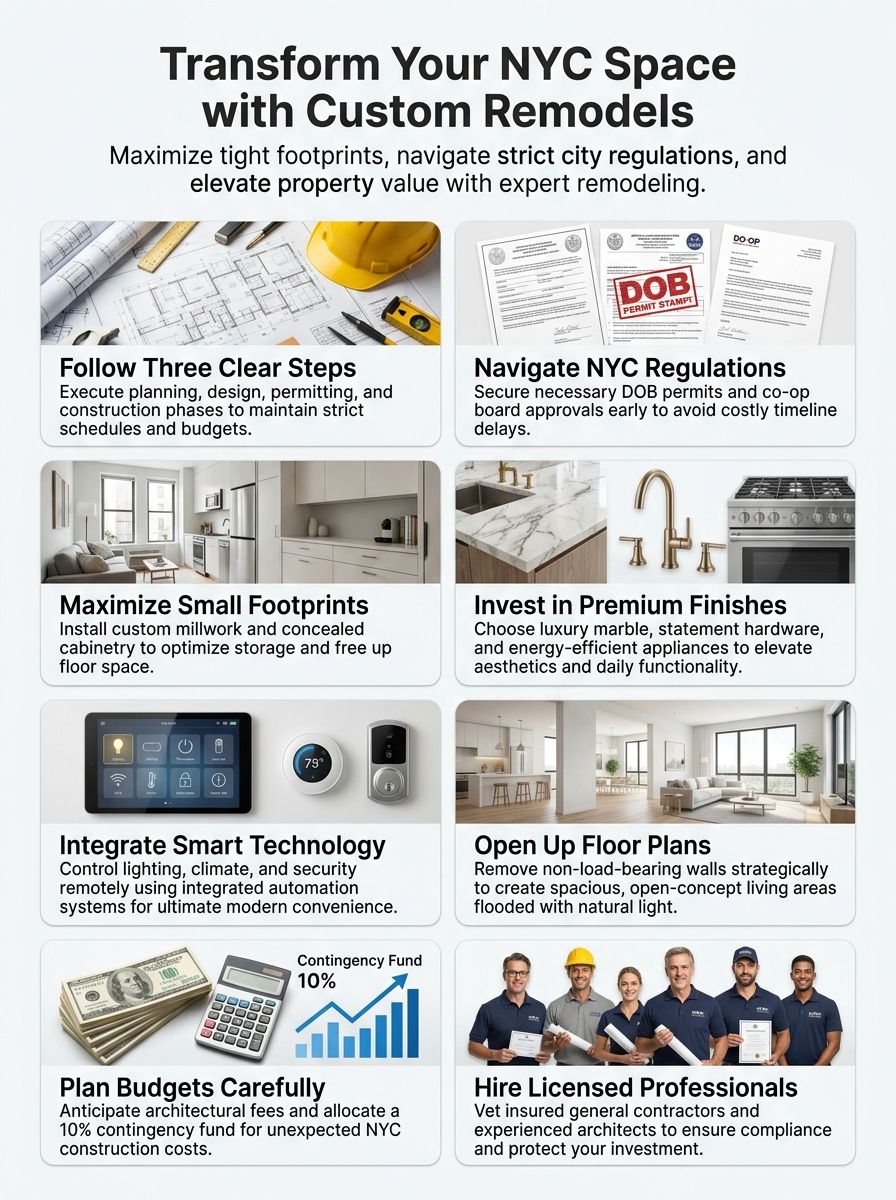
Key Steps in Custom Home Remodels NYC
We guide you through the full renovation path, consultation, design, permits, construction, and final detailing, so your project moves with fewer surprises. Our licensed contractor-led team keeps the design, the paperwork, and the field work aligned, which is one of the biggest differences between a smooth NYC remodel and a stalled one.
Watch the renovation process video
What Happens During the Consultation and Planning Phase?
The consultation is where we measure the space, review the building type, and get clear about how you actually live in the home. In NYC, that means more than style boards. We need to know whether you are in a co-op, condo, brownstone, or townhouse, whether the building is landmarked, and whether your goals involve plumbing moves, wall removal, central air, or new millwork.
The Department of Buildings requires a Registered Design Professional to perform a pre-design review on alteration projects before drawings are finalized. That early review matters because it forces the team to look at existing structure, plumbing, electrical, mechanical systems, and code impacts before you commit to a layout that later gets rejected.
Clear plans, complete drawings, and early rule-checking save more time than rushed demolition ever will.
This phase is also where hidden-condition risk becomes real. The latest city housing survey found that pre-1947 buildings still make up most of the housing stock, and older units report higher rates of leaks, peeling paint, and other housing problems than newer buildings. If your apartment is prewar, I assume we may find old patchwork plumbing, floor leveling issues, or outdated wiring once walls open up.
- Scope: what stays, what moves, and what must be rebuilt.
- Budget: where to spend on layout and systems first, and where finishes can flex.
- Building rules: alteration agreement, insurance requirements, work hours, elevator use, and debris rules.
- Procurement: long-lead items such as custom cabinetry, specialty tile, windows, and appliances.
A practical tip many owners learn too late is that specialty finishes can slow the job before construction even begins. Owners and renovators in NYC forums regularly report lead times of roughly eight to ten weeks for tile and wood flooring, and three to four months for custom cabinetry, so we start those decisions during design, not after demolition.
How Do Design, Permits, and Approvals Work in NYC?
The NYC Department of Buildings reviews most renovation filings, and most residential work falls into one of three categories: Alt-1 for major changes that affect use, egress, or occupancy, Alt-2 for broader work that does not change those items, and Alt-3 for one minor type of work. Most applications are now submitted through DOB NOW: Build.
| Filing type | Typical remodel use | Why it matters |
|---|---|---|
| Alt-1 | Major reconfiguration that changes use, egress, or occupancy | Usually carries the heaviest review and documentation burden |
| Alt-2 | Kitchen, bath, structural, or system work without changing use | The most common path for substantial apartment renovations |
| Alt-3 | One minor work type | Best for narrow scopes with limited impact |
Your building may be just as important as the city. Co-op and condo boards usually require an alteration agreement, detailed drawings, contractor insurance, and a management review before they let work start. In practice, incomplete packages, vague scopes, and missing insurance certificates are some of the most common reasons approvals drag out.
Most Manhattan co-ops also impose weekday work windows and strict protection rules for halls, elevators, and common areas. Recent NYC renovation estimators and alteration-agreement guides commonly place board review at about four to eight weeks for a complete package, and they often note insurance minimums in the $1 million to $2 million range for general liability.
A second planning trap is the building’s own wet-area policy. Many co-ops and condos limit “wet over dry” moves, which usually means you cannot shift a new kitchen or bath over the bedroom or living room below without a very strong technical case, if they allow it at all.
What Should I Expect During Construction and Finishing Touches?
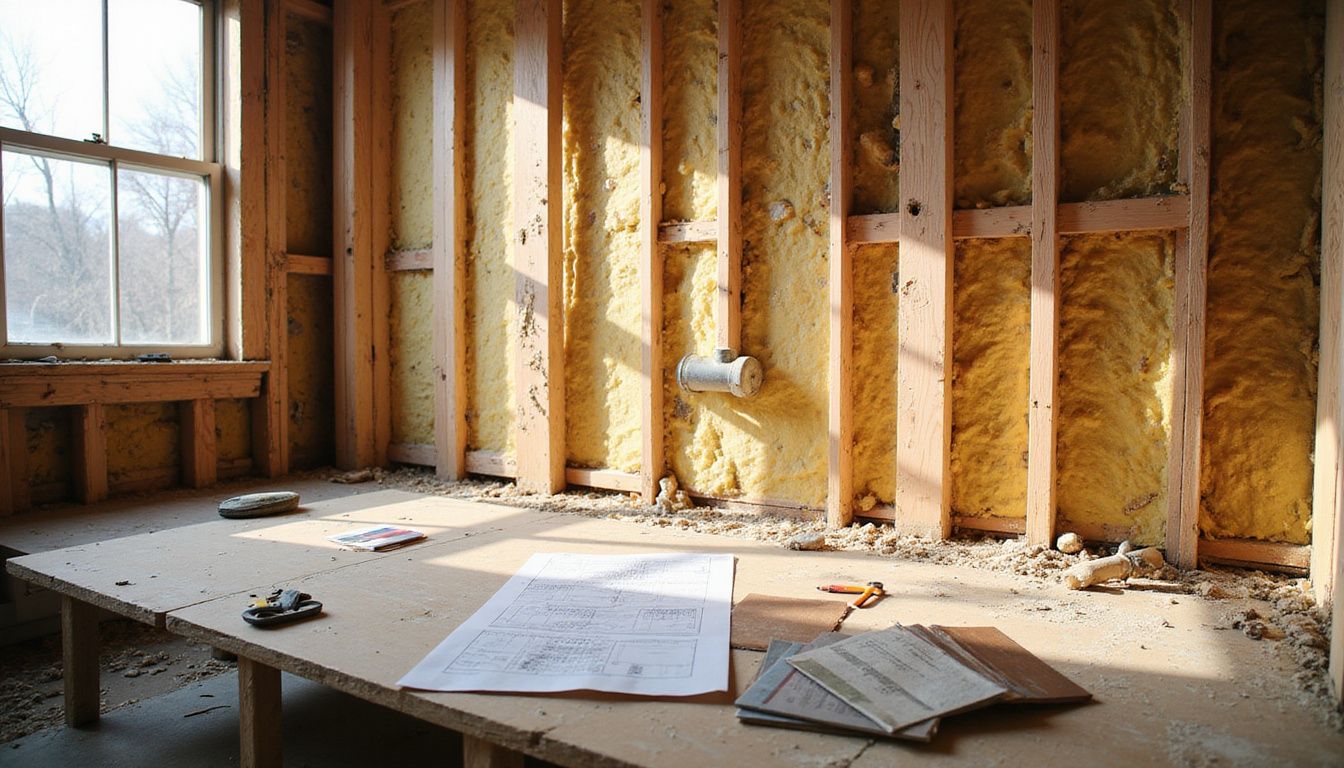
Construction starts with protection, controlled demolition, and rough work sequencing. We protect floors, elevators, and corridors, then move through demolition, framing, rough plumbing, electrical, inspections, drywall, millwork, tile, paint, and punch list in a clear order.
In older homes, safety planning is part of the construction scope. The EPA says paid contractors who disturb painted surfaces in pre-1978 homes must follow lead-safe practices, and in NYC the owner is also responsible for determining whether asbestos is present in the affected work area before DOB will issue permits. That is why dust control, containment, and testing belong in the schedule from day one.
Licensed trades handle licensed work. Plumbing alterations must be supervised by a Licensed Master Plumber, electrical work needs its own permit path, and even seemingly simple bathroom moves can trigger more review than owners expect.
- Demolition and prep: protect the apartment, isolate dust, remove debris safely.
- Rough work: framing, plumbing, electrical, HVAC, inspections.
- Finish work: drywall, flooring, tile, stone, paint, trim, cabinetry, hardware.
- Closeout: punch list, sign-offs, and final turnover.
The finishing stage is where quality becomes visible. Tight tile cuts, aligned reveals, level cabinet runs, clean paint lines, and well-placed lighting are what make a project feel expensive, even before you talk about material brands.
Design Elements to Elevate Your NYC Home
We specify custom millwork, high-end finishes, and smart home systems that improve both day-to-day living and long-term value. In NYC, good design is rarely about adding more things. It is about making the same footprint work harder and look calmer.
Watch design ideas for NYC renovations
How Can Custom Millwork and Cabinetry Enhance My Home?
Custom millwork is one of the most effective upgrades in a city apartment because it solves the storage problem without making the room feel crowded. Full-height cabinetry, radiator covers with usable tops, media walls, entry built-ins, banquettes, and integrated home-office joinery all turn dead space into working space.
Done well, millwork also cleans up sight lines. You can hide small appliances, create appliance garages, build storage around columns, and run trim details that make uneven prewar walls look intentional instead of patched.
- Kitchens: pantry pull-outs, appliance panels, corner optimization, banquette seating.
- Bedrooms: wall-to-wall wardrobes, bridge storage, built-in nightstands.
- Living areas: media walls, shelving, concealed storage, window seats.
- Work zones: compact desks, printer storage, file drawers, integrated lighting.
A schedule tip here is simple: approve cabinet layouts early. In real NYC projects, custom cabinetry often carries the longest interior lead time, so late shop-drawing changes can delay countertops, appliances, and final paint all at once.
What Are High-End Finishes and Fixtures to Consider?
High-end finishes should do more than look good in photos. In a NYC remodel, the best choices are the ones that hold up to tight clearances, daily use, and hard water, while still giving the room character. That usually means durable counters, stable cabinetry finishes, solid hardware, easy-to-clean shower systems, and lighting with separate task and ambient layers.
Efficient fixtures also carry real value. The EPA says a WaterSense showerhead uses no more than 2.0 gallons per minute and can save the average family about 2,700 gallons of water per year. ENERGY STAR notes that certified refrigerators are about 9% more efficient than models that only meet the federal minimum standard.
| Upgrade | Why homeowners choose it | What it can do |
|---|---|---|
| Quartz or natural stone counters | Cleaner seams and better wear than many lower-cost surfaces | Improves durability in kitchens and baths |
| WaterSense showerheads | Better water efficiency without a weak spray | Helps cut water and water-heating use |
| ENERGY STAR appliances | Lower operating cost over time | Reduces energy waste in everyday use |
| Statement hardware and layered lighting | Fast visual payoff | Makes simple cabinetry and tile look more refined |
If you want the room to feel upscale without overspending, put more budget into surfaces you touch every day, countertops, cabinet fronts, faucets, pulls, switches, shower trim, and fewer dollars into trendy extras you will stop noticing in a month.
That is also why we often pair premium focal materials with practical supporting finishes. You may choose a slab vanity top, then use a durable porcelain floor that handles traffic better than a softer stone.
We also recommend energy-efficient appliances when the scope includes a kitchen or laundry update. They make the project feel current now, and they read well to future buyers who are comparing monthly carrying costs.
How Do Tile and Stonework Improve Home Design?
Tile and stone shape how a room feels the second you walk in. In small NYC kitchens and baths, they define zones, add texture, and create a sense of permanence that paint alone cannot match.
Material choice should connect directly to use. Porcelain is usually the easy answer for busy floors because it is durable and easier to maintain, while natural stone makes more sense on focal walls, fireplace surrounds, vanity tops, or lower-traffic areas where the texture and veining can lead the design.
- Large-format tile: fewer grout lines, cleaner look, good for small baths.
- Mosaic or textured tile: better slip resistance and visual detail in shower floors.
- Checkerboard and patterned floors: strong character in entryways and kitchens.
- Stone accents: best used where you want one memorable focal point.
There is a budget side to this too. Sweeten’s NYC bathroom guide puts bathroom tile installation at roughly $26 to $82 per square foot, depending on material and complexity, and it suggests adding at least 10% material overage so you do not get stuck hunting for a matching batch later.
That extra ordering discipline matters in New York. A single backordered tile can hold up grouting, plumbing trim, glass, and final punch work.
Why Integrate Smart Home Technology in a Remodel?
Smart home technology works best when it is planned with the electrical scope instead of added after the walls are closed. That lets you place dimmers, keypads, under-cabinet lighting, speakers, thermostats, leak sensors, and low-voltage wiring where they actually support the way you live.
For most homeowners, the smartest first move is climate and lighting control. ENERGY STAR says homes with high heating and cooling bills, or homes left empty for much of the day, can save about $100 a year with a certified smart thermostat. That makes smart control a practical upgrade, not just a luxury feature.
In NYC apartments, I usually prioritize three smart features first:
- Lighting scenes: better mood, easier entertaining, less clutter from switches.
- Climate control: more comfort and better energy management.
- Security and access: video entry, smart locks, and remote monitoring where building rules allow.
The key is restraint. A few integrated systems that work reliably are better than a long list of disconnected gadgets that create app fatigue.
Popular Remodeling Projects in NYC
The most requested NYC remodels tend to focus on the rooms that drive daily friction and daily value: kitchens, bathrooms, open-plan living areas, and older townhouses or brownstones that need major structural and systems work. The right scope depends on how long you plan to stay, how much flexibility your building allows, and how much outdated infrastructure is hiding behind the walls.
Watch examples of popular NYC remodels
How Can I Transform My Kitchen Effectively?
A strong kitchen remodel starts with layout discipline. In NYC, the most successful kitchens usually improve storage, clearance, lighting, and appliance placement before they chase decorative upgrades. If the sink, range, and dishwasher already sit in workable positions, keeping them close to existing lines can save a lot of money.
Sweeten’s 2025 NYC kitchen cost guide lists starting points of about $26,000 for a budget-friendly renovation, $40,000 for a mid-range project, and $85,000 for a high-end remodel. It also notes that a major gut kitchen typically adds another 15% to 25% to the cost of the same room size.
| Kitchen tier | Typical starting point | What you usually get |
|---|---|---|
| Budget-friendly | $26,000 | Improved finishes, basic appliance and cabinet upgrades, limited layout change |
| Mid-range | $40,000 | Better cabinetry, counters, lighting, and more polished layout updates |
| High-end | $85,000 | Premium appliances, custom millwork, upgraded lighting, refined detailing |
Function matters as much as the finish palette. We design kitchens with full-height pantry storage, drawer-based base cabinets, integrated trash pull-outs, and lighting that covers prep zones instead of just the center of the room.
For homes with tight footprints, this is also where custom storage earns its keep. If your kitchen feels small, the answer is often better planning inside the cabinets, not a bigger island that blocks circulation.
New flooring and finish selections still matter, and high-end kitchen remodels work best when every choice supports function, not just appearance.
What Are the Best Upgrades for a Luxurious Bathroom?
A luxury bathroom should feel calm, efficient, and easy to maintain. Good upgrades include radiant floor heat, a larger shower with better drainage, a vanity designed for your storage habits, medicine cabinets recessed where possible, and lighting layers that work for both morning routines and evening wind-down.
Sweeten’s latest NYC bathroom pricing starts a full bathroom renovation at about $18,000 for budget level, $28,000 for mid-grade, and $40,500 for high-end work. For an average full bath, the same guide says a gut remodel can add another 15% to 25% over a standard rip-and-replace job.
Water efficiency deserves attention here because it adds up every single day. The EPA says WaterSense showerheads can save about 2,700 gallons of water per year for the average family, so choosing efficient shower trim is one of the rare upgrades that improves both comfort and operating cost.
- Radiant heat floors: strong comfort upgrade, especially in stone or porcelain baths.
- Curbless or larger showers: better access and cleaner sight lines.
- Custom vanities and recessed storage: more function without crowding the room.
- Layered lighting: vanity, shower, and ambient light on separate controls.
If you are considering an added powder room, the first questions are not about tile. They are about riser access, drainage, ventilation, and whether the building allows the wet-area move at all.
That is why a luxury bathroom renovation starts with plumbing and layout logic first, then materials.
How Do Open Floor Plan Conversions Work?
Open-plan conversions can make a NYC apartment feel dramatically larger, but the real work happens behind the clean look. Removing a simple partition is one thing. Removing a bearing wall, rerouting plumbing, shifting gas lines, or changing structural loads is a different level of project entirely.
The Department of Buildings requires drawings that show the existing condition, the proposed condition, and the areas affected by the scope of work. Where structural stability is temporarily diminished, special inspection requirements can also apply, which is why engineer coordination needs to happen early.
If your open-plan idea also moves a kitchen or bathroom, board rules can matter as much as structural rules.
Many co-ops and condos limit wet-area shifts because of leak and noise risk to the apartment below. So while owners often imagine a wide-open kitchen-living room, the winning plan is usually the one that opens sight lines while keeping plumbing close to existing stacks.
Lighting is what makes the new layout read clearly. We use ceiling lighting, millwork lighting, and material shifts to separate cooking, dining, and living zones without putting walls back in.
What Should I Know About Townhouse and Brownstone Restorations?
Townhouse and brownstone work gives you more freedom than a co-op apartment, but it also gives you more responsibility. You may be dealing with facade repairs, roof work, stoops, windows, rear-yard excavation, structural reinforcement, extensions, and full building-system replacement in the same project.
The Landmarks Preservation Commission regulates work on landmark properties, and as of 2026 it still requires permits for most exterior changes to buildings in historic districts, even if the work would not need a DOB permit on its own. LPC also notes that its permit system now runs through Portico, and many minor exterior repairs that do not require DOB permits can still qualify for no-fee minor work review.
LPC oversees more than 38,000 landmark properties across 157 historic districts citywide, so it is smart to confirm status before you assume a window replacement, cornice repair, railing change, or roof deck will be straightforward.
- Common brownstone scopes: facade restoration, roof replacement, waterproofing, window and door upgrades.
- Major value-add scopes: rear extensions, cellar excavation, stair reconfiguration, new mechanical systems.
- High-complexity items: underpinning, additions, elevators, landmark review, structural steel.
We coordinate closely with engineers, expediters, and specialists on these homes because the envelope, the structure, and the approvals all move together. That is also why we often work alongside firms such as Fontan Architecture on complex engineering and restoration needs where the documentation has to be especially tight.
Budget Considerations for NYC Remodels
Budgeting a New York renovation works best when you stop thinking in one single number. A realistic budget has to separate scope, finish level, building restrictions, soft costs, and contingency. That is the only way to compare bids fairly.
| Project scope | Common NYC range | Typical profile |
|---|---|---|
| Cosmetic refresh | $150 to $250 per square foot | Paint, flooring, lighting, pull-and-replace work |
| Full renovation | $250 to $450 per square foot | New kitchen and baths, electrical updates, selective layout changes |
| High-end gut renovation | $500+ per square foot | Studs-out work, structural changes, premium millwork, major system upgrades |
Those ranges line up with recent 2025 and 2026 NYC cost guides from local architects, design-build firms, and contractor platforms. They are useful starting points, but your building rules, finish level, and amount of hidden-condition work will decide where you actually land.
How Does Size Affect My Remodeling Budget?
Square footage matters, but scope matters more. A large apartment with light cosmetic updates can cost less per square foot than a small apartment where you are rebuilding two baths, moving a kitchen, and upgrading the electrical service.
Wet rooms are the cost drivers. Sweeten’s citywide guidance still places full-home remodels at roughly $100 to $200 per square foot for lighter blended scopes, while kitchens and baths carry much higher density of labor and materials. That is why the same 1,200-square-foot home can produce very different bids depending on how much of the work sits in plumbing-heavy areas.
Size also increases coordination load. Bigger projects need more staging, more deliveries, more trade overlap, and longer supervision, which is one reason townhouse and brownstone projects often feel expensive even before premium finishes enter the picture.
- Smaller project, higher intensity: kitchens and baths can cost more per square foot.
- Larger project, broader scope: more labor hours, more management, more soft costs.
- Older large homes: bigger risk of full-system replacement once walls open.
My standard advice is to reserve contingency based on scope, not just optimism. For lighter, non-gut work, 10% to 15% is a sensible cushion. For gut work in older buildings, 15% to 20% is safer.
What Material and Finish Options Impact Costs?
Material pricing can swing hard in NYC because you are paying for the product, delivery logistics, waste factors, installation skill, and building access all at once. The right way to budget is to separate raw material cost from installed cost, because those numbers are rarely close.
For example, entry-level laminate or ceramic can look inexpensive on a sample board, but premium stone fabrication, difficult tile patterns, and custom cabinetry labor are what move the total budget. Sweeten’s current guides put installed kitchen counters at roughly $39 per square foot on the low end and $557+ per square foot at the high end in NYC, while walk-in shower remodels commonly run from about $2,000 to $15,000 before major layout changes.
| Material choice | Budget effect | Best use |
|---|---|---|
| Porcelain tile | Usually more controlled than natural stone | Busy floors, baths, high-traffic zones |
| Natural stone | Higher fabrication and maintenance cost | Feature walls, vanities, statement counters |
| Semi-custom cabinetry | Mid-range price with decent flexibility | Kitchens and baths with regular dimensions |
| Fully custom millwork | Higher upfront cost, stronger fit and storage payoff | NYC apartments with odd dimensions and tight footprints |
Order extra material where the finish is batch-sensitive. Tile suppliers and remodel guides commonly recommend at least 10% overage, and I agree with that rule because a single shortage can delay several trades at once.
What Professional Fees and Services Should I Budget For?
Soft costs are where many homeowners under-budget. Design, architecture, engineering, expediting, permit filings, dumpster and debris logistics, building fees, and project management all sit outside the visible finish budget, but they are essential to getting the job approved and completed.
Current NYC renovation guides commonly place architecture and design fees in the 10% to 20% range, depending on how much service is included. If the team is handling concept design, construction documents, filing coordination, finish schedules, site visits, and punch-list support, the fee will land higher than a simple drawing package.
The contract structure matters too. The Department of Consumer and Worker Protection says a home improvement contractor must be licensed for residential work over $200 in New York City, and its consumer guidance says you should not pay more than 25% upfront. That one rule alone can protect you from a lot of bad bid behavior.
- Architecture and design: concept work, drawings, finish schedules, filing support.
- Engineering: structural, mechanical, plumbing, electrical coordination where needed.
- Permits and approvals: DOB filings, trade permits, board submissions, landmark review if applicable.
- Project management: scheduling, procurement tracking, site coordination, quality control.
These services are not overhead for the sake of overhead. In NYC, they are what keep the project legal, coordinated, and buildable.
Related: Commercial Locker Room Renovation Cost per Square Foot
Commercial locker room cost per square foot guides can still be useful if you own mixed-use property or compare contractor pricing across residential and commercial work. They help you see how labor density, plumbing load, finish durability, and fixture count affect cost, which is a useful habit when you review any renovation proposal.
Use those benchmarks as context, not as a direct substitute for residential pricing. Apartment board rules, access limits, and townhouse envelope work create their own NYC cost profile.
Choosing the Right Professionals
Choosing the team is where many remodels are won or lost before work starts. A good contractor is not just someone who can build. In New York, the right team also knows how to document, schedule, protect common areas, coordinate licensed trades, and communicate with management and consultants.
We vet general contractors and architects with NYC renovation, remodeling, and construction experience so your project lines up with your custom design goals and your building’s actual requirements.
Why Are Licensed and Insured Contractors Important?
Licensed and insured contractors reduce risk in ways homeowners feel immediately if something goes wrong. They are easier to verify, they are more likely to understand permit requirements, and they are better positioned to satisfy building insurance rules and inspection needs.
For residential work over $200 in NYC, the city requires a Home Improvement Contractor license. The DOB also requires contractors to provide their home improvement contractor license details when permits are obtained for many one- to four-family, co-op, condo, and rental-unit alteration jobs.
Insurance matters just as much as the license. DOB NOW permits can expire based on the earliest insurance or license expiration date, so shaky paperwork can interrupt a job even after approval.
- License: confirms the contractor is legally allowed to perform covered home-improvement work.
- Insurance: protects you, the building, and neighboring units from job-site claims.
- Permitting ability: keeps the project moving through DOB and trade inspections.
- Consumer protection: licensed contractors may give you access to city complaint and trust-fund remedies if the job goes sideways.
That is why I tell owners to check paperwork before they fall in love with a bid.
How Do I Select the Best General Contractor in NYC?
The best general contractor for your project is the one who has already managed jobs like yours, in the same kind of building, with the same approval hurdles. A great townhouse builder is not automatically the right fit for a strict Park Avenue co-op, and the reverse is also true.
Start by confirming licenses and insurance independently, then ask to see recent projects that match your scope. You also want a written process for permits, board approvals, procurement, payment milestones, and change orders.
- Ask for building-type experience: co-op, condo, brownstone, townhouse, or landmark work.
- Request a clear timeline: planning, approvals, demolition, rough work, finishes, punch list.
- Review payment structure: milestone-based draws are far safer than vague large deposits.
- Look for communication discipline: meeting notes, weekly updates, and documented changes.
The city’s consumer guidance is blunt on one point, and I agree with it: do not pay more than 25% upfront, and never rely on a vague contract. If a bid is unusually low, ask what has been omitted, because the cheapest proposal often becomes the most expensive job once change orders start.
What Are the Benefits of Hiring an Architect for Custom Remodels?
An architect helps you make better decisions before the expensive part begins. In NYC, that means more than aesthetics. It means verifying what the building can support, what the code requires, what the board is likely to reject, and how the full scope should be documented.
The Department of Buildings says most construction work requires plans filed by a New York State licensed Professional Engineer or Registered Architect. That makes an architect especially valuable when your remodel includes wall removal, plumbing relocation, landmark review, or any work that touches multiple systems.
Architects also improve the build itself. They can coordinate details across millwork, lighting, tile, hardware, and structure so the finished home feels intentional instead of pieced together.
On complex jobs, that design coordination saves money by reducing field improvisation. Fewer assumptions on site usually means fewer mistakes, fewer delays, and cleaner pricing from the trades.
Why NYC Homeowners Choose Custom Remodels
NYC homeowners choose custom remodeling because standard layouts rarely match modern living. A good remodel gives you better storage, better flow, and a home that works with your routines instead of fighting them every day.
How Can Custom Remodels Maximize Space in Urban Homes?
Space optimization is where custom work outperforms off-the-shelf solutions. In a city apartment, every inch matters, and standard cabinet sizes or generic furniture plans often waste the exact corners that need to work hardest.
Custom remodels maximize space by combining layout changes with built-ins, concealed storage, better door swings, and multiuse zones. That might mean turning a dead hallway into pantry storage, building a desk into a window wall, or replacing hinged doors with pocket or sliding solutions where code and structure allow.
- Built-ins: capture awkward walls, soffits, and underused niches.
- Open sight lines: make small homes feel larger without adding square footage.
- Better circulation: removes pinch points around kitchens, baths, and entries.
- Layered storage: keeps daily-use items accessible without visual clutter.
The result is not just a prettier home. It is a home that stores more, flows better, and feels easier to live in every day.
In What Ways Do Remodels Enhance Property Value?
Custom remodels enhance value by solving the issues buyers worry about most: outdated kitchens and bathrooms, weak storage, poor lighting, old plumbing, and questionable electrical systems. In a city full of older housing stock, those fixes signal reduced future hassle.
The value play is strongest when the work is documented and code-compliant. Buyers and brokers respond well to updated systems, clean permit history, and thoughtful finishes that feel current without being too personal.
Efficient upgrades help here too. ENERGY STAR appliances, smart climate control, and water-saving fixtures give owners lower operating costs now, and they make the home easier to market later.
That is why I usually tell clients to invest in layout, lighting, storage, and building systems first. Those are the upgrades future buyers feel immediately, even if they never ask what brand of faucet you chose.
How Do Custom Remodels Create Unique, Personalized Spaces?
Personalization is where a renovation stops feeling generic and starts feeling like home. The goal is not to make the space unusual for the sake of it. The goal is to shape it around your habits, your storage needs, your work patterns, and the way you want the home to feel at the end of a long day.
That can mean a kitchen planned around serious cooking, a quieter home office with integrated storage, a family entry with hidden shoe and coat storage, or a media wall that turns one small room into several usable zones. In my experience, the most successful custom spaces are the ones that solve a daily friction point so well you forget it was ever a problem.
Architectural lighting, fitted millwork, material transitions, and better room proportions all support that feeling. They make the home feel finished, specific, and easy to use.
This is where custom home remodels NYC projects really stand out. You are not just updating finishes. You are building a version of the home that fits your life in New York much better than the original plan ever did.
Wrapping Up
Custom home remodels NYC projects work best when the process is clear from the start. You need the right scope, the right drawings, realistic numbers, and a team that understands building rules as well as construction.
We covered the key steps, the design upgrades that make a real difference, the budget ranges that matter in today’s market, and the contractor checks that protect your investment. If you are planning a kitchen, bathroom, apartment, townhouse, or brownstone renovation, HomeRenovation4U can help you move from idea to build with far less stress.
FAQ
1. What does a custom home remodel in NYC usually include?
A custom home remodel in NYC can include layout changes, kitchen and bathroom renovation, custom millwork, flooring, lighting, plumbing and electrical upgrades, and finish work. The exact scope depends on the building type, permit requirements, and how much of the home is being reworked.
2. How much do custom home remodels in NYC cost?
Costs vary by scope, finish level, and building conditions. Cosmetic work often starts around $150 to $250 per square foot, fuller renovations often range from $250 to $450 per square foot, and high-end gut remodels can run $500 or more per square foot.
3. Do custom home remodels in NYC require permits or board approval?
Many do. In NYC, larger remodels often require DOB filings, and co-op or condo projects usually need board approval, insurance documents, and alteration-package compliance before construction begins.
4. How long does a custom home remodel in NYC take?
The timeline depends on the scope, approvals, and material lead times. A smaller remodel may take a few months from planning to completion, while a larger apartment, townhouse, or brownstone renovation can take substantially longer once design, filings, procurement, and construction are included.
5. Why do older NYC homes need more planning before renovation starts?
Older homes and apartments often come with uneven framing, outdated wiring, aging plumbing, limited electrical capacity, lead-safe work requirements, or hidden damage behind walls. That is why design review, permit planning, and contingency budgeting matter more in prewar properties.
6. How do I choose the right contractor for a custom home remodel in NYC?
Look for a licensed and insured contractor with experience in your building type, clear written estimates, a realistic process for permits and approvals, and a track record of managing NYC logistics, licensed trades, and finish quality.