
A well-built deck can change the way a Staten Island home uses the backyard. It can create safer access from the house, connect the patio or pool area, add outdoor seating space, improve the look of the property, and make the yard feel more finished and practical.
Deck building in Staten Island should be planned around structure, materials, stairs, railings, drainage, permits, safety, and how the family actually uses the outdoor space. The finished boards matter, but the strength of the framing, the stability of the stairs, the railing system, and the quality of installation decide how the deck performs over time.
HomeRenovation4U builds and renovates backyard decks, composite decks, pool decks, exterior stairs, railings, and outdoor access areas for Staten Island homes. Whether the project is a new deck, a replacement deck, a pool deck upgrade, or a deck renovation with new stairs and railings, the goal is the same: a cleaner, safer, better-looking outdoor space that is built properly from the start.
What to Know Before Hiring Deck Builders in Staten Island
- A deck is an outdoor structure, not just a surface. The framing, posts, footings, attachment, stairs, and railings matter as much as the decking boards.
- Composite decking is popular for lower maintenance. Many homeowners choose composite or PVC decking because it reduces the staining, sealing, splintering, and weathering issues that come with traditional wood.
- Stairs and railings are major parts of the project. They affect safety, appearance, comfort, and how naturally people move between the house, deck, patio, yard, and pool.
- Pool decks need extra planning. Access, drainage, railing, gates, surface choice, and wet-area durability all matter around above-ground pools.
- Permits may be required in NYC. Decks and porches can involve approved plans, permits, inspections, and design professional coordination depending on the project.
- The cheapest deck estimate can be risky. Low bids may leave out demolition, structural repairs, proper fasteners, railings, cleanup, permit planning, or framing work.
What Counts as a Proper Deck Construction Project?
A proper deck construction project is more than laying boards across a frame. A deck has to carry weight, resist weather, connect safely to the house or yard, provide stable walking surfaces, support railings, and handle daily use through hot summers, rain, snow, and freeze-thaw cycles.
For Staten Island homes, deck building often means working with tight side yards, existing patios, above-ground pools, fences, older siding, uneven grade, and limited backyard access. A good deck contractor should look at the whole property before deciding how the deck should be built.
New Deck vs. Deck Replacement vs. Deck Repair
Homeowners often start by asking for “deck repair,” but the real scope may be larger. A few worn boards are one thing. Loose railings, soft framing, failing stairs, sagging posts, or poor attachment to the house are more serious.
A new deck is built where no proper deck exists, often to connect the house to the backyard, patio, pool, or outdoor seating area. A deck replacement removes an old or unsafe deck and rebuilds the structure or surface with new materials. A deck renovation may reuse parts of the existing structure if they are sound, while upgrading boards, stairs, railings, trim, and access.
When the existing frame is solid, resurfacing with composite boards may be possible. When the frame, posts, stairs, or railings are weak, rebuilding is usually the safer and cleaner long-term solution.
Common Deck Project Types in Staten Island
Deck projects in Staten Island usually fall into a few practical categories:
- Backyard deck building for seating, grilling, and family use.
- Composite deck installation for lower maintenance and a cleaner finished look.
- Deck replacement for old wood decks with worn boards or unstable rails.
- Pool deck installation around above-ground pools.
- Raised decks with stairs down to the backyard or patio.
- Deck stairs and railings for safer access and better appearance.
- Deck renovation with new boards, trim, railings, and stair details.
- Deck and patio combinations that organize the backyard into usable zones.
The right project type depends on how the family uses the yard. A house with a pool needs a different deck than a small backyard used mainly for plants and outdoor dining. A second-level deck needs a different structure than a low platform deck over a patio.
Why Decks Need Proper Planning
Deck planning starts with use. Where do people enter from the house? Where should the stairs land? Is there a pool? Is there a patio? Does the yard need privacy? Is the deck mostly for seating, grilling, pool access, plants, or all of the above?
After that comes structure. The contractor needs to review posts, footings, framing, ledger attachment, joist layout, stair placement, railing runs, drainage, grading, and the condition of any existing deck or patio. Those details decide whether the finished deck feels solid or starts acting like a tired old porch after two winters.
Why Staten Island Homeowners Choose Composite Decking
Composite decking is one of the most common choices for modern deck installation in Staten Island. It gives homeowners a cleaner finish and reduces the maintenance burden compared with traditional wood decking.
Traditional wood can still be useful, especially for framing or budget-focused projects, but many homeowners do not want regular sanding, staining, sealing, splinters, and visible weathering. Composite and PVC decking are popular because they help the deck keep a more finished look with less routine maintenance.
Composite Decking vs. Traditional Wood
Wood decking usually has a lower upfront material cost, but it needs more care over time. It can stain, crack, splinter, fade, absorb water, and require repeated sealing or staining. If maintenance is ignored, the deck can start looking old quickly.
Composite decking costs more upfront, but it is designed for lower maintenance. It does not need the same staining and sealing schedule as wood. It also gives the deck a more consistent finished appearance, which is why many homeowners choose it for backyard decks, pool decks, and visible exterior upgrades.
PVC decking is another premium option, especially where moisture resistance is a major concern. It can work well around pools and wet areas, but product selection, budget, and installation details matter.
| Material | Main Advantage | What to Consider |
|---|---|---|
| Pressure-treated wood | Lower upfront cost and common availability. | Requires more maintenance and can weather faster if neglected. |
| Composite decking | Lower maintenance, clean appearance, good everyday durability. | Higher upfront material cost and requires proper installation. |
| PVC decking | Strong moisture resistance and a clean premium look. | Usually higher cost and product choice matters. |
Best Uses for Composite Decks
Composite decking is a strong choice for family backyards, pool decks, raised decks, outdoor seating areas, and homes where the owner wants a cleaner look without constant maintenance. It is also useful for properties where the deck is highly visible from the yard, patio, or neighboring homes.
Composite boards are especially practical when the deck connects multiple outdoor areas: house to stairs, stairs to patio, patio to pool, or pool to seating area. When the deck becomes part of daily outdoor use, low-maintenance materials start making more sense.
Color and Style Choices
Modern deck design does not have to be complicated. Clean gray composite boards, warm brown boards, white railing, black aluminum railing, and simple trim details can completely change the look of a backyard.
Gray deck boards often pair well with white railing, light siding, white fences, and modern patio areas. Brown or tan boards create a warmer, more traditional look. Dark railings can make the deck feel more open because they visually disappear more than thick white rails in some settings.
Good deck design is usually about balance. The deck should match the house, fence, patio, pool area, and neighborhood setting. It should not look like a random platform dropped from a catalog.
Deck Stairs and Railings: The Details People Notice First
Stairs and railings are two of the most important parts of deck construction. They affect safety, daily comfort, and the entire look of the project. A nice deck with awkward stairs or weak railings never feels finished.
Why Deck Stairs Matter
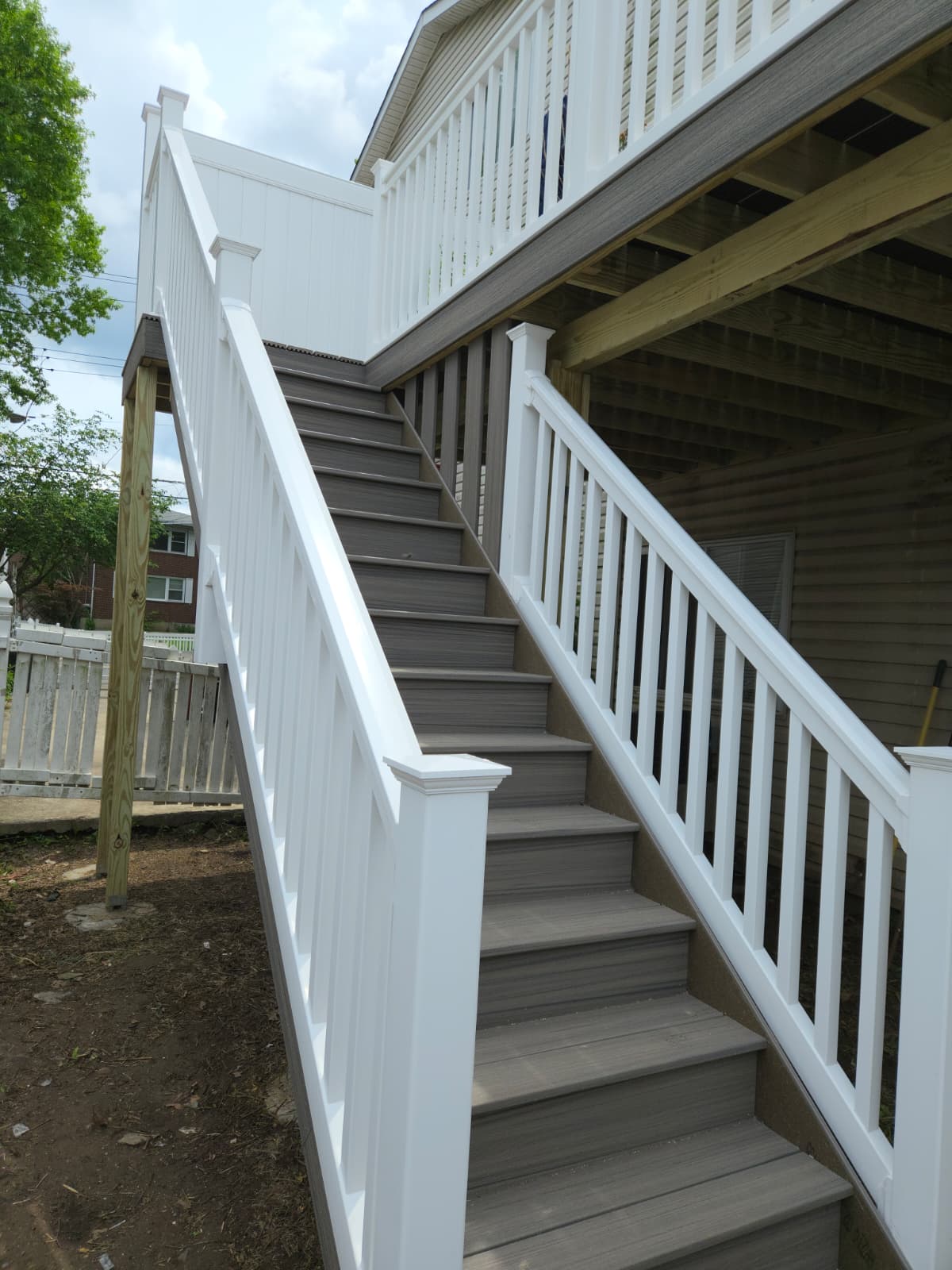
Deck stairs are more than access. They decide how people move between the house, deck, patio, pool, and yard. Good stairs feel natural. Poor stairs feel steep, narrow, unstable, or inconvenient.
Stair planning should consider width, tread depth, riser consistency, landing space, railing placement, lighting options, and where the stairs land. A stair run that drops into an awkward corner of the yard may technically work, but it does not improve the way the backyard functions.
For raised decks, stairs often become a major visual feature. They need to look clean from the ground and feel solid underfoot. That means the framing, stringers, treads, railing, and posts all need to be planned together.
Railing Options for Staten Island Decks
Deck railings frame the outdoor space. They also protect the edges, support stair access, and change the style of the whole backyard.
Popular railing options include white vinyl railing, black aluminum railing, composite railing, stair railing, privacy railing, and railing systems with post caps and trim details. White railings often match light siding and white fences. Black aluminum railings can create a cleaner modern look and preserve more visibility into the yard.
The right railing depends on the deck height, house style, privacy needs, budget, and whether the deck is near a pool, patio, or neighbor’s yard. A deck contractor should help match the railing to both the structure and the look of the home.
Matching Railings to the House
A deck should not fight the house visually. White railings often work well with white or light-colored siding, white privacy fencing, and classic suburban exterior styles. Dark railings can work well with gray or brown decking and a more modern backyard design.
The same idea applies to stair railings. Stairs should look like part of the deck system, not an afterthought. Matching posts, caps, railing color, trim, and stair treads makes the project feel finished.
Pool Decks and Backyard Deck Upgrades
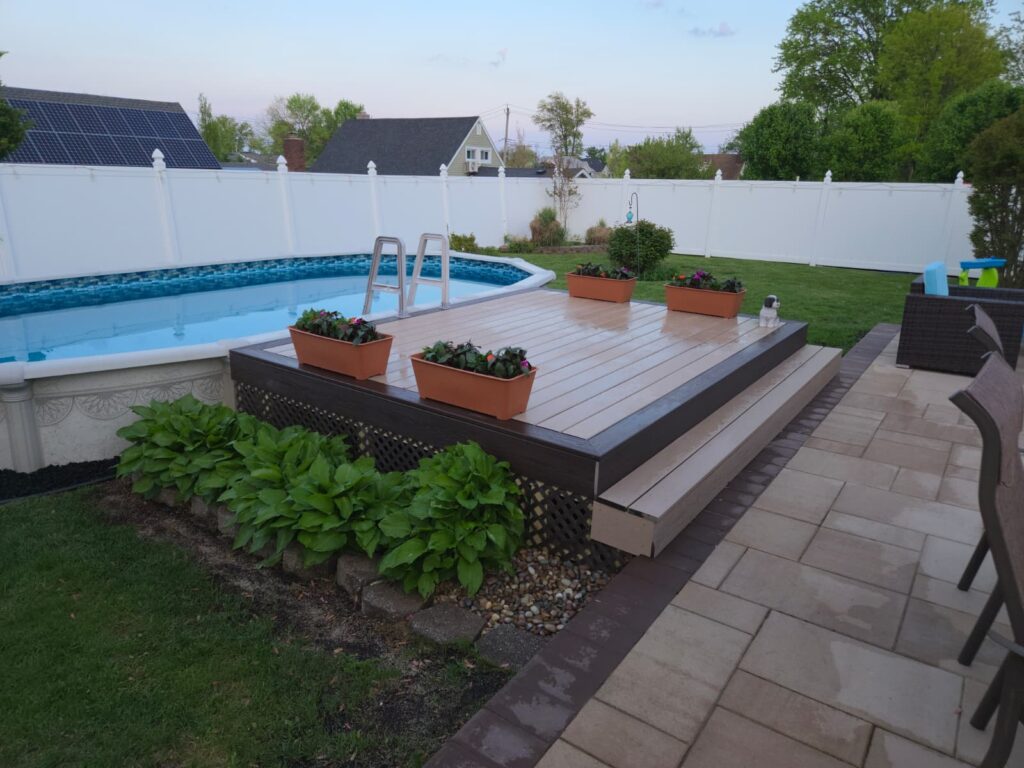
Many Staten Island homeowners want decks around above-ground pools, patios, or compact backyards. A pool deck can make the pool easier to use, safer to access, and much more attractive.
Decks Around Above-Ground Pools
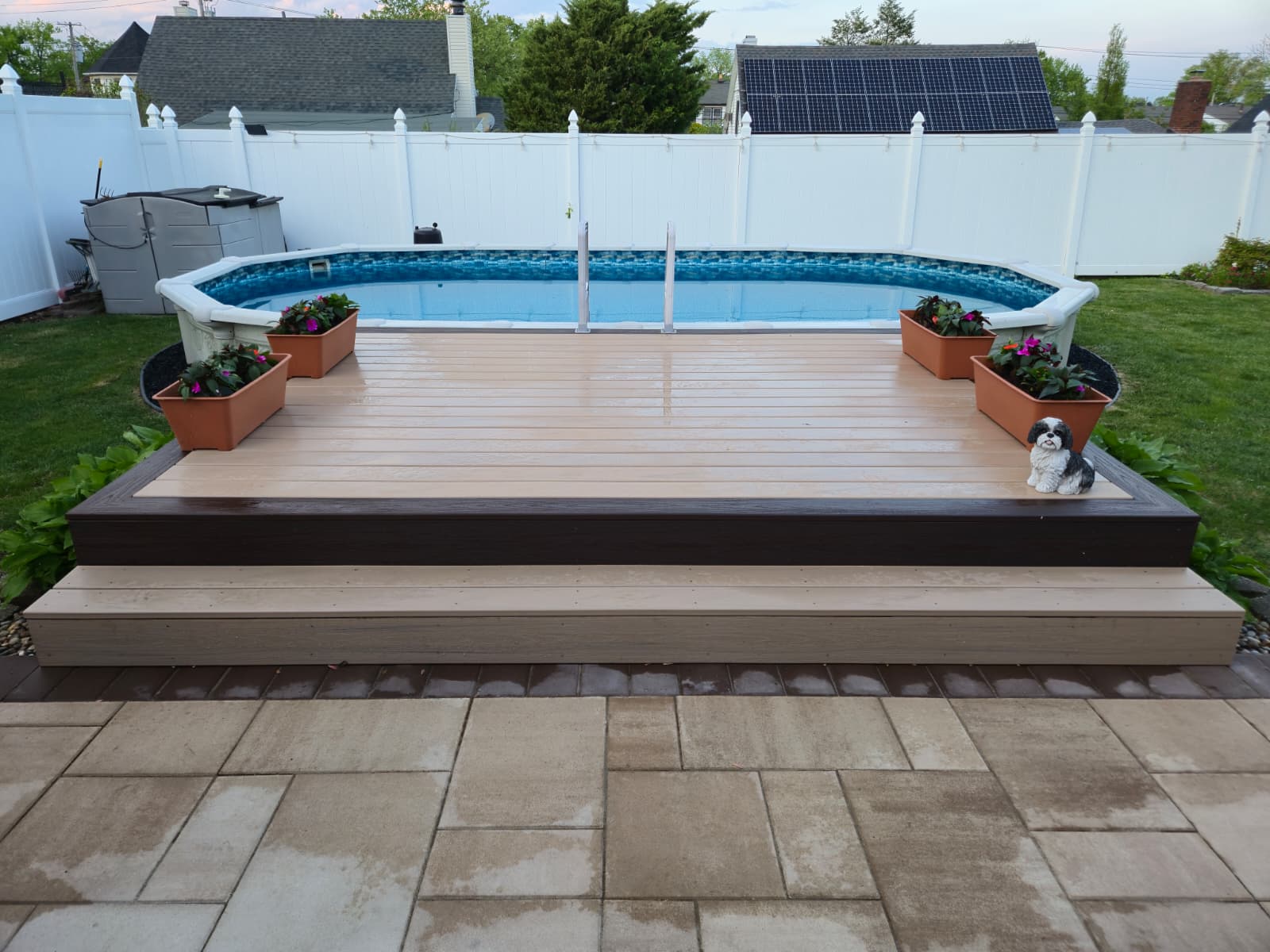
An above-ground pool can look temporary if it sits alone in the yard. A properly built pool deck gives it a finished setting. It creates a landing area, improves access, and makes the pool feel like part of the backyard instead of a separate object sitting on the grass.
Pool deck planning should consider stair access, railing, gates where needed, slip-resistant surfaces, drainage, pool equipment access, privacy fencing, and how people move around the water. The deck should make the pool easier to enjoy without making maintenance harder.
Composite or PVC materials are often attractive around pools because homeowners want lower maintenance and better moisture performance than basic wood. The structure still has to be built correctly. Around water, shortcuts become visible quickly.
Deck and Patio Combination
Many Staten Island homes use both a deck and a patio. The deck connects the house to the outdoor space. The patio creates a lower seating, grilling, or poolside area. Together, they can make the backyard feel organized.
A good deck-and-patio plan creates clear zones: entry from the house, seating, stairs, pool access, plants, storage, and walking paths. This is especially useful in compact yards where every foot matters.
Turning a Small Backyard Into Usable Space
A deck does not need to be huge to make a difference. In many Staten Island homes, the backyard is narrow, fenced, or partly taken up by a pool, patio, shed, or neighboring structures. A smart deck can make that kind of yard more usable.
The key is not size. It is layout. A smaller deck with good stairs, strong railing, clean boards, and a practical landing can be more useful than a larger deck that blocks movement or wastes space.
Deck Materials: What Homeowners Should Compare
Deck materials should be chosen for budget, appearance, maintenance, moisture exposure, and how the deck will be used. A family deck around a pool has different needs than a small side deck used mostly for access.
Pressure-Treated Wood
Pressure-treated wood is still common in deck construction, especially for framing. It can also be used for budget decking, but homeowners should understand the maintenance commitment.
Wood decking may need staining, sealing, cleaning, and repairs over time. It can splinter, crack, fade, and absorb moisture. For homeowners who enjoy maintaining wood, that may be acceptable. For homeowners who want a cleaner and easier outdoor surface, composite often makes more sense.
Composite Decking
Composite decking is a strong option for homeowners who want a finished look with less regular maintenance. It works well for backyard decks, raised decks, pool areas, stairs, and outdoor living spaces.
Correct installation matters. Composite boards need proper spacing, fastening, ventilation, trim planning, and support. A good product installed badly still becomes a bad deck. That is why material choice and contractor quality need to go together.
PVC Decking
PVC decking can be a premium choice for moisture-heavy areas and clean outdoor designs. It is often considered around pools and high-exposure zones where homeowners want strong moisture resistance.
It usually costs more than basic wood and may cost more than some composite products. The right choice depends on the deck design, exposure, budget, and desired appearance.
Railings, Posts, and Finish Details
Railings and posts are part of the deck system, not decoration added at the end. Vinyl, aluminum, composite, and other railing systems each have a different look, cost, and maintenance profile.
Post caps, trim boards, stair details, fascia, borders, and hidden fasteners can make the finished deck look cleaner. These details should be included in the estimate so the homeowner knows what the finished project will actually look like.
Do You Need a Permit for a Deck in Staten Island?
In New York City, decks and porches are regulated structures. New deck construction, major deck alteration, raised decks, structural changes, stairs, railings, and deck attachment to the house may involve approved plans, permits, and inspections.
Permit requirements depend on the exact property, deck size, height, location, structure, attachment, and scope. The safe approach is to review the project before construction starts instead of assuming a backyard deck is automatically a small informal repair.
Why Permit Planning Matters
Permit planning protects the homeowner and the contractor. It helps avoid unsafe work, property-line issues, railing problems, structural mistakes, and future headaches when selling, refinancing, or dealing with insurance or city review.
A deck is something people stand on, sit on, walk across, and use with family and guests. If it is raised, attached to the house, or connected to stairs, the structure matters. The paperwork may be annoying, but a collapsing or illegal deck is worse. Tiny consolation prize: paperwork does not rot, even if it does multiply like mushrooms.
What Usually Needs Review
Deck review can involve:
- New deck building.
- Deck replacement or major alteration.
- Raised deck construction.
- Deck expansion.
- Posts, beams, footings, and framing.
- Stairs and railings.
- Attachment to the house.
- Pool deck integration.
- Property-line and yard conditions.
Contractor and Design Professional Coordination
A serious deck contractor should know when to involve a licensed design professional, how to plan the scope, and how to avoid building something that creates a permit or safety problem later.
For homeowners, the important point is simple: ask permit questions before work starts. The answer may depend on the exact deck, but the question should never be skipped.
What Affects Deck Building Cost in Staten Island?
Deck construction cost in Staten Island depends on the size of the deck, height above grade, material choice, railing system, number of stairs, framing condition, demolition needs, pool or patio integration, permit requirements, and site access.
A simple low platform deck costs differently from a raised composite deck with long stairs, white railing, pool access, and privacy details. The same square footage can price very differently depending on the structure and finish package.
Main Cost Factors
- Deck size: larger decks need more framing, boards, fasteners, trim, labor, and cleanup.
- Deck height: raised decks need stronger supports, stairs, railings, and more careful planning.
- Material choice: wood, composite, and PVC have different costs and maintenance profiles.
- Stairs: stair runs, landings, handrails, and transitions add labor and materials.
- Railings: vinyl, aluminum, composite, privacy, and stair rail systems vary in cost.
- Existing deck demolition: old boards, framing, posts, and debris removal must be included.
- Framing condition: weak framing may need repair or replacement before new boards go down.
- Pool or patio connection: water exposure, access, drainage, and layout add planning time.
- Permits and design: required plans, filings, inspections, or professional review can affect budget.
- Site access: tight side yards, fences, slopes, and limited staging areas can affect labor.
Why Composite Decks Cost More Upfront
Composite decks usually cost more upfront than basic wood decks because the boards and railing systems are more expensive. Many homeowners still choose composite because the long-term maintenance burden is lower.
For a homeowner who does not want to stain, seal, sand, or regularly replace weathered boards, composite can be the better long-term choice. It is especially attractive around pools, patios, and visible backyard spaces where appearance matters.
Why Stairs and Railings Add Cost
Stairs and railings are labor-heavy. They require careful measuring, framing, fastening, alignment, post placement, and finish work. A flat platform deck is one scope. A raised deck with stairs and railing runs is a different project.
This is why a deck estimate should clearly state whether stairs, railings, posts, caps, fascia, gates, demolition, and cleanup are included. Otherwise the number may look friendly at first and then start growing teeth.
Why the Cheapest Deck Estimate Can Be Risky
A low deck estimate may leave out important pieces: old deck removal, framing repair, proper fasteners, railing details, stair work, cleanup, disposal, permit assumptions, or trim. Those missing pieces do not disappear. They come back later as change orders or problems.
Decks are outdoor structures people walk on. Saving money by ignoring structure, stairs, railings, or attachment is not a smart bargain. A deck should be priced as a complete outdoor system.
Deck Construction Process: From Estimate to Finished Backyard
A good deck project should follow a clear process. That keeps the homeowner informed and prevents the job from turning into a pile of boards, guesses, and “we’ll figure it out later.”
Step 1: Site Visit and Measurements
The process starts with a site visit. The contractor reviews the existing deck or yard, measures the space, checks access, looks at the house connection, reviews stairs and railing needs, and discusses how the homeowner wants to use the deck.
Important questions include: Where should the stairs go? Is there a pool? Will the deck connect to a patio? Is the yard fenced? Is privacy important? Is the existing frame usable? Is the deck raised? Are there drainage issues?
Step 2: Material and Layout Planning
Next comes layout and material planning. The homeowner chooses between wood, composite, and PVC decking. Railing style, board color, stair design, trim, pool access, and privacy needs are discussed before construction starts.
This stage matters because the deck should match the house and yard. A clean gray deck with white railings can feel very different from a warm brown deck with dark railings. Both can look good when they fit the property.
Step 3: Demolition or Site Preparation
If there is an old deck, it may need to be removed. Demolition can include old boards, railings, stairs, posts, framing, and debris. If the existing structure is partly reusable, the contractor should still inspect it carefully before installing new decking.
Site preparation may also involve clearing the work area, protecting nearby surfaces, planning material staging, and confirming access through the yard or side of the house.
Step 4: Framing, Posts, and Structural Work
The structure is the part of the deck that matters most even though homeowners mostly see the finished boards. Posts, beams, joists, ledger attachment, blocking, and fastening decide how solid the deck feels.
Good framing also makes the finish work cleaner. Straight boards, stable stairs, tight railing lines, and proper trim all depend on the structure underneath.
Step 5: Decking, Stairs, Railings, and Finish Details
Once the structure is ready, the deck boards, stairs, railings, trim, caps, and final details are installed. Composite boards may use hidden fasteners or other manufacturer-specific fastening systems. Stairs and railings are aligned, caps are finished, and the site is cleaned.
The final result should feel safe, solid, and visually complete. A finished deck should look like it belongs to the house, not like an emergency wooden balcony grown in the backyard overnight.
Deck Renovation and Replacement: When to Rebuild Instead of Repair
Older decks can sometimes be repaired, but not always. If the surface boards are worn but the structure is solid, resurfacing may be possible. If the structure is weak, rebuilding is usually the better choice.
Signs an Old Deck May Need Replacement
- Soft or spongy deck boards.
- Loose or leaning railings.
- Unstable stairs.
- Visible rot or water damage.
- Sagging areas.
- Old or rusted fasteners.
- Movement when walking.
- Poor attachment to the house.
- Cracked posts or weak framing.
- An outdated look that hurts the backyard.
If several of these issues are present, the deck should be inspected before any cosmetic resurfacing is considered. New boards over a bad frame are not a renovation; they are a disguise.
Resurfacing vs. Rebuilding
Resurfacing means replacing the visible deck boards and possibly railings while keeping a sound frame. Rebuilding means replacing the structure, stairs, railings, and surface as needed.
The right choice depends on the condition of the frame, posts, footings, stairs, railings, and attachment. A contractor should inspect the existing deck and explain whether resurfacing makes sense.
Upgrading Old Wood to Composite
Many homeowners replace old wood decking with composite boards and modern railing. This can give the backyard a cleaner, more current look while reducing future maintenance.
If the existing structure is usable, the project may be more focused on resurfacing and railing upgrades. If the structure is weak, replacing the full deck may be the safer and better-looking solution.
Deck Design Ideas for Staten Island Homes
Good deck design should fit the house, the yard, and the way the family uses the space. A deck can be simple and still make the backyard feel much more finished.
Raised Deck With Stairs to the Backyard
This is common when the main floor of the house sits above yard level. A raised deck creates outdoor space directly off the house, while stairs connect down to the patio, pool, or yard.
Pool Deck With Platform
A platform around an above-ground pool creates better access and a more finished look. It can also connect the pool to the patio or seating area.
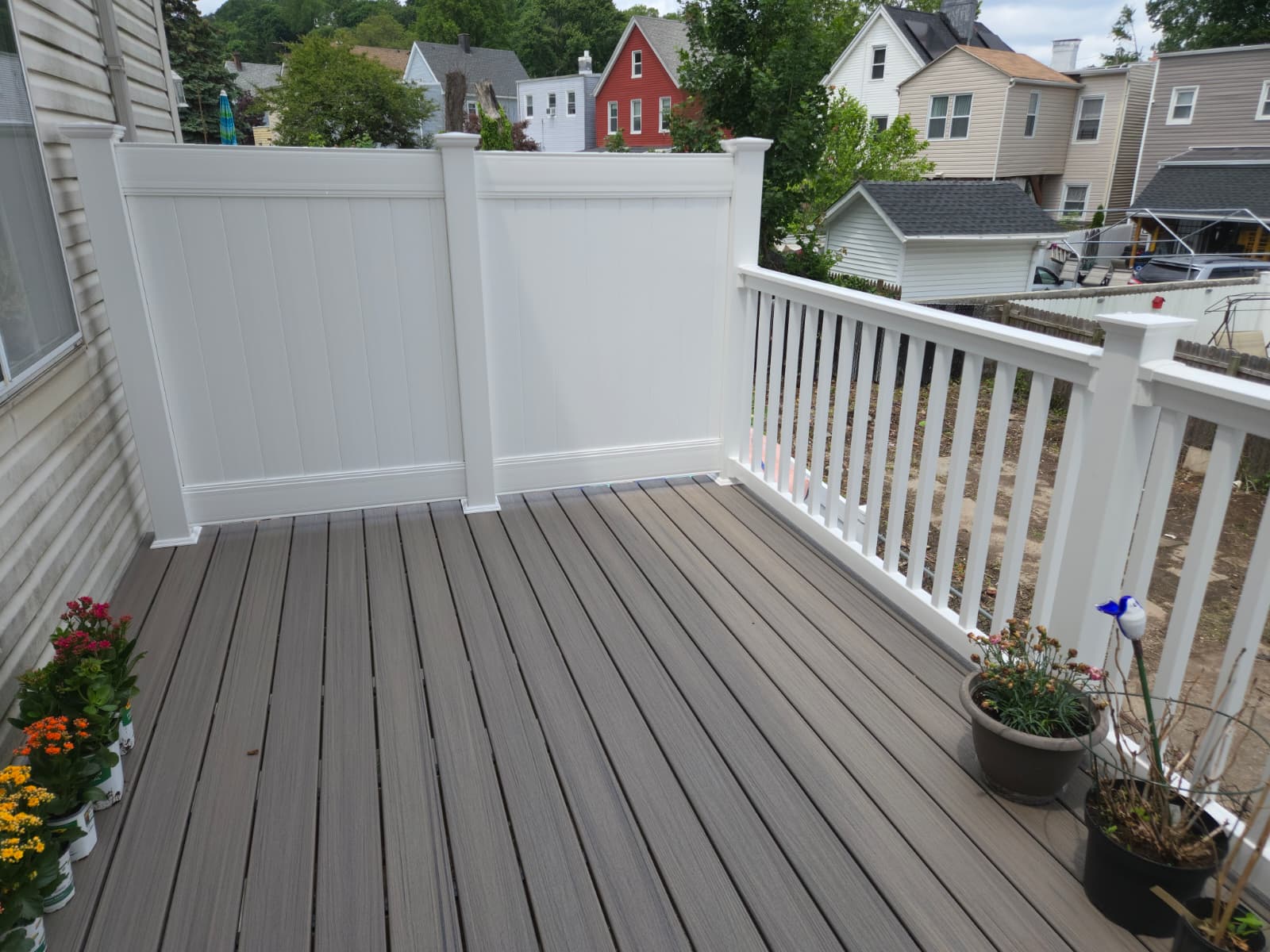
Deck With White Privacy Fence
White railings and white privacy fencing can make compact Staten Island yards feel cleaner and more enclosed. This works especially well with gray composite boards and light siding.
Gray Composite Deck With White Railings
Gray boards and white railings create a clean modern look that works well with many Staten Island homes. This combination also pairs naturally with white fencing and neutral patio surfaces.
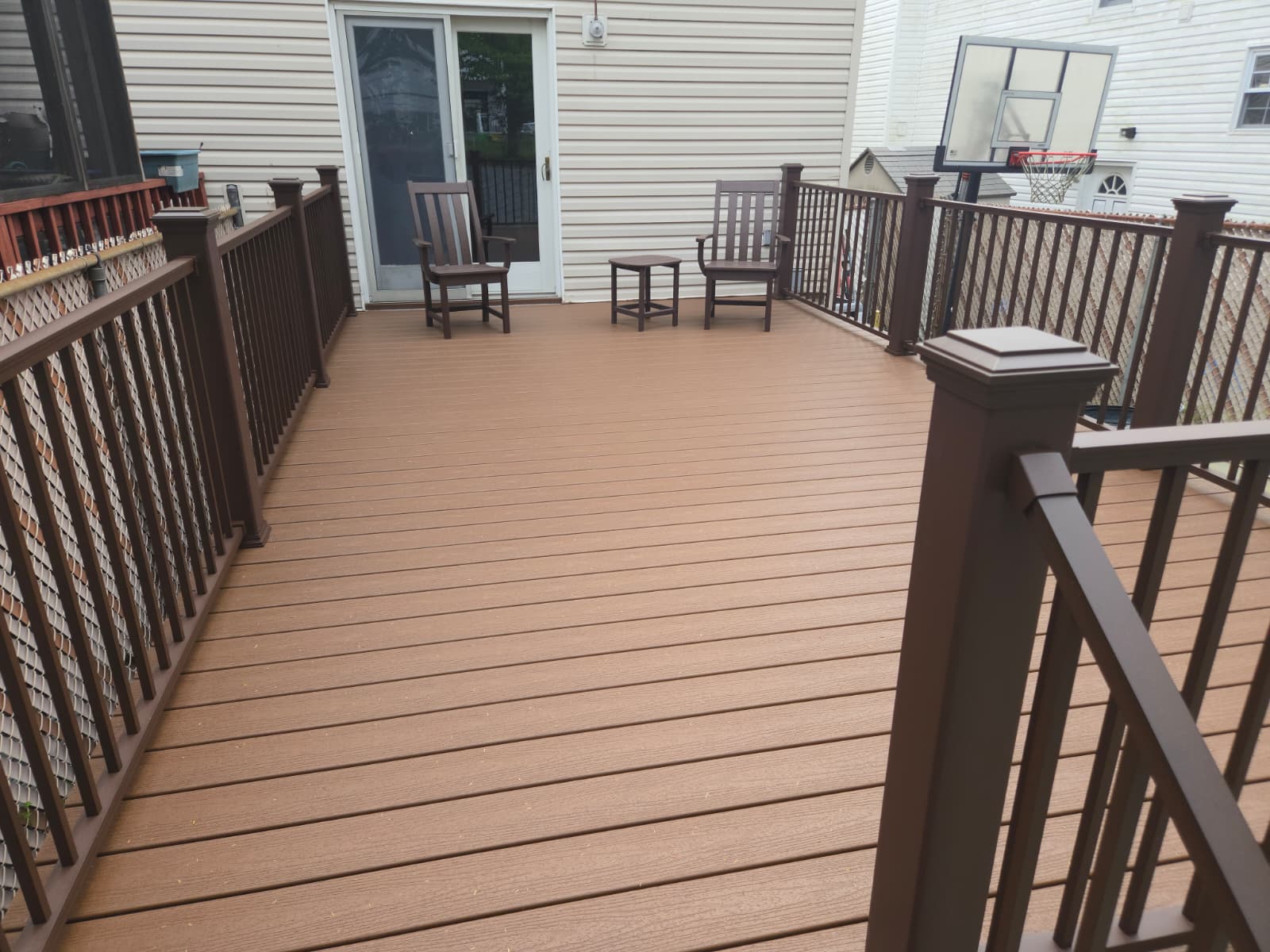
Brown Composite Deck With Dark Railings
Warm brown decking with darker railing can create a more traditional backyard feel. It can also work well with beige siding, darker trim, and natural landscaping.
Deck and Patio Outdoor Living Area
Some of the best backyard upgrades combine a deck, patio, pool area, seating area, and planting zones. The deck provides structure and access. The patio gives more ground-level living space. Together, they make the yard more useful.
How to Choose a Deck Contractor in Staten Island
Choosing a deck contractor is not just about price. The contractor should understand structure, materials, stairs, railings, permits, site access, and local backyard conditions.
Questions to Ask Before Hiring
- Have you built decks in Staten Island?
- Do you install composite decking?
- Can you build deck stairs and railings?
- Do you handle deck replacement and old deck demolition?
- How do you check the existing frame?
- What railing options do you offer?
- Can you build around above-ground pools?
- Who handles permit questions?
- What is included in the estimate?
- What is excluded from the estimate?
What a Good Deck Estimate Should Include
A deck estimate should be clear enough that the homeowner knows what is actually being built. It should include:
- Deck size and general layout.
- Material type: wood, composite, PVC, or specific product line if selected.
- Framing scope and structural assumptions.
- Stairs and landings.
- Railing type and railing locations.
- Demolition and disposal of old deck materials.
- Trim, fascia, post caps, and finish details.
- Permit or design assumptions.
- Timeline.
- Cleanup.
- Named exclusions.
If stairs, railings, demolition, or cleanup are missing from the estimate, the number may not be useful for comparison.
Why Local Experience Matters
Staten Island homes often have tight side-yard access, older decks, above-ground pools, fences, patios, uneven yards, and exterior layouts that require practical problem-solving. Local experience helps a contractor plan better and avoid surprises.
A contractor who understands these conditions can usually recommend a deck layout that fits the property instead of forcing a generic design into the yard.
Recent Project Example: Composite Deck and Backyard Upgrade
A recent backyard deck project shows how much a properly planned deck can improve outdoor space. The work included composite decking, stairs, railings, pool-area access, and a cleaner transition between the house, patio, deck, and yard.
What Was Built
The project included a raised deck platform, new stairs, railing sections, and finished composite deck surfaces. The backyard also included a patio and pool area, so the deck had to work as part of a larger outdoor layout.
The finished result created better access, cleaner lines, safer stairs, more usable deck space, and a more polished backyard appearance.
Why the Result Works
The deck works because the different parts connect logically. The stairs provide access. The railings frame the deck. The composite boards create a clean walking surface. The deck connects the house, patio, and pool area instead of feeling separate from the yard.
This is what a good deck project should do. It should improve how the backyard works, not simply replace old boards with new boards.
Final Planning Notes Before Building a Deck
A deck should be planned as a complete outdoor structure. Materials matter, but structure, stairs, railings, drainage, permits, and installation quality matter more. The best deck is not just the one that looks good on the first day. It is the one that stays solid, safe, and useful after years of weather and daily use.
Before starting a deck construction project in Staten Island, decide how the backyard should work. Do you need pool access? A raised deck with stairs? A lower platform? A deck and patio combination? Privacy railing? A low-maintenance composite surface? Those decisions shape the whole project.
HomeRenovation4U builds and renovates decks in Staten Island, including composite decks, pool decks, deck stairs, railings, backyard platforms, and exterior renovation work. If your old deck looks tired, unsafe, or outdated, a properly planned deck upgrade can make the whole backyard feel cleaner, safer, and more usable.
Frequently Asked Questions
How much does deck construction cost in Staten Island?
Deck construction cost depends on deck size, height, materials, stairs, railings, demolition, framing condition, permits, site access, and whether the project uses wood, composite, or PVC decking. A simple platform deck costs differently from a raised composite deck with stairs, railings, and pool access.
Is composite decking worth it?
Composite decking costs more upfront than basic wood, but many homeowners choose it because it requires less routine maintenance and keeps a cleaner look over time. It is especially popular for backyard decks, pool decks, and outdoor living areas.
Do I need a permit to build a deck in Staten Island?
Deck and porch projects in NYC may require permits, approved plans, and inspections, especially for new decks, raised decks, structural changes, stairs, and major alterations. Requirements depend on the property and exact project scope, so permit questions should be reviewed before work starts.
Can an old wood deck be replaced with composite decking?
Yes, an old wood deck can often be upgraded with composite decking, but the existing frame must be inspected first. If the framing is sound, resurfacing may be possible. If the structure, posts, stairs, or railings are weak, rebuilding may be safer.
What is better for a pool deck: wood or composite?
Many homeowners prefer composite or PVC decking near pools because these materials offer lower maintenance and better moisture performance than basic wood. The best choice depends on budget, design, pool layout, and installation quality.
How long does it take to build a deck?
The timeline depends on deck size, design, materials, permits, demolition, stairs, railings, and site conditions. A simple deck replacement is faster than a large raised deck with stairs, railings, and pool integration.