
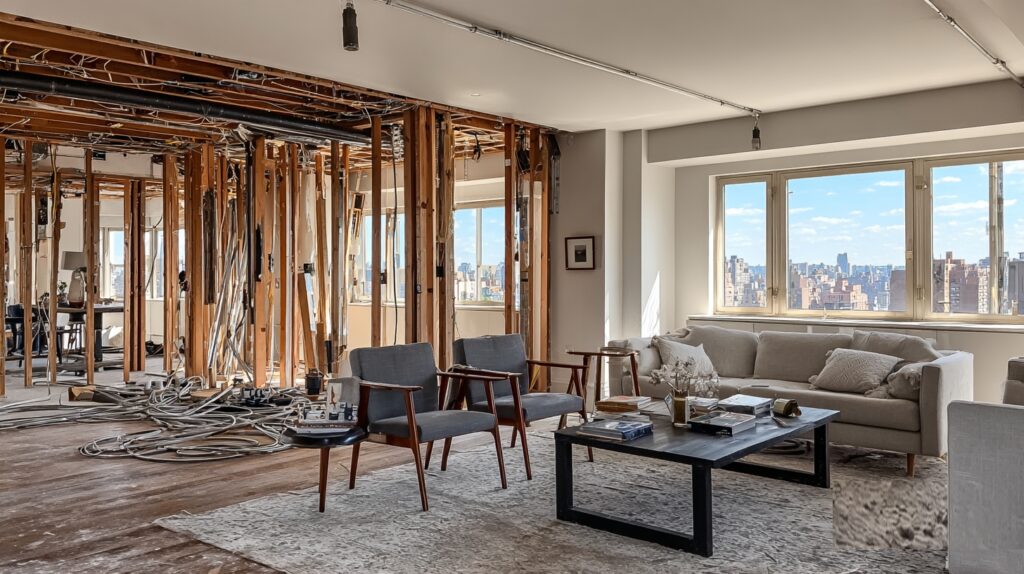
You know how a serious renovation can look straightforward on paper, until demolition turns up the real story behind the walls.
Full Gut Renovation Cost: What Homeowners Should Expect In 2026 is really about controlling risk: money, time, approvals, and surprises that are common in NYC apartments, brownstones, and suburban homes across the metro area.
I’m Alex Fedin, a licensed General Contractor in New York City, and since 2000 I’ve watched the same pattern repeat: homeowners who plan for soft costs, permits, and contingencies sleep better, and finish stronger.
Recent homeowner surveys show renovation spending and timelines stayed elevated through 2023 and into 2024, with planning often taking longer than construction.
So, I’m going to break down what a full gut renovation includes, what drives costs in NYC-area buildings, and the budgeting moves that prevent the most expensive surprises.
Key Takeaways
- For NYC renovations, many published cost guides put basic to mid-level work around $100–$200 up to $200–$400 per sq ft, while high-end and complex projects can push $500–$800+ per sq ft in extreme cases.
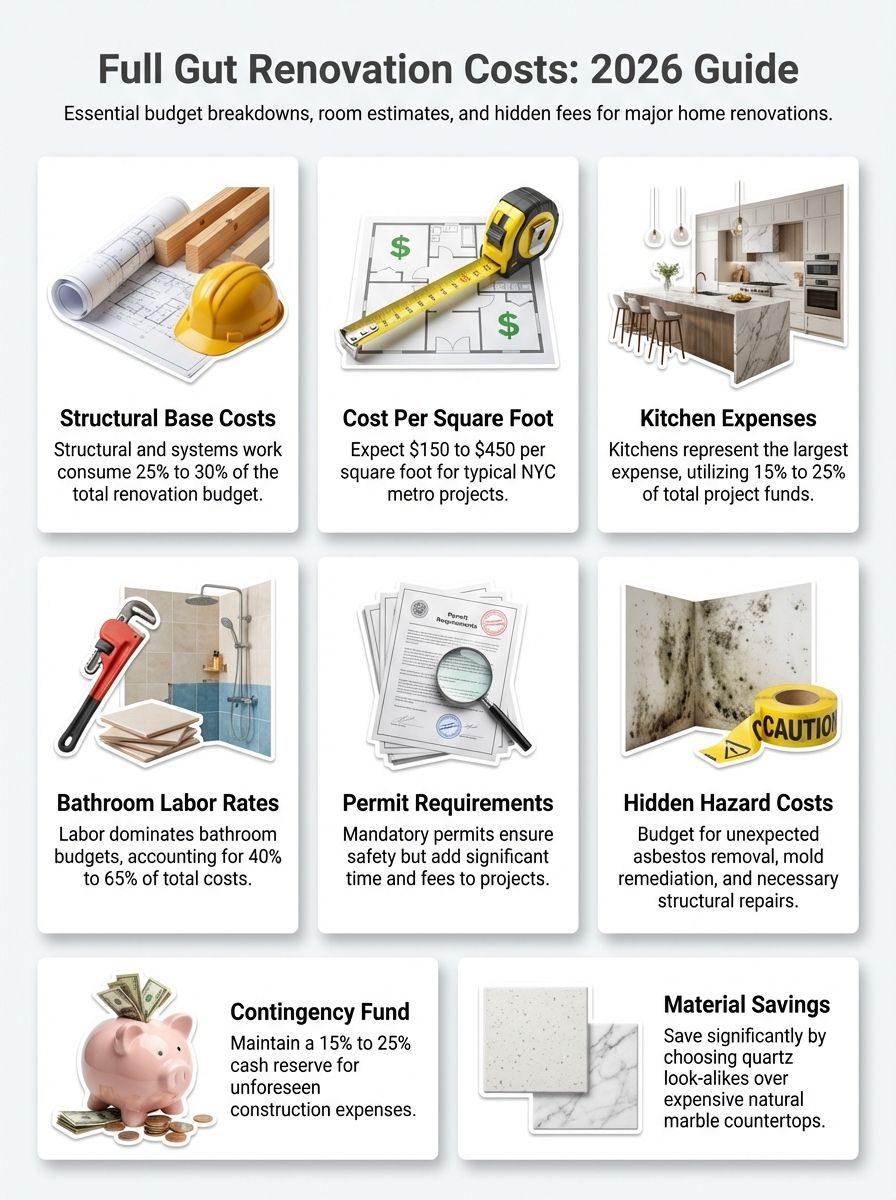
- Use a simple starting split: 25–30% for structure and systems (MEP), 30–35% for kitchens and baths, 10–15% for flooring, and 8–10% for windows, doors, paint, and finish carpentry.
- In the NYC metro, keeping plumbing locations close to existing risers is one of the fastest ways to control remodeling costs, especially in co-ops with layout limits.
- Permits are not a footnote. NYC filings have minimum fees, and work without approvals can trigger Stop Work Orders, delays, and civil penalties.
- For 2026 projects, plan a 15–20% contingency if your home is older, if you expect structural work, or if your building requires extra compliance (asbestos survey, lead-safe practices, insurance, and board rules).
What Does a Full Gut Renovation Include?
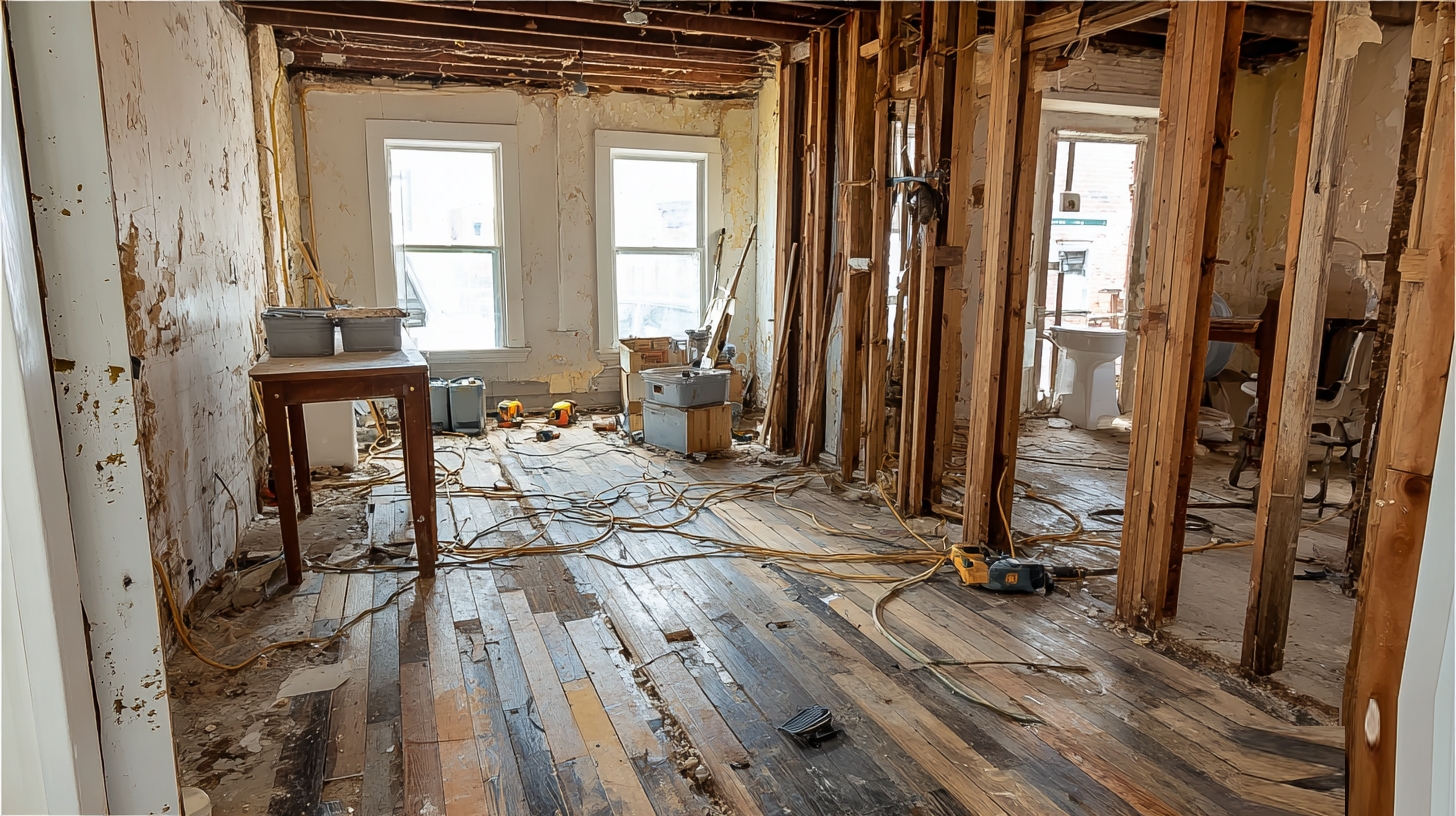
A full gut renovation means you strip the interior down to the studs, then rebuild from the rough work to the finishes.
In NYC metro homes, that often includes full demo, new framing, updated electrical and plumbing, new HVAC decisions, new insulation where possible, and brand-new finishes across kitchens, bathrooms, and living areas.
On the budgeting side, structure and systems work often lands around 25–30% of the total, kitchens and baths around 30–35%, flooring around 10–15%, and the remaining finish categories (windows, doors, paint, trim) commonly take 8–10% each.
In co-ops and many condos, “full gut” also includes paperwork: alteration agreements, insurance certificates, elevator protection, and work-hour rules that can limit how fast trades can move.
If your home was built before 1978, treat lead dust control like a non-negotiable safety line item. The EPA’s Renovation, Repair and Painting rule requires lead-safe certified contractors for covered work in pre-1978 housing, and it shapes how demo, containment, and cleanup should be handled.
One more reality check: planning can take longer than building. A large national homeowner survey reported that kitchen renovations averaged about 9.6 months of planning and 5.1 months of building in 2023, which is why I push clients to lock scope early and order long-lead items before demo starts.
Video walk-through: what a gut renovation looks like mid-project
Key Factors That Affect Full Gut Renovation Costs
Full gut renovation cost is not driven by finishes alone. In the NYC metropolitan area, the biggest swings come from scope decisions (moving plumbing or walls), building rules, and logistics that eat up labor time.
Material pricing matters too. In a January 2026 construction economics update tied to federal price index data, construction input prices were reported to be higher than the prior year, which is one reason 2026 budgets need real contingencies instead of optimistic rounding.
Video: key cost drivers that change a renovation budget fast
How Does Home Size and Layout Impact Costs?
Square footage sets your baseline, but layout sets your risk.
If you keep kitchens and bathrooms close to their existing “wet” zones (risers, stacks, and venting paths), you usually reduce demolition, reduce rough plumbing changes, and reduce the number of building approvals you need to chase.
Once you start combining rooms, removing load-bearing walls, or opening long spans, you add engineering, permitting, and heavier labor. For perspective, consumer cost data commonly places load-bearing wall removal in a wide range, and it often requires both engineering review and permits.
If you want an “open concept,” budget for engineering and inspections, not just a beam. The structure is the easy part, the approvals and sequencing are what usually stretch schedules.
If you’re planning an extension or major addition, costs can jump quickly because you add foundations, exterior envelope work, and more inspections. In NYC-area projects, those additions also trigger more delivery constraints and neighborhood logistics (parking, material staging, debris removal).
What Regional Pricing Differences Should I Expect?
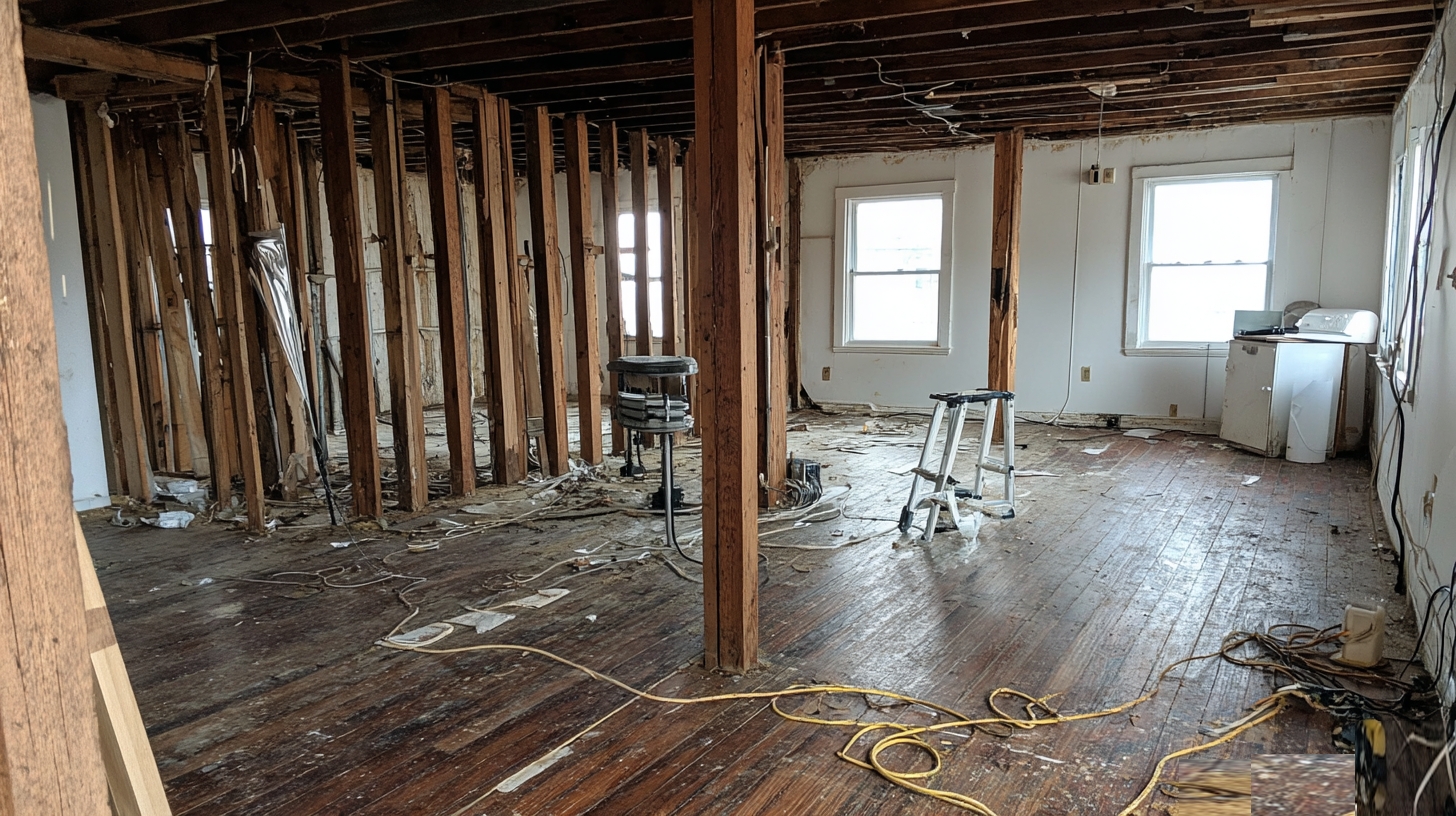
Even inside the NYC metro, pricing changes by borough, building type, and access. A walk-up with narrow stairs, limited freight elevator time, and strict building protection rules can cost more than a larger suburban home with easy driveway access.
To help you sanity-check bids, use a quick “range map” like this, then confirm with three local proposals and a detailed scope.
| Area / building type | Typical cost pressure | What usually causes it |
|---|---|---|
| Manhattan co-ops | Higher | Board approvals, work-hour windows, insurance requirements, elevator scheduling |
| Brooklyn and Queens apartments | Mid to higher | Access constraints, older plumbing and wiring, building rules vary widely |
| NYC brownstones | Higher | Older structure, leveling and waterproofing needs, major mechanical upgrades, more “unknowns” in walls |
| Long Island / Westchester single-family | Mid | Easier access, but larger scope items (roofing, siding, additions) show up more often |
| Northern New Jersey towns | Mid | Local permit processes vary, labor availability can swing seasonally |
The most overlooked step, in my experience, is budgeting for the “non-sexy” parts: dumpsters, protection, elevator fees, after-hours deliveries (if needed), and temporary storage.
How Does the Age and Condition of My Home Affect Costs?
Older homes can save you money when the layout already works, because you can reuse room functions and avoid structural changes.
They also create the biggest surprise risk. Prewar buildings may hide dated wiring, undersized electrical service, old galvanized plumbing, uneven framing, water intrusion, or prior unpermitted work that you have to correct before you can close walls.
If your property had flood damage or chronic leaks, plan for moisture investigation early. It is cheaper to diagnose the source up front than to rebuild finishes twice.
- Pro tip: Schedule a pre-demo walkthrough with your GC, plumber, and electrician together. You want one coordinated plan for risers, vents, panel capacity, and shutoffs.
- Common pitfall: Assuming you can “figure it out during demo.” That approach usually increases change orders and stretches the timeline.
- Best use of money: Upgrade systems you cannot see (electrical, plumbing, ventilation) before you upgrade what you can see (tile, fixtures, paint).
What Are Typical Material and Labor Costs?
Labor is the NYC budget heavyweight, and labor time is where logistics hit hardest. If trades lose hours to freight elevator windows, building quiet hours, or material staging limits, you still pay for those hours.
For kitchens, labor often lands around 15% to 25% of the room total in many real-world bids, and bathrooms commonly run higher because of the density of plumbing, waterproofing steps, and inspections.
On materials, the smartest move is to decide early where you will “spend” and where you will “standardize.” For example, a single standout countertop can carry a kitchen visually, while you keep the rest of the finishes durable and clean.
- Flooring: engineered wood can reduce both material cost and installation risk in older, less-flat subfloors.
- Cabinetry: paint-grade shaker lines can look custom if you invest in good hardware and smart storage inserts.
- Fixtures: pick one brand family for trims (shower valve, tub filler, faucets) so parts match and maintenance stays simple.
- Paint: budget for prep. In NYC apartments, surface prep is often the difference between “new” and “cheap.”
Why Are Permits and Inspections Important and Costly?
Permits and inspections force the work to meet code, and they protect you when you sell or refinance. They also create real costs in fees, professional drawings, and time.
In New York City, the administrative fee schedule includes minimum filing fees for alterations, then adds a per-$1,000 charge above a threshold. This is why “we’re just moving a wall” can still turn into a formal filing with real dollars attached.
Skipping permits can backfire fast. The NYC Department of Buildings can issue Stop Work Orders, and violating a Stop Work Order can carry civil penalties, listed by DOB as $6,000 for a first offense and $12,000 for subsequent offenses.
| Permit and compliance item | Why it hits your budget | How to control it |
|---|---|---|
| DOB filing (ALT1/ALT2/other) | Minimum fees, plan review time, inspections, pro drawings | Finalize layout early, avoid last-minute scope changes |
| Building board package (co-op/condo) | Insurance certificates, deposits, protection rules, limited work hours | Ask for the alteration agreement before design starts |
| Landmarks review (if applicable) | Separate approval path and added schedule risk | Confirm landmark status and scope limits before selecting windows, doors, or exterior work |
Full Gut Renovation Cost: What Homeowners Should Expect In 2026 (NYC Metro Averages)
In 2026, NYC-area renovation budgets reflect three big pressures: labor time, approvals, and the finish level you choose.
To keep estimates realistic, I like to start with cost per square foot ranges, then build a room-by-room allowance list so you can see where your money is actually going.
Video: how to think about per-square-foot pricing in NYC
What Is the Cost Per Square Foot for Full Gut Renovations?
Below is a practical per-square-foot breakdown for full gut renovations in the NYC metro area. Use it to set expectations, then tighten it with bids that reflect your building rules and finish selections.
| Category | Cost per Sq Ft (2026 planning ranges) | What this typically includes | Notes and examples |
|---|---|---|---|
| Basic / Budget | $100–$200 |
|
|
| Higher-end Mid-Range | $200–$400 |
|
|
| High-End / Complex | $400–$800+ |
|
|
| How to use these numbers | N/A |
|
|
How Much Does a Mid-Range Renovation Typically Cost?
A mid-range NYC metro renovation usually lands in the “higher-end mid-range” bucket because so many apartments require upgrades behind the walls to meet code and modern load demands.
For kitchens, a common planning range is $30,000–$50,000 for a mid-range remodel, with smaller kitchens sometimes fitting $15,000–$25,000 when you keep the layout and choose standard finishes.
Bathrooms can range widely based on waterproofing scope, plumbing condition, and fixture selection. Many homeowners plan a baseline band first, then add a separate allowance for any behind-the-wall plumbing and electrical repairs that demo may reveal.
- Budget control move: Keep the same general kitchen and bath locations, then spend on better storage, lighting, and finishes.
- Schedule control move: Select tile, plumbing trims, cabinets, and appliances before permits are filed, so you do not redesign midstream.
- Bid clarity move: Require line items for protection, debris, inspections, and final punch list, not just “labor and materials.”
What Are the Costs of High-End Renovations?
High-end renovations climb fast because you pay for customization twice: once in fabrication, and again in installation time.
Luxury bathrooms can exceed $80,000, and large kitchens often run $60,000–$100,000+ depending on appliances, stone, and custom cabinetry.
If you are buying premium appliances and custom cabinetry, treat “mechanicals” as a matching investment. Strong ventilation, correct electrical loads, and tight waterproofing protect the finishes you’re paying for.
| High-end line item | Why it changes the price | Budget tip |
|---|---|---|
| Custom cabinetry | Shop drawings, longer lead times, more install labor | Use custom only where it solves a real storage problem |
| Stone and slab fabrication | Templating, fabrication, and risk of breakage during delivery | Confirm slab availability before you commit to a layout |
| Specialty mechanicals | Higher electrical demand and more coordination | Verify panel capacity early, before walls close |
How Much Does Each Room Cost to Renovate?
Room costs vary, but in a full gut renovation, kitchens and bathrooms usually dominate because they combine plumbing, electrical, waterproofing, and high-touch finishes.
Use the sections below as planning allowances, then tighten them with bids and a written scope.
Why Is the Kitchen the Largest Expense?
The kitchen is expensive because it stacks many cost drivers into one room: cabinetry, countertops, appliances, lighting, and multiple trades that must coordinate tightly.
Design fees can be modest for a simple refresh, then rise quickly when the job requires a full redesign, detailed cabinetry planning, and coordination across trades.
- Cost lever #1: Keep the existing layout if possible. Moving plumbing and gas lines often triggers more labor and more approvals.
- Cost lever #2: Spend on cabinetry function (drawers, pull-outs, trash, pantry) before you spend on rare stone.
- Cost lever #3: Pick one “hero” finish, like a standout countertop or backsplash, and standardize the rest.
- Cost lever #4: Treat ventilation as part of the design, not an afterthought, because retrofits cost more.
What Makes Bathroom Renovations Expensive?
Bathrooms cost more than most homeowners expect because labor intensity is high, and the waterproofing and inspection steps are non-negotiable if you want a durable result.
In NYC buildings, you also have tighter logistics: limited staging space, strict protection rules, and, in many co-ops, requirements to use licensed and insured trades with specific coverage levels.
| Bathroom cost driver | What it usually includes | Where surprises show up |
|---|---|---|
| Waterproofing and substrate work | Membranes, slopes, drains, wall prep | Rotted subfloors, uneven framing, prior bad tile work |
| Plumbing and valves | Rough and finish plumbing, shutoffs, testing | Old piping condition, riser access limits, pressure issues |
| Tile and finishes | Tile setting, grout, niches, trim | Special layouts, large-format tile handling, stone detailing |
A pro-tip I share with clients is to budget for a clean “behind-the-wall” allowance. If demo reveals failing valves or undersized venting, you want the flexibility to fix it once and close the wall with confidence.
How Much Do Living Areas and Bedrooms Cost to Renovate?
Living areas and bedrooms can be cost-effective parts of a full gut if you keep the scope focused on surfaces, lighting, and storage.
Painting, flooring, doors, and trim add up across the whole home, especially when you have repairs after demo and electrical work.
- Low-disruption upgrade: New lighting plan plus dimmers, paired with fresh paint and updated outlets and switches.
- Value upgrade: Closets and built-ins that improve daily function, especially in smaller NYC apartments.
- Comfort upgrade: Better sound control where your building allows it, especially under new flooring.
What Hidden Costs Should I Watch For?
Hidden costs are the reason two “same size” renovations can land hundreds of thousands apart in NYC.
The best defense is simple: assume you will find at least one surprise behind the walls, then plan money and time for it.
How Do Structural Changes and Repairs Affect Budget?
Structural changes increase cost because you add engineering, permits, inspections, and more complex sequencing. You also add the risk of discovery once demolition exposes framing and load paths.
If you plan to remove or modify a load-bearing wall, you typically need engineering review and a plan for temporary support, beam sizing, and correct installation.
- Budget for engineering: Even a small structural change can require stamped drawings and site visits.
- Budget for finish restoration: After the beam goes in, you still need patching, flooring repair, and paint.
- Budget for schedule impact: Structural work can pause other trades until inspections clear the next step.
When Are Utility Upgrades Necessary and What Do They Cost?
Utility upgrades often become necessary when you change layouts, add fixtures, or modernize appliances.
In older NYC-area homes, electrical capacity is a common pinch point. New York State energy guidance commonly places many electrical panel upgrades in the $1,000–$2,500 range, though service upgrades and building-specific constraints can push totals higher.
Plumbing upgrades show up when shutoffs fail, when old piping does not meet modern expectations, or when you need reliable pressure for new showers and fixtures.
| Upgrade | Why it happens during a gut renovation | How to reduce the hit |
|---|---|---|
| Electrical panel work | More circuits, higher loads, modern appliance demands | Coordinate it during open-wall work, when access is easiest |
| Plumbing modernization | Old shutoffs, corroded lines, fixture changes | Replace what’s accessible during demo to avoid future opening of finishes |
| Ventilation improvements | Moisture control and code expectations | Plan duct paths early so you do not “box out” late |
What Are the Costs and Risks of Asbestos or Mold Removal?
This is where NYC rules matter. Asbestos and mold can shut your project down until the site is safe and properly documented.
NYC requires an asbestos survey by a certified investigator before asbestos-containing material is disturbed, and the City requires licensed abatement and specific filing timelines. NYC guidance also lists penalties for skipping required asbestos survey and filing steps, which is why you should treat testing as a pre-demo requirement, not a “maybe.”
On costs, consumer pricing data for New York City often places many asbestos removal projects in the low thousands, with per-square-foot pricing varying by material and access. Mold remediation can also land in the low thousands for many jobs, then climb rapidly if the problem is widespread or hidden in multiple rooms.
| Hazard | Budget risk | Smart planning move |
|---|---|---|
| Asbestos | Survey, licensed abatement, filing fees, air monitoring, schedule pauses | Do the survey before bidding, so contractors price the real scope |
| Mold | Containment, removal, drying, reconstruction, possible repeat testing | Fix the moisture source first, then remediate and rebuild |
How to Budget for a Full Gut Renovation
Start with a clear renovation budget tied to a realistic Full Gut Renovation Cost range, then build a line-item plan you can share with bidders.
In NYC, I usually advise a 15% to 25% contingency for gut renovations, with the higher end reserved for older buildings, major layout change, or known compliance burdens.
How Do I Set Realistic Budget Expectations?
Get at least three detailed bids. Do not compare totals only, compare scopes and exclusions.
Ask each contractor to separate demo, rough MEP, finishes, permits, and building requirements, so you can see where numbers differ.
- Confirm what your building requires: insurance limits, work hours, protection, and board review steps.
- Confirm what the City requires: filing type, inspections, and closeout paperwork.
- Confirm what you require: finish level, fixture brands, and schedule expectations.
How Should I Allocate Funds for Unexpected Expenses?
Set a contingency fund, then treat it like a separate account line in your spreadsheet or banking.
Use it only for true unknowns discovered in demolition (hidden damage, required utility upgrades, hazardous material steps), or for scope changes you approve in writing.
Once demolition ends and rough conditions are visible, update your budget. That is the moment you can make smart tradeoffs without losing control of the project.
Next, read Tips to Reduce Full Gut Renovation Costs.
Tips to Reduce Full Gut Renovation Costs
You can reduce costs without “cheapening” the result. Focus on decisions that cut labor time, limit approvals, and keep long-lead items from stalling the schedule.
In a 2026 NYC budget, time is money, and delays often cost more than small material upgrades.
How Can I Prioritize Key Areas to Save Money?
Start with the rooms that drive daily life and future value, then protect the systems that keep them working.
- First: Electrical, plumbing, ventilation, and waterproofing where needed
- Second: Kitchen function (layout, storage, lighting)
- Third: Main bathroom comfort and durability
- Fourth: Floors and paint across the home for a cohesive finish
- Last: High-end extras that do not change function (rare stone, specialty hardware everywhere)
If resale is a key goal, use ROI data as a guide, not a rule. A 2025 national Cost vs. Value report from Zonda highlighted strong recoup rates for several replacement projects and listed a minor kitchen remodel among the higher performers, but NYC’s real estate market and buyer preferences can change the outcome by neighborhood and building type.
Why Should I Compare Contractor Quotes?
Comparing bids is not about picking the cheapest number. It’s about catching missing scope before it becomes a change order.
If one bid is dramatically lower, assume something is missing. Ask what is excluded, what allowances are assumed, and who pays for building requirements like protection and elevator scheduling.
Request a detailed scope, schedule, and payment milestones. Then verify licenses, insurance, and who is actually supervising the job day to day.
What Are Cost-Effective Material Options?
Cost-effective does not mean low quality. It means predictable performance, easy maintenance, and good availability.
| Category | Cost-effective choice | Where it makes sense |
|---|---|---|
| Countertops | Quartz in a marble-look style | Busy kitchens that need stain resistance and lower maintenance |
| Flooring | Engineered wood | Older subfloors where stability matters and leveling may be required |
| Tile | Classic porcelain subway or simple large-format porcelain | Bathrooms where you want durability and easier replacement later |
| Fixtures | Mid-range trims from established brands | Main baths and kitchens where parts availability helps long-term service |
Use the savings where they actually show: better storage, better lighting, and better mechanicals behind the walls.
Should I DIY or Hire Professionals for a Full Gut Renovation?
DIY can help on a gut renovation, but only in the right lanes. In NYC-area projects, any work tied to code, permits, and safety should stay with licensed professionals.
In pre-1978 homes, lead dust control is a major safety issue. The EPA recommends lead-safe practices even for homeowners doing DIY work, and hiring certified contractors for covered projects reduces risk for your family and your property.
If you want to do something hands-on, pick tasks that do not affect plumbing, electrical, structure, or waterproofing, like painting after proper prep, installing simple hardware, or managing finish selections and deliveries.
Conclusion
Full Gut Renovation Cost: What Homeowners Should Expect In 2026 comes down to three levers: scope, approvals, and surprises.
Build your renovation budget with real allowances for contractor fees, permits, inspections, and building requirements, then protect it with a 15–20% contingency that matches your home’s age and complexity.
If you want a clear scope, a realistic timeline, and craftsmanship you can feel every day, HomeRenovation4U can help you plan and execute a renovation that fits NYC’s rules and your goals.
FAQs
1. What does a full gut renovation cost in 2026?
Expect $100 to $350 per square foot, often $60,000 to $200,000 for a 1,200 square foot home, depending on materials, labor, and permits.
2. What drives the cost most?
Major drivers are project size, structural work, new electrical and plumbing, heating and cooling system upgrades, high end finishes, and local labor rates, and unseen issues found during demolition can raise costs fast.
3. How should homeowners budget for a full gut renovation?
Get detailed bids from a contractor, set a 15% to 20% contingency, and include permit fees and a realistic timeline, because delays add labor and material costs.
4. Will a full gut renovation raise my home value enough to cover costs?
Return on investment varies by market, location, and work quality.
Upgrades to the cooking area and washrooms, plus solid structural and system work, improve resale value, but full cost recovery is not guaranteed, consult an appraiser and review local sales.
References
- https://www.vmpowerconstruction.com/blog/home-renovation-cost-guide-2026
- https://www.nerdwallet.com/home-ownership/home-improvement/learn/bathroom-remodel-cost (2026-02-11)