
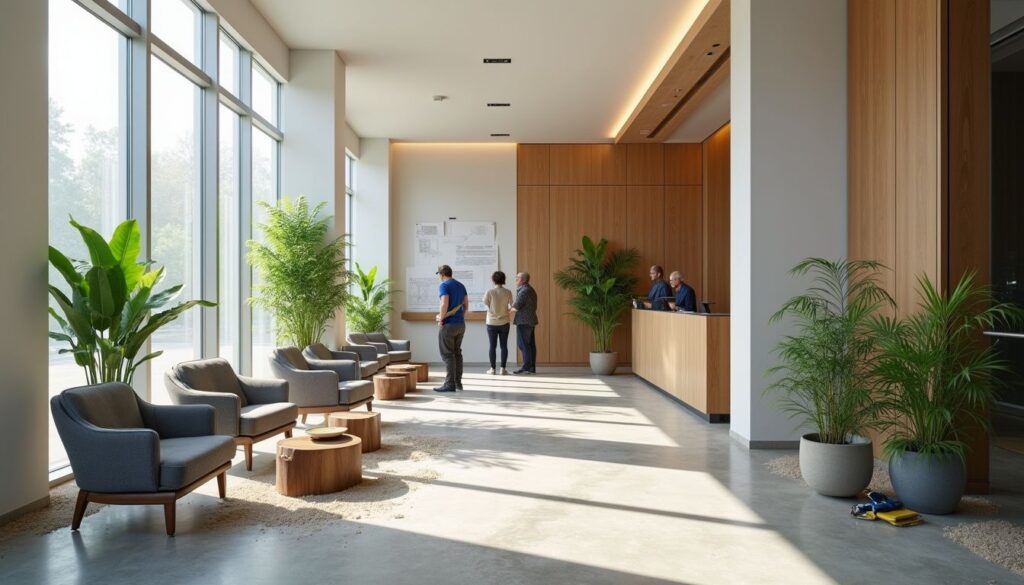
How does lobby design enhance the guest experience?
A lobby isn’t just a pretty entrance. In NYC buildings, it’s your daily pinch point for arrivals, deliveries, stroller traffic, contractors, and security.
When the flow is wrong, you feel it as crowding, noise, confusion, and a space that looks tired no matter how often it gets cleaned.
When the flow is right, guests intuitively know where to go, staff can actually do their jobs, and residents stop treating the lobby like a problem to rush through.
Here’s the practical way I evaluate a lobby before any design decisions:
- Sightlines: can you see the desk, elevator bank, and main door without zig-zagging around furniture?
- Security posture: do visitors naturally funnel past a controlled point, or can they slip in behind deliveries?
- Delivery reality: do packages land in an organized zone, or do they spread across the lobby and block circulation?
- Comfort zones: can someone wait without feeling like they’re sitting in a hallway?
- Noise control: do hard surfaces echo, making every conversation sound louder than it is?
If you’re planning an NYC lobby renovation, work with a lobby renovation contractor who can coordinate design intent with real permitting, phasing, and building operations. That’s where good plans become a lobby that performs.
Next: the trends shaping lobbies in 2026, and how to apply them to NYC buildings.
Key lobby renovation trends for 2026
By 2026, the best lobbies are doing three jobs at once: they welcome people, they manage building operations, and they quietly reinforce value.
In NYC, that means you plan for traffic patterns, deliveries, security, and long-term maintenance from day one, not after the finishes are selected.
This quick table shows the trends I’m seeing most often, and what they mean for a real building.
| Trend | What it looks like in an NYC lobby | Why it matters |
|---|---|---|
| Minimalist, “clear path” layouts | Open circulation, fewer obstacles, intentional focal points | Reduces confusion, improves accessibility, and makes small lobbies feel bigger |
| Green materials and healthier interiors | Low-VOC paints, durable finishes, better ventilation strategy | Improves comfort and lowers the chance of constant repairs and complaints |
| Smart access and package systems | Video intercom, mobile credentials, organized package rooms or lockers | Speeds entry, reduces staff workload, and tightens security |
| Multi-functional “third space” planning | Small work perch, waiting zone, delivery zone, stroller-friendly circulation | Makes the lobby useful, not just decorative |
| Biophilic comfort | Planting, daylight strategy, natural textures, calmer lighting | Makes the space feel human and reduces the “institutional” vibe |
What are modern minimalist aesthetics in lobby design?
Minimalist doesn’t mean empty. It means everything in the lobby earns its square footage.
In NYC, this trend shows up as clean lines, fewer visual “stops,” and furniture that doesn’t interrupt the main path from door to desk to elevators.
To make minimalism work in a real residential building, focus on these high-impact choices:
- One clear axis: keep the main walkway obvious, then place seating off that path.
- A smaller, smarter desk: you can reduce the physical barrier while still keeping a controlled point of contact.
- Hidden storage: integrate a closet or millwork so carts, cleaning supplies, and delivery overflow don’t end up in view.
- One “hero” element: a sculptural light, a wall panel detail, or a single piece of local art that makes the lobby memorable.
Also, minimal layouts are a good moment to check accessibility details early. For example, ADA guidance commonly uses a 36-inch maximum counter height for an accessible portion at a service counter, which can influence the reception or concierge design.
Minimalism here means more room to live, work, and relax.
How can eco-friendly materials improve lobby renovations?
Green design pays off when it improves day-to-day comfort and reduces maintenance, not when it turns into a marketing checklist.
For NYC lobbies, I look for materials that are durable, low-odor during installation, and easy to clean without harsh chemicals.
Three upgrades that typically deliver real value:
- Low-emitting interiors: use low-VOC paints, adhesives, and sealants so the lobby doesn’t smell like a job site for weeks.
- Verified wood and millwork: FSC-certified wood is one practical way to push responsible sourcing without guessing.
- Performance fabrics and cleanable finishes: choose materials that handle high-touch use without constant spot repairs.
If your building is covered by carbon rules, sustainability becomes even more practical. NYC Accelerator notes that Local Law 97 applies to many buildings over 25,000 square feet, with penalties of $268 per metric ton of CO2e over the emissions limit, so envelope and HVAC choices can tie directly to financial risk.
My pro tip: treat “green” as a coordination issue. You want the finish schedule, ventilation plan, and maintenance plan to agree with each other, or you’ll lose the benefits.
What smart technology features enhance lobby functionality?
Smart tech works best when it removes friction. If it adds steps, residents stop using it and staff ends up running a manual workaround.
Here are tech features I see delivering the most value in NYC lobbies right now:
- Video intercom plus mobile entry: systems such as ButterflyMX are built around seeing visitors on a phone and granting entry without a physical key handoff.
- Mobile access control: platforms such as Brivo and SALTO KS support mobile credentials, so you can issue and revoke access without chasing fobs.
- Package management: solutions like Luxer One and Package Concierge focus on secure delivery workflows, which helps keep the lobby from becoming a storage room.
Smart systems use AI and ML to personalize guest stays and predict needs, improving service. In residential buildings, the parallel is using data-driven tools to reduce repetitive tasks, such as visitor entry calls and package questions, while keeping a clear “human option” for residents who prefer it.
| System category | What it solves | What to confirm before you buy |
|---|---|---|
| Video intercom | Visitor verification and faster entry | Connectivity, camera placement, and how deliveries are handled |
| Mobile credentials | Fewer lost fobs and easier access changes | How access is revoked, and how guest access is granted |
| Package room or lockers | Less lobby clutter and fewer stolen packages | Carrier workflow, camera coverage, and overflow strategy |
How do multi-functional lobby areas benefit guests?
In 2026, the lobby works best as a “useful buffer” between the street and the home.
That does not mean you turn it into a co-working floor. It means you build in a few purposeful zones that reduce daily friction.
What multi-functional planning looks like in NYC buildings:
- A real waiting spot: comfortable seating that is not blocking the entry path.
- A quick work perch: a narrow counter with outlets for a short laptop session or a quick signature.
- A delivery zone: a defined area for packages, carts, and courier flow, ideally not in the main view of the front door.
- A wellness cue: better air movement, calmer lighting, and materials that make the lobby feel clean and quiet.
If you get the zones right, you reduce complaints. You also give the building something residents talk about in a positive way.
What are biophilic design elements and their impact?
Biophilic design is the straightforward idea that people feel better in spaces that reconnect them with nature through plants, daylight, natural textures, and sensory comfort.
In NYC, the trick is to make it realistic: low-maintenance, pest-aware, and compatible with lobby lighting and HVAC.
Ways to build biophilia without creating a maintenance headache:
- Layered greenery: combine a few large planters with smaller plants at seating height for a more natural feel.
- Material honesty: use wood tones, stone-like surfaces, and textured wall panels to warm up hard architecture.
- Daylight control: maximize natural light where you can, then add glare control so the space stays comfortable.
If you want a framework instead of opinions, the WELL Building Standard includes biophilia features that can help you turn “we want it to feel better” into a clearer design direction.
How is technology modernizing lobby spaces?
Technology should make a lobby feel simpler, not more complicated.
The best upgrades remove bottlenecks, reduce repetitive staff tasks, and give residents a clear, reliable routine for entry, deliveries, and information.
Here’s a clean way to phase tech into a renovation so you avoid rework:
- Confirm infrastructure: power, data, Wi-Fi coverage, and equipment locations.
- Plan the user journey: resident entry, visitor entry, deliveries, and staff override procedures.
- Install in layers: access control first, then package systems, then displays and convenience features.
- Train and test: build in a real “soft launch” before you call it finished.
How do touchless check-in systems work?
In residential terms, “touchless check-in” is really touchless entry and touchless guest handling.
You’re trying to reduce the moments where people bunch up at the door, wait on a staff member, or pass physical credentials around.
- Resident mobile access: residents use a phone credential (often Bluetooth or NFC) instead of a key fob.
- Visitor verification: a video intercom call goes to a resident’s phone, so they can see who’s there before granting entry.
- Temporary access: issue time-bound access for dog walkers, contractors, and guests, then revoke it automatically.
- Staff override: keep a secure, documented way for staff to handle exceptions without propping doors open.
- Accessible alternatives: keep non-phone options available for residents who need them.
The biggest pitfall I see is treating touchless entry as “just a device.” It’s a workflow. Plan the rules first, then choose the hardware and software that matches those rules.
What are smart lighting and climate control systems?
Smart lighting and HVAC control do two jobs in a lobby: they improve comfort, and they reduce wasted energy during off-hours.
That matters in NYC, where a lobby often runs long hours and gets hit with constant door swings in winter and summer.
- Occupancy-based lighting: sensors dim or brighten zones based on real use, not a fixed guess.
- Daylight response: lights adjust when sun levels change, which keeps the space consistent and reduces glare.
- Smarter temperature control: tighter setpoint management helps reduce hot-and-cold complaints near entrances.
- Maintenance visibility: alerts for failures or out-of-range conditions reduce “it’s been broken for weeks” surprises.
If you’re planning a lobby renovation, align controls with how the lobby is actually used, not how you wish it was used. That’s where the comfort gains come from.
How do interactive digital displays improve guest interaction?
Interactive displays are only worth it when they reduce repetitive questions and improve wayfinding.
In NYC buildings, that usually means clear directions, building announcements, package guidance, and elevator or amenity info, without turning the lobby into an ad wall.
To make displays useful, not noisy:
- Keep content short: one message per screen, written for someone walking by.
- Update cadence: assign ownership, so content stays current and credible.
- Design for the environment: brightness, glare control, and placement matter more than fancy animations.
- Use proven signage hardware: players such as BrightSign are commonly used to run reliable digital signage experiences in busy public settings.
How can comfort and visual appeal be improved in lobbies?
Comfort is the difference between a lobby that feels like a hallway and a lobby that feels like part of the home.
For NYC buildings, I focus on seating, acoustics, lighting layers, and one or two visual anchors that make the space feel intentional.
What are the best cozy seating options for lobbies?
Choose seating like you’re furnishing a high-traffic room, because that’s exactly what a lobby is.
Comfort matters, but durability is what keeps the lobby looking good after the first year.
One practical benchmark: ACT (Association for Contract Textiles) sets a high-traffic guideline of 30,000 double rubs (Wyzenbeek method) for woven upholstery in public spaces, which is a solid reference point when you’re comparing fabric specs.
- Modular seating: lets you reconfigure for holidays, events, or peak delivery seasons.
- Performance upholstery: brands like Crypton and Sunbrella Contract focus on cleanability and durability for high-use environments.
- Integrated power: add outlets where people naturally sit, not as an afterthought on a far wall.
- Spacing for circulation: keep the main path clear so the lobby never feels “blocked.”
How does natural light create open lobby spaces?
Natural light can make an NYC lobby feel larger, cleaner, and more welcoming without changing the footprint.
If you can’t add new glazing, you can still improve daylight performance with better sightlines, lighter finishes, and smarter artificial lighting that mimics daylight balance.
- Control glare: use shades or films so bright sun does not turn seating into an uncomfortable spotlight.
- Reflect light: lighter wall finishes and ceilings help bounce light deeper into the space.
- Layer the lighting: combine ambient, accent, and task lighting so the lobby stays consistent from morning to night.
Why use statement art and sculptures in lobbies?
Statement art gives your lobby a “memory hook.” People remember the building, and they remember how it felt to walk in.
In NYC, it also helps your property stand out in listing photos and walkthroughs, especially when the art is scaled correctly and lit well.
To make statement pieces work without clutter:
- Choose one primary focal piece: then keep nearby finishes quieter so the art has room.
- Light it like a feature: a great piece looks average under flat lighting.
- Plan durability: avoid fragile placements where deliveries and carts will clip corners.
- Use local culture thoughtfully: pick pieces that feel connected to the neighborhood, not generic “hotel decor.”
Examples of successful lobby renovations
Good NYC lobby work is rarely about one dramatic gesture. It’s a series of coordinated improvements that make the space easier to use, easier to maintain, and more valuable over time.
Below is the kind of scope that tends to deliver the strongest before-and-after impact without wasting budget.
What changes were made at NYC residential lobby renovation by Home Renovation 4u?
At HomeRenovation4U, we approach NYC residential lobby renovations as a performance upgrade, not just a cosmetic refresh.
NYC residential building lobby renovation: full transformation
This case highlights a full renovation of a residential building lobby in New York City, demonstrating how outdated common areas can be transformed into modern, functional spaces while maintaining strict regulatory compliance.
This video showcases a full renovation of a residential building lobby in New York City.
The project begins with the complete demolition of the existing lobby space, removing outdated finishes and structural elements.
The next phase focuses on new framing and drywall installation, forming the foundation for the redesigned lobby layout. All carpentry work is executed according to architectural and professional engineer drawings.
Electrical work follows, including the installation of new electrical lines and modern lighting systems designed to enhance visibility, safety, and visual appeal.
A new sprinkler system is installed as part of the plumbing scope, ensuring full compliance with NYC fire-safety requirements.
The renovation concludes with tile and stone installation, creating a clean, contemporary lobby environment with durable, high-quality finishes.
Throughout all stages, construction is performed in strict compliance with OSHA safety regulations and New York City Department of Buildings codes.
The project began with the complete demolition of the existing lobby, removing old finishes and structural elements to allow for a full redesign of the space.
Following demolition, new framing and drywall installation were completed to establish the updated layout. All carpentry work was executed strictly in accordance with architectural and professional engineer drawings, ensuring structural accuracy and long-term durability.
The renovation included new electrical lines and modern lighting systems, improving both functionality and visual clarity throughout the lobby. In parallel, a new sprinkler system was installed as part of the plumbing scope to meet current fire-safety and building code requirements.
The final phase focused on tile and stone installation, delivering a clean, contemporary finish suited for high-traffic residential environments. Material selection prioritized durability, ease of maintenance, and a refined visual appearance.
Throughout all stages of construction, the work was performed in full compliance with OSHA safety regulations and New York City Department of Buildings (DOB) codes, ensuring a safe work environment and regulatory approval.
This renovation illustrates how a comprehensive, code-compliant approach can modernize residential lobbies while improving safety, functionality, and overall building presentation.
On projects like these, the changes that usually make the biggest difference are:
- Flow reset: adjust layout so entry, concierge, seating, and elevators work in a straight, logical sequence.
- Finish upgrades where hands actually touch: doors, handles, wall protection, and seating surfaces that take daily wear.
- Lighting redesign: layered lighting that makes the lobby feel warmer, and improves visibility and safety.
- Access and delivery organization: modern entry systems and a defined package strategy to reduce clutter.
If you want a result that holds up, assign one person to coordinate design, trades, and building operations. In my experience, that single decision prevents a lot of rework.
What challenges arise in lobby renovation and how to overcome them?
NYC lobbies are tough jobs because you’re renovating a shared space while people still need to live and move through it.
The solution is not “work faster.” The solution is clear scope, tight coordination, and a phasing plan that respects the building’s daily rhythm.
How to manage budget while meeting design goals?
Budget control starts before demo. If you wait until bids come in, you’re already reacting.
AIA guidance notes that a design contingency often ranges from 5% to 10% of construction cost, and for NYC lobby renovations, that reserve is what protects you when you uncover field conditions or need to adjust lead-time selections.
Here are budget moves that consistently work:
- Spend on the “first impression line” first: entry door zone, reception wall, lighting, and seating.
- Reuse strategically: keep what is structurally sound, and upgrade what residents touch and see every day.
- Value-engineer early: swap materials in design, not after you order.
- Track lead times: delays are expensive, even if the material is “cheap.”
- Plan alternates: pre-approve two or three finish options so you can pivot without redesigning.
What local building codes must be considered?
NYC codes and permitting are not a side issue. They control your schedule and they can stop a job if you treat them casually.
NYC DEP lists standard construction hours as 7 a.m. to 6 p.m. on weekdays and requires a construction noise mitigation plan, the NYC Department of Buildings requires permitted electrical work to be performed by a Licensed Master Electrician, and ADA guidance commonly uses a 32-inch minimum clear door opening and a 36-inch maximum height for an accessible counter portion.
Use this as a starting checklist, then confirm details for your building’s exact conditions:
- Accessibility: clear routes, door clearances, and at least one usable service point.
- Fire and egress: don’t shrink paths or add obstructions near exits.
- Electrical scope: intercoms, access control, and displays often trigger electrical permitting and inspections.
- Material compliance: confirm finish performance for public spaces and the building’s fire safety requirements.
How to minimize renovation disruptions?
The goal is steady operations with predictable inconvenience, not chaos.
That takes phasing, barriers, and communication that is honest and specific.
- Phase by function: keep one clear entry route active at all times when possible.
- Control dust and noise: use temporary partitions, negative air if needed, and daily cleanup routines.
- Schedule loud work: concentrate the noisiest tasks into tight windows instead of spreading them out.
- Post clear wayfinding: tell people where to go before they reach the confusion point.
- Give staff scripts: residents accept disruption more easily when staff can explain the plan consistently.
Future innovations shaping lobby designs
The next wave of lobby changes is less about flashy gadgets and more about systems that quietly reduce friction.
In NYC, that usually means smarter access, better delivery handling, and energy-aware controls that support long-term operating goals.
How will AI improve guest service operations?
AI is already showing up in buildings through practical tools, even when nobody calls it “AI.”
For example, some package and security ecosystems use camera-based workflows to reduce manual sorting and improve tracking, which can cut down on the daily flood of “where is my package?” issues.
If you’re considering AI-enabled systems, focus on two requirements first:
- Data controls: clear rules for retention, permissions, and who can access footage or logs.
- Human fallback: a reliable manual process when a device goes offline or a resident needs help.
What role does augmented reality play in lobby design?
AR is most useful before construction starts, when decisions are still cheap.
A quick AR walkthrough helps boards and owners agree on scale, furniture spacing, sightlines, and lighting concepts without guessing from a flat rendering.
- Faster approvals: fewer “I didn’t realize it would look like that” surprises.
- Better coordination: clearer alignment between owner, designer, and contractor.
- Cleaner change orders: fewer layout changes mid-job.
How can sustainable energy practices be applied?
Sustainable energy upgrades don’t have to be dramatic to matter. In many NYC buildings, better controls and targeted mechanical upgrades deliver real results without changing the building’s character.
NYC Accelerator notes that Local Law 97 has compliance periods starting in 2024 with stricter limits coming in 2030, and it lists penalties of $268 per ton of CO2e over the limit, so energy planning can directly affect future costs.
Practical moves that pair well with a lobby renovation:
- Air management: reduce drafts at entrances and improve comfort near door zones.
- Smarter controls: use schedules and sensors so systems respond to occupancy patterns.
- Lighting efficiency: upgrade to LEDs and controls that reduce waste during low-use hours.
Last Words
A great lobby doesn’t happen from one trend. It comes from coordinated decisions that respect how NYC buildings actually operate.
Your lobby renovation should improve flow, comfort, and daily function, while also supporting the building’s long-term value.
If you’re planning an NYC lobby renovation, build your scope around real constraints like access, deliveries, and code requirements, then choose finishes and tech that you can maintain.
And if you want fewer surprises, hire a lobby renovation contractor who can coordinate permits, phasing, and trades with the same care as the design.
That’s how you get a lobby that feels better on day one, and still looks right years later.
FAQs
I am a hospitality designer with 12 years of hotel and lobby renovation work, I help you plan upgrades that raise guest experiences in 2025.
1. What are the top lobby renovation trends for 2026?
Sustainable materials, nature-based design, smart systems, touch-free check-in, flexible seating, local art, and energy-efficient lighting lead lobby renovation trends and shape guest experiences in 2026.
2. How do these trends improve guest experiences?
They speed service, cut friction, and make spaces feel calm and welcoming. You will see faster check-in, clearer wayfinding, and more comfort.
3. How can you start a lobby renovation project this year?
First, audit your current lobby and collect guest feedback, then set clear goals for guest experiences and accessibility. Next, pick sustainable materials and one simple tech system to pilot, train staff, and run a short test. Finally, measure results, adjust, and expand what works.
4. What tech should you include, and how do you keep it simple?
Use smart systems for lighting, touch-free check-in, and data tools to personalize stays, but start with one system, test it, train staff, and add more only after it proves useful.